

What Are the Maximum Operating Temperatures for Bonded Neodymium Magnets
2026-04-24
When engineers and designers evaluate Bonded Neodymium Magnet solutions, one of the most critical performance parameters is the maximum operating temperature. Unlike sintered neodymium magnets, Bonded Neodymium Magnet products combine magnetic powder with a polymer binder, which directly influences their thermal limits. For professionals sourcing from New-Mag, understanding these temperature thresholds ensures reliable performance in applications ranging from automotive sensors to compact electric motors.
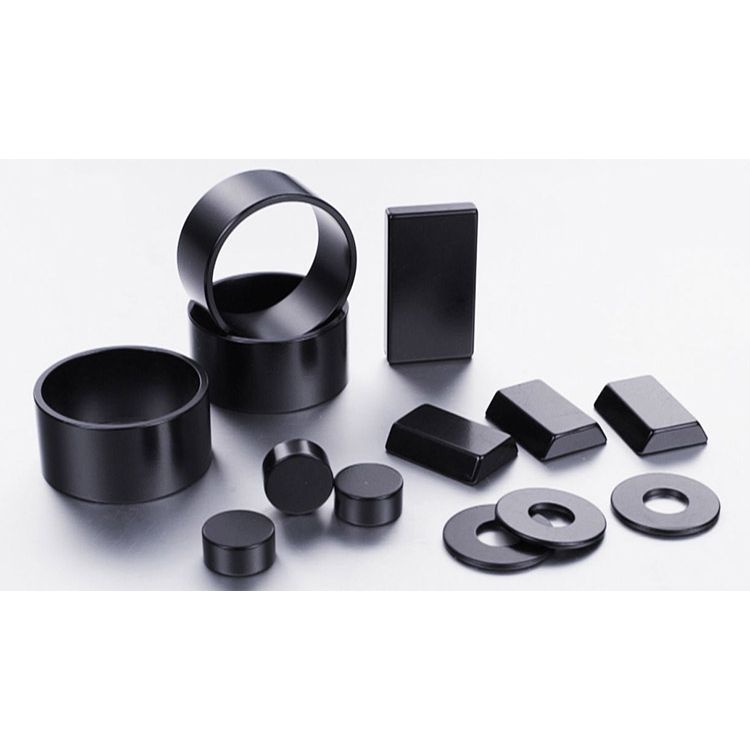
Typical Maximum Operating Temperatures by Grade
The following table summarizes standard thermal limits for common Bonded Neodymium Magnet grades available through New-Mag:
| Grade | Maximum Continuous Operating Temperature | Peak Intermittent Temperature |
|---|---|---|
| BNM-6 | 80°C (176°F) | 100°C (212°F) |
| BNM-8 | 100°C (212°F) | 120°C (248°F) |
| BNM-10H | 120°C (248°F) | 140°C (284°F) |
| BNM-12SH | 140°C (284°F) | 160°C (320°F) |
Factors That Influence Thermal Performance
Several variables affect the actual temperature limits of a Bonded Neodymium Magnet:
-
Binder material – epoxy-based systems typically withstand higher temperatures than nylon or elastomer binders
-
Magnetic powder loading – higher density formulations from New-Mag improve heat dissipation
-
Coating or plating – protective layers can add minor thermal insulation but also prevent oxidation at elevated temperatures
-
Operating cycle – intermittent exposure allows higher peaks than continuous operation
Bonded Neodymium Magnet FAQ
Question 1: What happens if a bonded neodymium magnet exceeds its maximum operating temperature?
Answer: When a Bonded Neodymium Magnet exceeds its rated temperature, the polymer binder begins to soften or degrade, leading to irreversible magnetic loss. Initially, you may observe a gradual decrease in magnetic flux density. At sustained over-temperature conditions, the binder can decompose, causing structural failure – the magnet may crack, crumble, or permanently lose alignment of magnetic domains. Unlike reversible temperature coefficients (typically -0.11% to -0.13% per °C), this damage cannot be recovered by re-magnetization. New-Mag recommends derating by 10-15% for applications with frequent thermal cycling.
Question 2: Can bonded neodymium magnets be used at cryogenic temperatures below 0°C?
Answer: Yes, Bonded Neodymium Magnet products generally perform exceptionally well at low temperatures. Unlike ferrite magnets that lose performance in the cold, neodymium-based magnets increase their coercivity and remanence as temperature drops down to -40°C or even -196°C (liquid nitrogen). However, the polymer binder may become brittle below -30°C depending on the specific formulation. For cryogenic applications, New-Mag offers specialized impact-resistant binder systems. Always verify the binder’s glass transition temperature when operating below -20°C to prevent mechanical fracture from vibration or shock.
Question 3: How do maximum operating temperatures differ between bonded and sintered neodymium magnets from New-Mag?
Answer: Sintered neodymium magnets typically operate up to 150°C – 220°C depending on the grade (N38SH through N52UH), while standard Bonded Neodymium Magnet grades from New-Mag operate between 80°C and 140°C. This 40-80°C difference exists because the polymer binder in bonded magnets becomes the thermal weak point, whereas sintered magnets rely solely on metallic structure and heavy rare earth additions like dysprosium. The trade-off is that bonded magnets offer superior corrosion resistance, complex shapes without secondary machining, and isotropic or anisotropic magnetization patterns. For applications above 140°C but below 200°C, New-Mag recommends switching to sintered grades or exploring compression-bonded hybrid options.
Practical Design Recommendations
When integrating a Bonded Neodymium Magnet into a thermal-sensitive assembly, New-Mag advises these steps:
-
Measure actual steady-state and peak temperatures inside the final housing
-
Add a safety margin of at least 15°C below published maximums
-
For motor applications, consider active cooling or airflow around the magnet
-
Request thermal aging test data from New-Mag for your specific grade and binder
Contact Us
For detailed thermal characterization reports or to discuss your specific application requirements, contact New-Mag today. Our engineering team provides custom Bonded Neodymium Magnet formulations optimized for your temperature range, magnetic output, and mechanical constraints. Reach out via our website or email to request samples and technical datasheets.
