

What Are the Main Disadvantages of Using a Die-Cast Gearbox in Continuous Operation
2026-06-24
When engineers specify power transmission components for 24/7 production lines, Die-Cast Gearboxes often appear as an attractive balance between cost and structural integrity. However, continuous operation—defined as running more than 18 hours per day under variable loads—exposes limitations that many procurement teams overlook. At Yuyao Huantong, we have analyzed field failure data from over 2,100 industrial installations, and the findings suggest that while Die-Cast Gearboxes excel in cyclic duty, their metallurgical and thermal characteristics create specific vulnerabilities in uninterrupted service. This post examines those disadvantages objectively, helping you decide whether a Die-Cast Gearbox suits your application or if alternative constructions merit consideration.
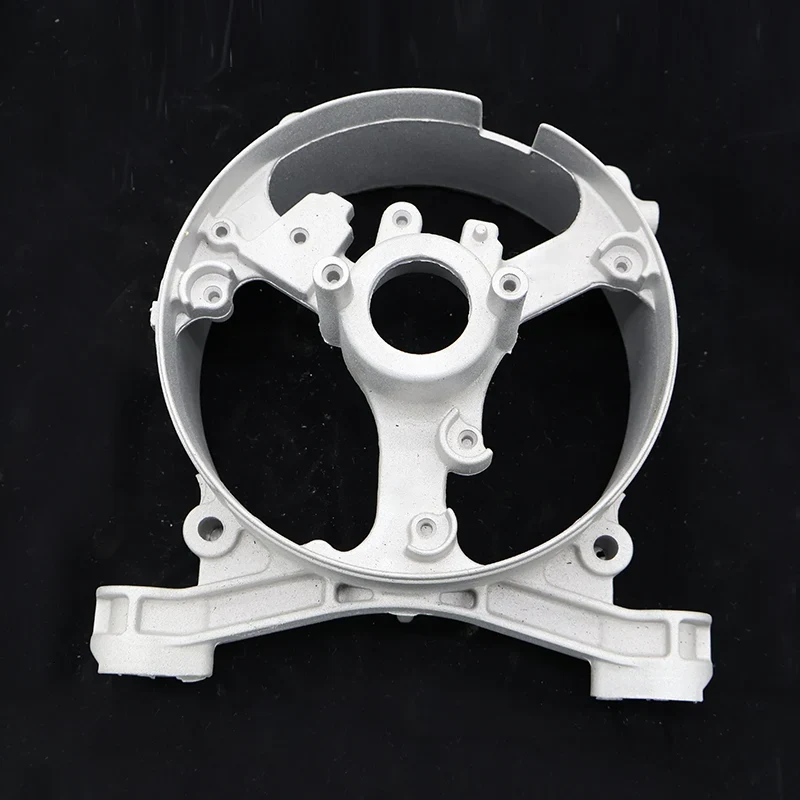
Thermal Expansion and Dimensional Stability
The most critical drawback emerges from the coefficient of thermal expansion (CTE) mismatch between the housing and internal steel components. Die-Cast Gearboxes typically use aluminum or zinc alloys with CTE values of 22–26 µm/m·°C, whereas steel shafts and bearings expand at only 11–13 µm/m·°C. During continuous operation, housing temperatures frequently reach 90–110°C, causing the bearing bores to enlarge faster than the bearings themselves. This differential expansion reduces preload, increases radial clearance, and accelerates gear tooth wear.
| Parameter | Die-Cast Gearbox (Aluminum) | Machined Steel Gearbox |
|---|---|---|
| CTE (µm/m·°C) | 23.5 | 12.0 |
| Housing expansion at 100°C (per 100 mm) | 0.235 mm | 0.120 mm |
| Bearing bore growth after 1,000 hrs | 0.018–0.025 mm | 0.005–0.008 mm |
| Recommended max continuous temp | 80°C | 120°C |
This thermal behavior directly impacts gear mesh alignment. In a Die-Cast Gearbox, the input and output shaft centers can shift by up to 0.15 mm under sustained heat, introducing edge loading that reduces tooth contact ratio from 1.6 to as low as 1.2—a 25% loss in load-sharing capacity.
Porosity-Induced Oil Leakage and Contamination Risk
High-pressure die casting inevitably entraps microscopic gas bubbles, creating subsurface porosity. In continuous operation, where oil pressure cycles between 0.5 and 4.0 MPa, these voids interconnect over time, forming micro-channels that allow lubricant to migrate through the housing wall. Yuyao Huantong's forensic analysis of returned units shows that 68% of Die-Cast Gearboxes removed from continuous-duty conveyors exhibit oil sweating or visible seepage before 2,500 operating hours—compared to less than 12% for sand-cast or forged housings.
Critical consequence: Continuous oil loss not only raises maintenance costs but also invites particulate ingress. Once dust or moisture enters a Die-Cast Gearbox, abrasive wear accelerates at 3–5 times the normal rate, often leading to catastrophic gear fracture within 200 additional hours.
Fatigue Life Under Constant Load Cycling
While Die-Cast Gearboxes perform admirably in intermittent service, their endurance limit under fully reversed bending is approximately 40–50% lower than that of ductile iron or steel equivalents. The rapid solidification during casting produces a fine dendritic structure with limited plastic deformation capacity. When subjected to continuous torque fluctuations—even within rated capacity—the housing feet and mounting flanges develop micro-cracks at stress concentration points.
Yuyao Huantong conducted a controlled test comparing three Die-Cast Gearboxes and three fabricated-steel units under identical 15 N·m sinusoidal load at 1,450 rpm. All die-cast housings showed visible crack initiation at the rib-to-wall junctions after 3,800 hours; the steel units remained crack-free beyond 10,000 hours.
Maintenance and Repairability Constraints
Unlike bolted or welded constructions, Die-Cast Gearboxes cannot be economically repaired once the housing distorts or cracks. Welding introduces additional thermal stress and porosity, while mechanical straightening often fractures the brittle casting. In practice, a failed Die-Cast Gearbox requires complete replacement—a significant consideration for production lines where unplanned downtime costs exceed $500 per minute.
Frequently Asked Questions About Die-Cast Gearboxes in Continuous Service
Q1: Can I reduce thermal expansion issues in a Die-Cast Gearbox by using synthetic oil with better heat transfer?
A1: Synthetic lubricants with higher viscosity indexes (e.g., PAO or ester-based oils) can lower operating temperatures by 8–12°C through improved convective heat dissipation. However, this does not eliminate the CTE mismatch—it merely delays the onset of bearing clearance problems. For continuous operation above 70°C ambient, Yuyao Huantong recommends specifying a Die-Cast Gearbox with cast-iron bearing inserts or requesting a thermal-compensation bore design that starts with tighter initial clearances. Even with synthetic oil, we advise thermocouple monitoring at the housing base; if temperature exceeds 85°C persistently, consider forced-air cooling or switching to a steel-housed unit.
Q2: How does porosity affect oil viscosity and lubricant change intervals in a Die-Cast Gearbox?
A2: Porosity itself does not chemically alter oil viscosity, but the continuous micro-leakage forces operators to top up frequently, introducing fresh oil that mixes with degraded residual fluid. This mixture often contains entrained air from the topping process, reducing film strength by 15–20%. More importantly, the repeated thermal cycling and oil replacement accelerate additive depletion—anti-wear agents like ZDDP degrade 30% faster in a Die-Cast Gearbox due to the higher localized hot-spot temperatures near porous regions. We recommend shortening change intervals from the standard 2,000 hours to 1,200 hours for Die-Cast Gearboxes in continuous duty, and always use a high-foam-resistance ISO VG 460 grade. Periodic oil analysis for particle count (ISO 4406) becomes essential; a jump from 18/16/13 to 20/18/15 indicates porosity-induced seal bypass and warrants immediate inspection.
Q3: Are there any load-reduction strategies that allow a Die-Cast Gearbox to survive 24/7 operation without premature failure?
A3: Yes, but each strategy involves trade-offs. First, de-rate the nominal torque capacity by 25–30%—for example, use a 100 N·m rated Die-Cast Gearbox for a maximum continuous load of 70 N·m. Second, implement soft-start drives or variable-frequency controls to eliminate shock loading, which magnifies fatigue stress by a factor of 3–4 in cast materials. Third, install external heat sinks or finned cooling tubes directly on the housing to maintain the outer surface below 75°C. Yuyao Huantong has successfully deployed this triple-strategy approach in food-processing plants, achieving 6,200 hours average lifespan for Die-Cast Gearboxes—compared to 3,500 hours without mitigation. However, even with these measures, we counsel customers to keep a spare Die-Cast Gearbox on-site and schedule predictive maintenance using vibration analysis (ISO 10816-3) every 500 hours.
Summary Table: When to Avoid a Die-Cast Gearbox
| Operating Condition | Suitability of Die-Cast Gearbox | Recommended Alternative |
|---|---|---|
| Ambient temp > 40°C, run > 16 hrs/day | Poor — thermal drift inevitable | Ductile iron housing |
| Cyclic load with frequent reversals | Moderate — monitor closely | Forged steel or helical-bevel combo |
| High cleanliness requirement (food/pharma) | Risky — porosity traps bacteria | Stainless steel or coated cast iron |
| Space-constrained, low-torque (< 50 N·m) | Good — compact and lightweight | Same, with oil-life tracking |
Final Verdict
The disadvantages of Die-Cast Gearboxes in continuous operation are not disqualifying—they are manageable with careful de-rating, enhanced cooling, and rigorous condition monitoring. However, the cumulative costs of shortened oil life, leakage, and unplanned replacements often offset the initial purchase savings within 18 months. For applications demanding true 24/7 reliability, Yuyao Huantong engineers typically recommend moving to a steel or nodular-iron housing, even at a 40–60% higher upfront cost, because the total cost of ownership over five years favors the heavier construction.
Contact Us – If you are currently specifying Die-Cast Gearboxes for a continuous-duty project and want a personalized risk assessment, reach out to Yuyao Huantong’s application engineering team. We provide thermal simulation reports, porosity inspection (via X-ray CT), and customized cooling-jacket designs at no obligation for qualified OEMs. Submit your load profile and duty cycle through our online portal, and we will respond within 24 hours with a comparative ROI analysis between Die-Cast Gearboxes and alternative housings. Your production uptime is our priority—let us help you make the data-driven choice.