

What Are the Load-Bearing Capacities of Different Equal Angle Steel Sizes
2026-10-26
Understanding the load-bearing capacity of Equal Angle Steel is essential for engineers, fabricators, and project managers who need structures that are both safe and economical. At Energet Solar, we supply Equal Angle Steel in a wide range of sizes and grades, and our technical team regularly helps clients match section dimensions to real-world loading conditions. This guide breaks down how capacity varies across common sizes, what factors govern performance, and how to specify the right section with confidence.
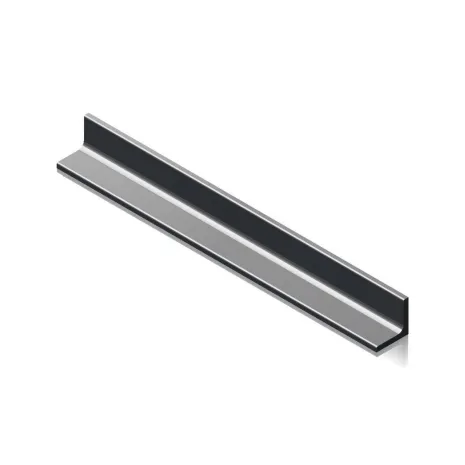
Key Factors That Determine Load-Bearing Capacity
The capacity of Equal Angle Steel is not a single number—it depends on section geometry, steel grade, span, restraint conditions, and load direction. The table below summarizes the main variables:
| Factor | Effect on Capacity |
|---|---|
| Leg length and thickness | Larger legs and thicker walls increase area and stiffness |
| Steel grade (e.g., Q235, Q355, S275, S355) | Higher yield strength raises allowable stress |
| Unbraced length | Longer spans reduce buckling resistance |
| Axis of bending (x-x vs. y-y) | Equal legs behave symmetrically, but restraint differs by axis |
| End connections | Welded or bolted fixity affects effective length |
Typical Capacity Ranges by Size
The following table provides indicative allowable load ranges for Equal Angle Steel used as a simply supported beam with a 1.5 m span under uniform load. Values assume a common structural grade and are for preliminary sizing only—final design must follow project-specific codes.
| Size (mm) | Mass (kg/m) | Indicative Allowable UDL (kN/m) | Typical Use |
|---|---|---|---|
| 40 × 40 × 4 | 2.42 | 1.5–2.5 | Light bracing, frames |
| 50 × 50 × 5 | 3.77 | 2.5–4.0 | Racking, supports |
| 63 × 63 × 6 | 5.72 | 4.0–6.5 | Walkways, platforms |
| 75 × 75 × 8 | 8.99 | 6.5–10.0 | Structural bracing |
| 90 × 90 × 8 | 10.9 | 9.0–14.0 | Heavy frames |
| 100 × 100 × 10 | 15.0 | 13.0–20.0 | Primary members |
Compression and Tension Behaviour
Under axial compression, Equal Angle Steel is governed by flexural-torsional buckling, which often controls slender sections. Short, stocky angles reach yield capacity, while slender members are limited by buckling curves. In tension, capacity is typically governed by the gross section yield or net section fracture at connections. Energet Solar recommends verifying both limit states for every critical member.
How to Select the Right Size
Use these steps for reliable specification:
-
Define the load case and span.
-
Calculate required section modulus and radius of gyration.
-
Check buckling for the unbraced length.
-
Verify connection capacity and corrosion allowance.
-
Confirm availability and grade with a trusted supplier such as Energet Solar.
FAQ: Equal Angle Steel
Q: What is the load-bearing capacity of 50×50×5 Equal Angle Steel?
A: For a 1.5 m simply supported span under uniform load, indicative allowable capacity is roughly 2.5–4.0 kN/m, depending on steel grade and restraint; final values must be confirmed by structural calculation.
Q: Does a larger Equal Angle Steel size always carry more load?
A: Not necessarily—capacity also depends on thickness, grade, unbraced length, and load direction, so a smaller but thicker or higher-grade angle can outperform a larger slender section.
Q: Which steel grade is best for high-load Equal Angle Steel applications?
A: Higher-strength grades such as Q355 or S355 provide greater yield capacity, but selection must balance weldability, cost, and buckling behaviour, which Energet Solar can help evaluate.
Contact Us
Ready to specify the right Equal Angle Steel for your project? Contact Energet Solar today for sizing support, grade recommendations, and competitive quotations tailored to your load requirements.