

What Are the Key Differences Between a Stainless Steel Threaded Flange and a Slip-On Flange
2026-06-26
When selecting pipe connectors for industrial systems, engineers often face a choice between a Stainless Steel Threaded Flange and a slip-on flange. While both serve the same fundamental purpose—joining pipes, valves, and equipment—their design, installation, and performance characteristics differ substantially. At HengDi, we manufacture both types, and we frequently help customers determine which solution best fits their pressure, temperature, and maintenance requirements. This article breaks down the technical distinctions to guide your decision.
Design and Structural Fundamentals
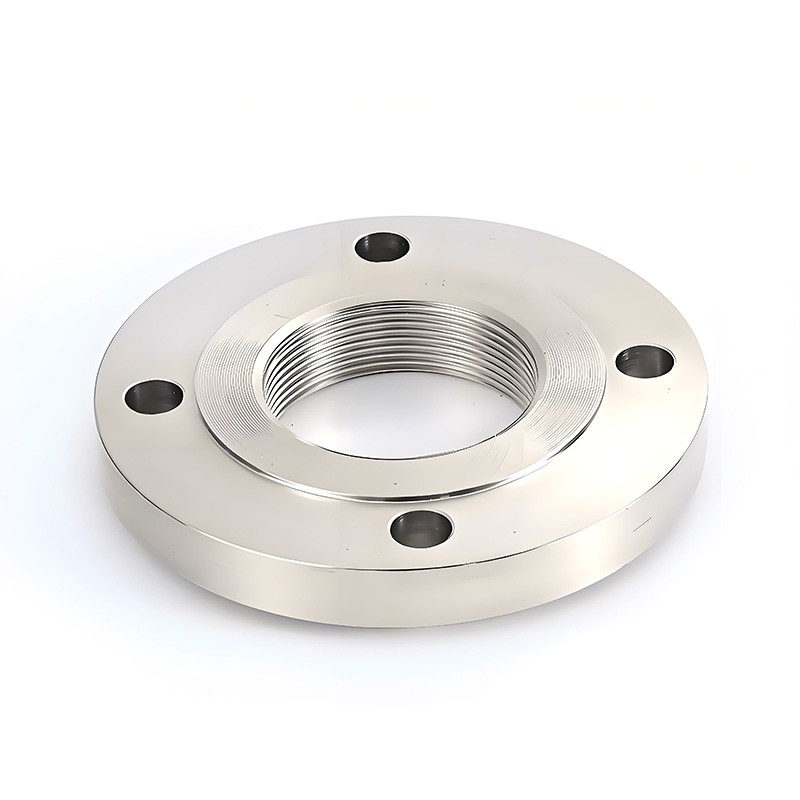
A Stainless Steel Threaded Flange features internal taper threads (typically NPT or BSPT) that screw directly onto the male threads of a pipe. No welding is required for the flange-to-pipe joint. In contrast, a slip-on flange has a slightly larger bore than the pipe’s outer diameter, allowing the pipe to slide inside the flange hub before being fillet-welded on both the inside and outside.
| Feature | Stainless Steel Threaded Flange | Slip-On Flange |
|---|---|---|
| Attachment method | Threaded connection (no welding) | Double fillet welding (inner + outer) |
| Bore size | Matches pipe thread OD | Larger than pipe OD (clearance fit) |
| Hub design | Tapered thread profile | Straight hub with welding chamfer |
| Reusability | Fully reusable (unscrew and replace) | Not reusable (cutting required) |
| Installation time | Fast (manual or power tongs) | Slower (welding + cooling + inspection) |
Mechanical Performance and Pressure Ratings
The threaded engagement of a Stainless Steel Threaded Flange creates a mechanical lock, but the thread roots act as stress concentration points. For this reason, HengDi recommends threaded flanges primarily for low-to-medium pressure systems (Class 150–600) and non-cyclic services. Slip-on flanges, with their continuous welded joints, distribute stress more evenly and can handle moderate thermal cycling better—though they still fall below welding neck flanges in high-pressure applications.
Critical note: A Stainless Steel Threaded Flange should never be used in systems with severe vibration or frequent temperature fluctuations above 400°C, as thread galling and loosening may occur. Slip-on flanges, while more robust in these conditions, require careful weld procedure qualification.
Installation, Maintenance, and Cost Efficiency
From a project economics perspective, the Stainless Steel Threaded Flange offers significant labor savings. No hot work permit, welding consumables, or post-weld heat treatment are needed. This makes it ideal for confined spaces, explosive atmospheres, or retrofit projects where welding is impractical. However, thread sealing requires proper compound or PTFE tape, and over-tightening can deform the threads—a risk that HengDi mitigates by precision machining all our threaded flanges to ASME B1.20.1 standards.
Slip-on flanges demand higher initial labor costs but provide a permanent, leak-tight joint when welded correctly. They also allow minor angular adjustments during fitting before welding—a flexibility that threaded connections do not offer.
Application Suitability Comparison
| Application Factor | Stainless Steel Threaded Flange | Slip-On Flange |
|---|---|---|
| Small-bore piping (≤ 2") | Excellent choice | Acceptable but overkill |
| Large-bore piping (> 4") | Not recommended (threading difficult) | Standard practice |
| Hazardous / flammable fluids | Limited use (potential leak path) | Preferred (welded integrity) |
| Offshore / marine environments | Suitable with corrosion-resistant alloy | Suitable with proper weld overlay |
| Temporary / test connections | Ideal | Not practical |
| High-vibration systems | Avoid | Acceptable with proper welding |
Frequently Asked Questions About Stainless Steel Threaded Flange
Q1: Can a Stainless Steel Threaded Flange be used in high-pressure gas pipelines?
A: Generally, no. For gas services above 300 psi, we at HengDi advise against threaded flanges because the thread helix creates a continuous spiral leak path, even with sealants. Gas molecules can migrate through microscopic thread clearances over time. Slip-on or welding neck flanges are the safer alternatives for high-pressure gas. However, if your system operates below 300 psi with non-toxic gas and you apply a high-quality anaerobic thread sealant, a Stainless Steel Threaded Flange can function reliably—but always consult your design code (ASME B31.3) for specific restrictions.
Q2: How do I properly torque a Stainless Steel Threaded Flange to prevent thread damage?
A: Torque values depend on thread size, grade (e.g., 304 vs. 316), and lubricant type. HengDi recommends using a calibrated torque wrench and following a star-pattern tightening sequence for the flange bolts—not for the threaded pipe connection itself. For the pipe-to-flange thread engagement, tighten by hand until snug, then use a pipe wrench for 1–2 additional turns (never more than 3 turns past hand-tight). Over-torquing stretches the female threads, reducing pull-out strength. Always apply anti-seize compound on stainless steel threads to avoid galling, and record the final torque value for quality traceability.
Q3: Are Stainless Steel Threaded Flange connections safe for food or pharmaceutical applications?
A: Yes, but with strict conditions. The threaded crevices can trap product residues and harbor bacteria, making them difficult to clean-in-place (CIP). For hygienic services, HengDi typically supplies sanitary clamp or lap joint flanges instead. However, if you must use a Stainless Steel Threaded Flange, specify a 316L grade with electro-polished internal surfaces, use FDA-compliant PTFE tape, and design the system for frequent disassembly and manual cleaning. We also offer a modified thread design with reduced crevice depth upon request—contact our engineering team for details.
Final Recommendation
Choose a Stainless Steel Threaded Flange when you need fast, weld-free installation, small pipe diameters (≤ 2"), temporary connections, or work in hazardous areas where hot work is prohibited. Choose a slip-on flange when you require permanent joints, larger pipe sizes, moderate thermal cycles, and lower long-term maintenance risks—and when welding resources are readily available.
At HengDi, every Stainless Steel Threaded Flange we produce undergoes 100% thread inspection and hydrostatic testing to ensure leak-free performance. Our slip-on flanges are manufactured with precision-bored hubs to minimize weld shrinkage distortion.
Contact Us
Selecting the right flange type directly impacts your system’s safety, downtime, and total cost of ownership. If you are still unsure whether a Stainless Steel Threaded Flange or a slip-on flange fits your specific pressure, temperature, and media conditions, the HengDi technical team is ready to assist. We provide free application reviews, CAD drawings, and material certificates for all our products. Contact us today via our website live chat or email [email protected]—we will respond within 4 business hours with a customized recommendation and a competitive quote for your project requirements. Your piping integrity is our priority.