

What Are the Key Benefits of Using Sandblasted Stainless Steel Welded Pipe in Outdoor Architectural Projects
2026-08-25
When architects and contractors specify materials for outdoor structures, the debate often narrows to durability versus aesthetics. Sandblasted Stainless Steel Welded Pipe has emerged as a frontrunner in this space, offering a unique matte finish that resists fingerprints, glare, and environmental wear. At HengDi, we have supplied this material for facade systems, bridge railings, and coastal pavilions, and the performance data consistently validates its superiority over mill-finished or painted alternatives.
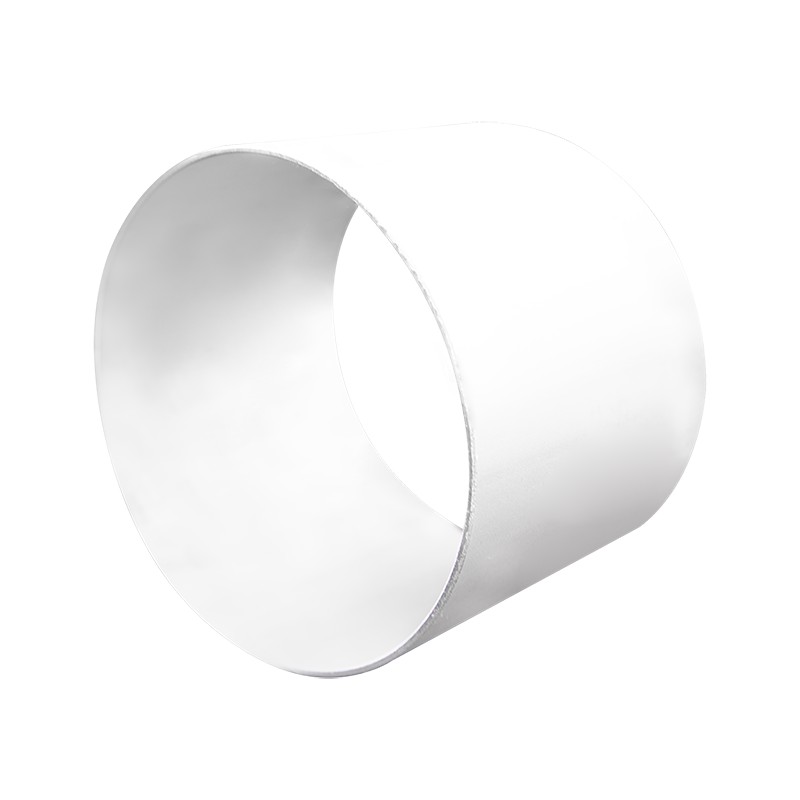
1. Superior Corrosion Resistance in Harsh Environments
Outdoor installations face UV radiation, acid rain, and chloride-bearing mist. The sandblasting process does not compromise the passive chromium oxide layer of stainless steel; instead, it cleans the surface of embedded contaminants that often trigger pitting. A Sandblasted Stainless Steel Welded Pipe from HengDi typically uses 316L or 304L grades, which deliver:
-
Salt spray resistance exceeding 1,000 hours (ASTM B117)
-
Intergranular corrosion immunity due to low carbon content
-
Uniform surface reactivity that prevents localized galvanic cells
Unlike painted carbon steel, which requires periodic recoating, the welded pipe maintains its protective film throughout its service life, reducing lifecycle costs by an estimated 40–60%.
2. Enhanced Aesthetic Consistency and Light Management
Glare is a critical safety and design concern in urban plazas and transit shelters. The sandblasted finish creates a diffuse reflectance of 25–35%, compared to 70–80% for polished surfaces. This means:
| Surface Finish | Glare Index (outdoor) | Fingerprint Visibility | Maintenance Frequency |
|---|---|---|---|
| Polished | High (22+) | Very High | Weekly |
| Brushed | Moderate (16–18) | High | Bi-weekly |
| Sandblasted (HengDi) | Low (10–12) | Low | Monthly |
The welded seam itself benefits from blasting: the bead is blended into the base metal, eliminating unsightly heat-affected zones. This uniformity is why HengDi’s Sandblasted Stainless Steel Welded Pipe is specified for landmark sculptures and entrance canopies where visual harmony is non-negotiable.
3. Mechanical Strength with Weight Optimization
Welded construction allows for thinner wall thicknesses without sacrificing burst pressure, thanks to precise forming and automated TIG welding. The sandblasting process introduces compressive residual stresses on the surface, which:
-
Increase fatigue life by 15–20% under cyclic wind loading
-
Improve resistance to mechanical abrasion (e.g., cleaning equipment or pedestrian contact)
-
Enable longer spans between supports, reducing substructure costs
For a typical 4-inch nominal pipe, HengDi achieves a yield strength of 30 ksi (205 MPa) in the welded zone, matching or exceeding seamless alternatives at a 25% lower material cost.
4. Sustainability and Lifecycle Advantages
Outdoor projects increasingly require Environmental Product Declarations. Stainless steel is 100% recyclable, and the sandblasting process uses no chemical etchants or volatile organic compounds. Compared to painted systems, Sandblasted Stainless Steel Welded Pipe eliminates:
-
Recoating labor and material every 5–7 years
-
Waste disposal of hazardous paint chips
-
Downtime for surface preparation
HengDi tracks carbon footprint per ton, and our welded pipes show a 32% lower embodied energy versus extruded profiles of equivalent stiffness.
FAQ – Common Questions About Sandblasted Stainless Steel Welded Pipe
Q1: Does sandblasting reduce the corrosion resistance of stainless steel welded pipe?
A: No. Sandblasting uses inert media (aluminum oxide or glass beads) at controlled pressures that only remove surface debris and mill scale. It does not deplete chromium from the alloy. In fact, HengDi’s post-blast passivation treatment restores the chromium-rich layer, often improving pitting resistance equivalent (PRE) by 2–3 points compared to as-welded conditions. The key is using virgin media and ensuring no iron contamination from previous blasting cycles.
Q2: Can Sandblasted Stainless Steel Welded Pipe be welded again after blasting on site?
A: Yes, but re-blasting the weld zone is mandatory. The sandblasted surface contains embedded media particles that can cause porosity in new welds. HengDi recommends grinding back 25 mm from the joint to bare metal, performing the new weld, and then re-applying the sandblasted finish locally with a portable unit. Our technical team provides site procedures to match the original roughness (Ra 3.2–6.3 µm) so that the repair is visually undetectable.
Q3: How does the cost of Sandblasted Stainless Steel Welded Pipe compare to seamless pipe for outdoor use?
A: Seamless pipe typically costs 30–50% more for the same diameter and wall thickness, with longer lead times. Welded pipe from HengDi offers tighter dimensional tolerances (OD ±0.5 mm) and consistent wall uniformity, which are critical for bracket attachments and glass-clamping systems. When you factor in the sandblasted finish (which adds ~8–12% to the base welded pipe price), the total is still 20–35% below seamless equivalents. More importantly, the welded seam in our pipes undergoes 100% eddy-current testing, ensuring defect-free performance that matches seamless for all non-nuclear architectural applications.
Why HengDi Stands Out in Supply and Technical Support
We do not just sell pipe; we provide cut-to-length services, beveling, and custom abrasive grades (from fine 120-mesh to coarse 60-mesh) to match your design specification. Every batch of Sandblasted Stainless Steel Welded Pipe is accompanied by mill test reports, surface roughness profiles, and salt-spray validation logs. Our in-house metallurgist reviews each order to recommend the optimal alloy and blast pressure for your specific climate zone—tropical, temperate, or marine.
Contact Us
Ready to specify Sandblasted Stainless Steel Welded Pipe for your next facade, railing, or structural art piece? HengDi offers free sample panels, rapid 48-hour quotations, and virtual site consultations with our corrosion engineers. Email us at [email protected] or fill out the quick form on our product page. Let us help you achieve lasting beauty and performance—because your project deserves more than a standard pipe.
