

What are the key advantages of using a Stainless Steel Long Radius Elbow in corrosive fluid handling applications
2026-04-20
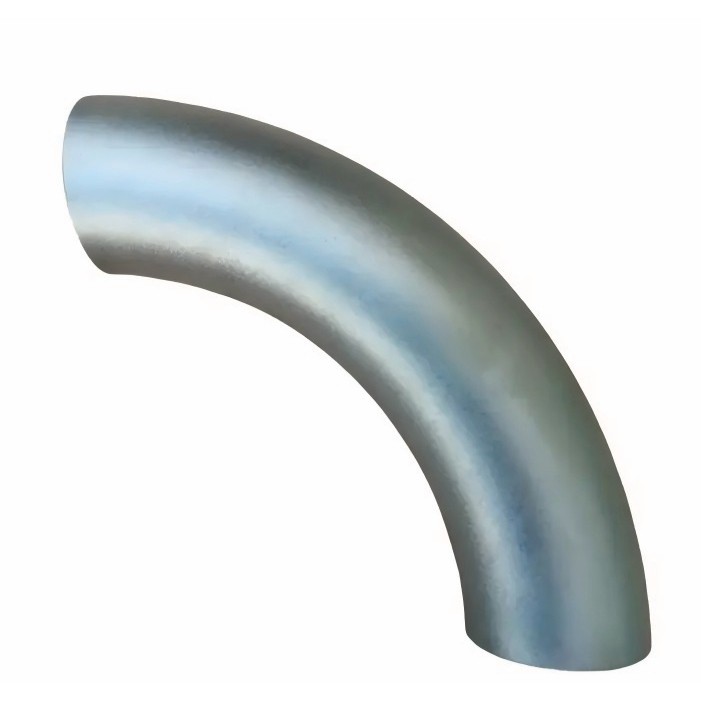
In industries ranging from chemical processing to marine engineering, the choice of piping components directly impacts system longevity and safety. HengDi specializes in manufacturing premium Stainless Steel Long Radius Elbow fittings that excel in corrosive environments. This article explores why these elbows are indispensable for fluid handling systems exposed to acids, salts, and aggressive chemicals.
Key Advantages in Corrosive Fluid Handling
| Advantage | Description | Benefit to System |
|---|---|---|
| Corrosion Resistance | Chromium oxide layer on stainless steel (304/316L) prevents chemical attack | Extended service life in acidic or chloride-rich fluids |
| Reduced Erosion | Long radius (1.5D) design minimizes turbulent flow and particle impact | Lower maintenance frequency for abrasive-corrosive slurries |
| Material Integrity | Austenitic grades resist pitting and crevice corrosion | No contamination of sensitive pharmaceutical or food fluids |
| Pressure Retention | Uniform wall thickness withstands corrosive fluid pressures up to 1000 psi | Safe operation in high-stress chemical lines |
Unlike short radius elbows, the Stainless Steel Long Radius Elbow provides smoother directional changes. This reduces velocity gradients that can accelerate corrosion-erosion synergy. HengDi uses solution-annealed stainless steel to eliminate carbide precipitation, a common weakness in welded elbows.
Performance Comparison: Long Radius vs. Short Radius
| Parameter | Stainless Steel Long Radius Elbow | Standard Short Radius Elbow |
|---|---|---|
| Center-to-face distance | 1.5 × nominal diameter | 1.0 × nominal diameter |
| Pressure drop coefficient (K factor) | 0.15 – 0.25 | 0.30 – 0.45 |
| Recommended for corrosive fluids | Yes, ideal | Not recommended |
| Resistance to chloride stress corrosion | High (with 316L grade) | Moderate to low |
FAQ – Stainless Steel Long Radius Elbow Common Questions
Question 1: Which stainless steel grade is best for handling seawater in a Stainless Steel Long Radius Elbow?
Answer: For seawater or high-chloride environments, HengDi recommends grade 316L stainless steel. The addition of 2-3% molybdenum provides exceptional resistance to pitting and crevice corrosion. For stagnant seawater conditions or elevated temperatures (above 50°C), consider super duplex grades. However, standard 304 should be avoided as chloride levels above 200 ppm can induce stress corrosion cracking within months. Always verify the chloride concentration and operating temperature before selection.
Question 2: How does the bending radius of a Stainless Steel Long Radius Elbow affect flow-induced corrosion?
Answer: A Stainless Steel Long Radius Elbow (1.5D radius) reduces centrifugal forces that push corrosive fluids against the outer wall. Short radius elbows create high-velocity gradients where the outer wall experiences both high flow velocity and shear stress, accelerating erosion-corrosion. The longer radius keeps fluid streamlines more parallel, lowering local turbulence intensity by approximately 40%. This directly reduces the rate of protective oxide layer removal, especially in two-phase flows containing bubbles or solid particles. HengDi designs all elbows to maintain laminar-like flow transition.
Question 3: Can a Stainless Steel Long Radius Elbow be used for alternating acidic and alkaline fluids without rapid degradation?
Answer: Yes, but only if properly passivated. HengDi manufactures Stainless Steel Long Radius Elbow components with electropolished inner surfaces. When alternating between pH extremes (e.g., pH 2 sulfuric acid and pH 12 sodium hydroxide), the passive film can temporarily dissolve and reform. The key is avoiding stagnant conditions during transitions. Continuous flow helps maintain stable passivation. For frequent batch changes, specifying a 316L grade with a nitric acid passivation treatment post-installation extends resistance to general corrosion. Avoid chloride-containing acids like hydrochloric acid at any concentration.
Why HengDi Leads in Corrosive Service Applications
HengDi employs traceable raw materials from approved mills, with full mill test certificates for each Stainless Steel Long Radius Elbow. Dimensional inspections follow ASME B16.9, and optional ferroxyl testing confirms proper passivation. Every elbow is marked with heat numbers for full material traceability – critical for regulated industries.
Contact Us
For technical datasheets, corrosion resistance charts, or a quote on Stainless Steel Long Radius Elbow fittings, reach out to HengDi today. Our engineering team provides grade selection guidance based on your specific fluid chemistry, temperature, and pressure requirements. Contact us via email or the website form to discuss your corrosive fluid handling project.