

What are the failure modes of aluminum battery cooling plate under long-term vibration
2026-04-03
In the evolving landscape of electric vehicle thermal management, the battery cooling plate and associated cooling tubes play a critical role in maintaining cell temperature uniformity. Sinupower, a recognized name in precision thermal components, has observed that aluminum battery cooling plate systems are particularly susceptible to specific failure modes when subjected to prolonged vibration. Understanding these failures is essential for engineers designing durable EV battery packs.
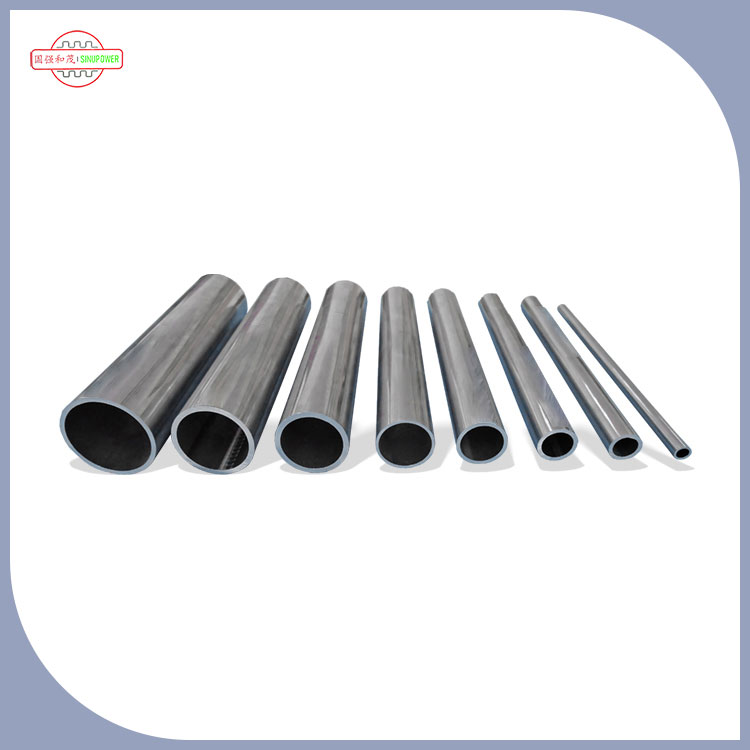
Primary Failure Modes of Aluminum Battery Cooling Plate Under Vibration
Long-term vibration induces mechanical stress cycles that can compromise the integrity of aluminum battery cooling plate assemblies. Below are the most documented failure modes:
| Failure Mode | Description | Root Cause |
|---|---|---|
| Fatigue cracking | Micro-cracks along weld seams or corners | Cyclic stress from vibration exceeding endurance limit |
| Joint detachment | Separation between cooling plate and cooling tubes | Poor brazing quality or thermal expansion mismatch |
| Corrosion-assisted fracture | Crack propagation accelerated by coolant leakage | Vibration-induced wear of protective coating |
| Bolt hole elongation | Enlarged mounting points causing plate misalignment | Repeated shear loads from chassis vibration |
| Coolant tube kinking | Partial or full blockage of flow channels | Resonant vibration causing tube wall buckling |
Why These Failures Matter for EV Applications
A failed battery cooling plate leads to uneven cell temperatures, accelerated capacity loss, and in severe cases, thermal runaway. Sinupower emphasizes that vibration testing must simulate real-world road conditions including potholes, speed bumps, and continuous highway travel.
Battery Cooling Plate and Cooling Tubes FAQ
Question 1: What is the most common vibration-induced failure location on an aluminum battery cooling plate?
Answer: The most common failure location is the brazed joint between the battery cooling plate and the inlet/outlet cooling tubes. This area experiences stress concentration due to differences in wall thickness and material stiffness. Under long-term vibration, microscopic gaps open along the joint, leading to coolant seepage. Once coolant escapes, the aluminum surface loses corrosion protection, and pitting initiates within 200–500 hours of continued operation. Sinupower recommends using reinforced fillet designs and non-destructive helium leak testing after every 1,000 vibration cycles to detect early-stage joint degradation.
Question 2: How does vibration frequency affect the fatigue life of cooling tubes attached to the cooling plate?
Answer: Vibration frequency directly determines the number of stress cycles accumulated over time. Aluminum cooling tubes have a natural resonance range between 25 Hz and 45 Hz. When excitation from the vehicle chassis falls within this range, the tube amplitude can increase by 300–500%, causing fatigue failure in as few as 10⁶ cycles. At frequencies below 15 Hz, failure is dominated by high-amplitude displacement leading to tube kinking. Above 60 Hz, the battery cooling plate behaves more rigidly, and failure shifts to surface wear at contact points. Sinupower advises designers to perform modal analysis early in the pack design phase to shift resonant peaks away from common road vibration spectra.
Question 3: Can the material temper of aluminum prevent vibration-induced cracking in battery cooling plates
Answer: Yes, material temper significantly influences crack resistance. Fully annealed aluminum (O-temper) offers high ductility but low yield strength, causing permanent deformation under vibration. Fully hard temper (H19) resists deformation but lacks fracture toughness, leading to brittle crack initiation after only 500,000 vibration cycles. The optimal choice for battery cooling plate applications is H14 or H16 temper, which balances strength (yield ~145 MPa) and elongation (8–12%). Sinupower has validated that H16 temper aluminum cooling plates with laser-welded cooling tubes achieve over 5 million vibration cycles at 2G acceleration without through-wall cracks. Surface anodizing to MIL-A-8625 Type III further extends fatigue life by reducing micro-motion fretting.
Best Practices for Mitigating Vibration Failures
To extend the operational life of aluminum battery cooling plate systems, Sinupower recommends:
-
Using silicone-based gaskets between mounting brackets and the cooling plate
-
Adding vibration dampers to cooling tubes at 100 mm intervals
-
Selecting brazing filler metals with lower melting points to reduce residual stress
-
Performing random vibration testing per ISO 19453-4 for minimum 22 hours per axis
Contact Us
For customized solutions on aluminum battery cooling plate and cooling tubes that withstand extreme vibration environments, reach out to the engineering team at Sinupower today. Provide your vibration profile and thermal targets, and receive a failure-resistant design within 48 hours. Contact us now to secure your EV battery pack reliability.