

What are the common material grades for stainless steel socket weld flanges and how do they affect corrosion resistance
2026-04-27
When selecting a Stainless Steel Socket Weld Flange for critical piping systems, understanding material grades and their impact on corrosion resistance is essential. At HengDi, we manufacture high-performance Stainless Steel Socket Weld Flanges that meet ASTM and ASME standards, ensuring long-term reliability in demanding environments.
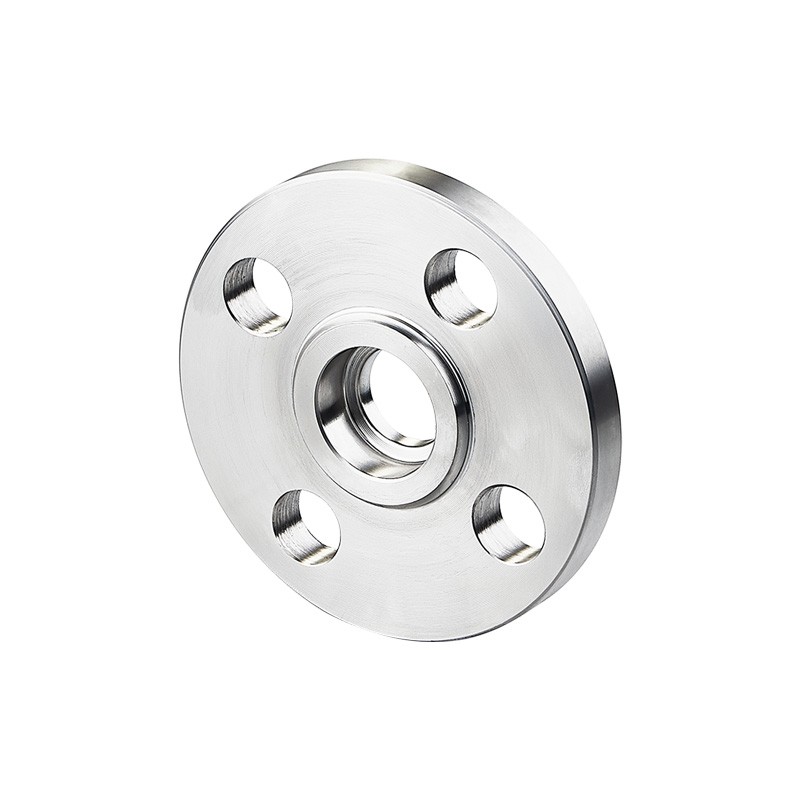
Common Material Grades and Their Corrosion Resistance
The table below outlines the most widely used stainless steel grades for Stainless Steel Socket Weld Flange production and how each resists different types of corrosion.
| Material Grade | Key Alloying Elements | Corrosion Resistance Characteristics | Typical Applications |
|---|---|---|---|
| ASTM A182 F304 | 18% Cr, 8% Ni | Good resistance to organic acids and mild corrosive media. Susceptible to intergranular corrosion after welding. | General chemical processing, food handling, low-pressure steam systems. |
| ASTM A182 F304L | 18% Cr, 8% Ni (low carbon) | Enhanced resistance to intergranular corrosion after welding due to reduced carbide precipitation. | Welded systems where post-weld annealing is impractical. |
| ASTM A182 F316 | 16% Cr, 10% Ni, 2% Mo | Superior resistance to pitting and crevice corrosion, especially in chloride environments. | Marine applications, pulp and paper mills, pharmaceutical equipment. |
| ASTM A182 F316L | 16% Cr, 10% Ni, 2% Mo (low carbon) | Maximum resistance to sensitization and excellent performance in acidic chloride solutions. | Offshore platforms, chemical tankers, desalination plants. |
| ASTM A182 F321 | 17% Cr, 9% Ni, Ti stabilization | Excellent resistance to intergranular corrosion at elevated temperatures (450–800°C). | High-temperature exhaust systems, thermal oxidizers. |
How Material Grades Affect Corrosion Resistance
The corrosion resistance of a Stainless Steel Socket Weld Flange depends on the passive chromium oxide layer. Higher chromium content improves general corrosion resistance, while molybdenum (as in F316 grades) directly targets chloride-induced pitting. Low-carbon variants (L grades) prevent chromium carbide precipitation at grain boundaries during welding—a common cause of weld decay.
For example, in a marine environment with stagnant seawater, using an F304 Stainless Steel Socket Weld Flange could result in pitting within months. Switching to F316L from HengDi extends service life to over 15 years due to molybdenum’s protective effect.
Frequently Asked Questions About Stainless Steel Socket Weld Flanges
Question 1: Can I use a Stainless Steel Socket Weld Flange in highly acidic chemical lines without risk of rapid failure?
Answer: It depends entirely on the acid type and concentration. For dilute sulfuric or organic acids at ambient temperature, ASTM A182 F316L offers acceptable performance. However, for hot concentrated hydrochloric or sulfuric acids, even premium stainless steel grades will corrode quickly. In such cases, HengDi recommends upgrading to duplex stainless steel (e.g., F51) or nickel alloy flanges. Always perform a corrosion rate test based on your exact process fluid chemistry before final selection.
Question 2: How does the low carbon content in F304L and F316L improve the long-term reliability of a Stainless Steel Socket Weld Flange after welding?
Answer: When a standard F304 Stainless Steel Socket Weld Flange is welded, heat exposure in the 425–870°C range causes chromium carbides to form at grain boundaries. This depletes local chromium, leaving a narrow zone vulnerable to intergranular corrosion. The low carbon content (maximum 0.03% in L grades) minimizes carbide formation, so the heat-affected zone retains its full chromium concentration. For socket weld connections that cannot be post-weld heat treated, F304L or F316L from HengDi is the only safe choice for corrosive environments.
Question 3: What is the most cost-effective Stainless Steel Socket Weld Flange grade for food processing applications with regular caustic cleaning cycles?
Answer: For food plants using alternating acid and alkaline cleaning (CIP procedures), ASTM A182 F316 provides the best balance of cost and performance. The 2% molybdenum resists pitting from chloride-based sanitizers, while the higher nickel content improves resistance to caustic stress corrosion cracking. Although F304 is cheaper, it often shows surface staining after 6–12 months of CIP cycles. HengDi supplies F316 Stainless Steel Socket Weld Flanges with full traceability and electropolished bore options for hygienic requirements.
Conclusion
Selecting the correct material grade for a Stainless Steel Socket Weld Flange directly determines corrosion resistance, maintenance costs, and system safety. Low-carbon and molybdenum-bearing grades are essential for harsh or welded service. HengDi stocks a full range of certified flanges from F304 to F321, each pressure-tested and marked per ASTM specifications.
Contact us today for technical datasheets or a quote on Stainless Steel Socket Weld Flanges tailored to your exact process conditions. Email HengDi or fill out the inquiry form on our website to receive a same-day response from our corrosion engineering team.