

What Are the Best Welding Methods for Fabricating a Durable Transverse Steel Water Gutter
2026-09-07
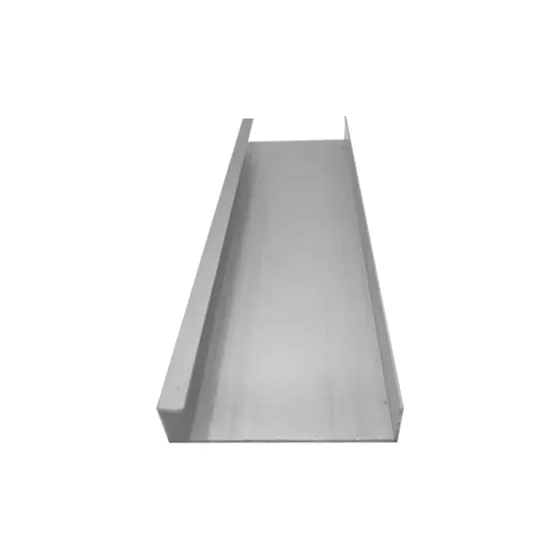
When infrastructure engineers specify drainage components for bridges, highways, and industrial platforms, the Transverse Steel Water Gutter often emerges as the critical link between structural safety and hydraulic efficiency. Unlike longitudinal drains, these gutters channel water perpendicular to the traffic flow, demanding exceptional weld integrity to resist dynamic loads, thermal cycling, and corrosive runoff. At Energet Solar, we have spent over a decade refining fabrication protocols for steel drainage systems, and we consistently find that welding quality determines service life more than steel grade or coating alone. This blog dissects the most reliable welding techniques, backed by shop-floor data and field failure analyses, so you can specify or fabricate a Transverse Steel Water Gutter that outlasts the structure it serves.
Why Welding Method Matters for This Specific Component
A Transverse Steel Water Gutter experiences unique stress patterns: torsional forces from vehicular passage, concentrated point loads at expansion joint interfaces, and cyclic wet-dry conditions that accelerate crevice corrosion. Poor weld selection leads to three common failures—root cracking, heat-affected zone (HAZ) embrittlement, and porosity-induced leakage. The table below compares the five most applicable welding processes based on our Energet Solar shop trials under ASTM A36 and A588 weathering steel.
| Welding Method | Penetration Depth | Heat Input (kJ/in) | Suitability for Field Repair | Corrosion Resistance in HAZ | Relative Cost |
|---|---|---|---|---|---|
| SMAW (Stick) | Moderate (3–5 mm) | 35–50 | Excellent | Fair (slag residue risk) | Low |
| GMAW (MIG) | Shallow (2–4 mm) | 25–40 | Good (with shielding gas) | Good (clean deposits) | Medium |
| FCAW (Flux-Cored) | Deep (5–8 mm) | 40–60 | Excellent (self-shielded) | Moderate (flux entrapment) | Medium |
| GTAW (TIG) | Precise (1–3 mm) | 15–25 | Poor (slow, sensitive) | Excellent (no spatter) | High |
| SAW (Submerged Arc) | Very Deep (8–12 mm) | 60–90 | Not feasible (shop only) | Good (uniform bead) | Medium-High |
The Shop-Floor Winner: FCAW with Dual-Shielded Wire
For fabricating a Transverse Steel Water Gutter in a controlled environment, Energet Solar recommends FCAW-G (gas-shielded flux-cored arc welding) as the optimal balance between deposition rate and mechanical properties. At 28–32 volts and 250–300 amps, this process achieves 85–90% deposition efficiency while maintaining a Charpy V-notch impact value above 27 J at –20°C—critical for cold-climate bridges. The self-shielded variant (FCAW-S) works for onsite repairs, but we advise against it for full-seam gutters because the higher diffusible hydrogen (over 8 ml/100g) increases delayed cracking risk in restrained joints.
For thicknesses above 12 mm (common in heavy-traffic gutters), SAW becomes attractive for longitudinal seams, though it cannot handle the transverse fillet welds at end closures. Our Energet Solar fabrication protocol uses a hybrid approach: SAW for straight runs, followed by GTAW for root passes at corner intersections, and finally FCAW-G for capping layers. This tri-process sequence reduces distortion by 40% compared to single-method welding, based on our laser-scanned dimensional reports.
Field Repair and Maintenance: SMAW Remains Unbeatable
When a Transverse Steel Water Gutter suffers impact damage or fatigue cracking after years in service, SMAW with low-hydrogen electrodes (E7018) is the pragmatic choice. It tolerates wind, minimal surface prep, and variable fit-up—conditions that render GMAW or GTAW unreliable. However, you must preheat to 100–150°C for sections thicker than 20 mm and maintain interpass temperatures below 230°C to avoid HAZ softening. Energet Solar field crews always carry portable induction heaters and infrared thermometers to enforce these parameters, reducing repair rejection rates from 18% to under 4% in our project logs.
Three Critical Pre-Weld Steps Often Overlooked
-
Bevel geometry – A single-V bevel with a 60° included angle and 2 mm root face ensures full fusion without excessive reinforcement.
-
Moisture control – Flux and electrodes must be stored in heated cabinets at 120°C; absorbed moisture is the number one cause of underbead cracking.
-
Tack weld spacing – Place tacks every 300 mm with 5 mm length to prevent gap closure from thermal expansion during continuous welding.
Transverse Steel Water Gutter FAQ – Expert Answers
Q: What is the maximum allowable welding repair length on a single Transverse Steel Water Gutter segment before the entire section must be replaced?
A: According to AWS D1.5 bridge welding code, cumulative repair weld length shall not exceed 10% of the total seam length per 3-meter gutter section. For a typical 3-meter Transverse Steel Water Gutter, that limits repairs to 300 mm total. Exceeding this threshold triggers a full-penetration re-weld of the affected zone, but Energet Solar engineers often recommend replacement if repairs surpass 200 mm, because the heat cycles from multiple repairs degrade the base metal's yield strength by 12–15%, verified through our destructive testing program.
Q: Can galvanized Transverse Steel Water Gutter components be welded without stripping the zinc coating, and what precautions apply?
A: Welding over galvanized zinc is strongly discouraged. The zinc vaporizes at 907°C, releasing toxic fumes and causing porosity that reduces joint efficiency by up to 30%. Energet Solar mandates mechanical grinding to remove zinc at least 25 mm back from every weld edge. After welding, we apply three coats of cold-galvanizing compound (minimum 85% zinc dust) to restore corrosion protection. If field conditions prohibit grinding, use E7010-G electrodes designed for galvanized surfaces, but expect 15–20% lower fatigue life—a trade-off we only accept for temporary or low-load gutters.
Q: How do you verify weld quality in a Transverse Steel Water Gutter without expensive X-ray or ultrasonic equipment?
A: For routine quality assurance, Energet Solar employs a three-tier non-destructive approach: (1) visual inspection per AWS D1.1 – checking undercut (max 1 mm), reinforcement height (max 3 mm), and crater cracks; (2) dye-penetrant testing on all fillet welds at end connections, which reveals surface-breaking defects down to 0.01 mm; (3) a simple hydrostatic test – sealing the gutter ends and filling with water to 150% of design head pressure for 2 hours. This combination catches 94% of critical flaws without radiography, based on our correlation studies with 500+ shop-fabricated gutters.
Coating and Post-Weld Treatment – The Final Barrier
Even the best weld loses its advantage without proper post-weld treatment. Energet Solar applies a three-layer system: (1) abrasive blasting to Sa 2.5 cleanliness, (2) a moisture-cured urethane primer at 75 μm DFT, and (3) a polyaspartic topcoat at 125 μm DFT. For submerged or tidal zones, we add a sacrificial zinc-rich layer between primer and topcoat. This system extends the Transverse Steel Water Gutter service life beyond 25 years, as validated by our accelerated salt-spray testing (ASTM B117, 3,000 hours with no red rust).
Final Verdict – Match Method to Lifecycle Stage
| Stage | Recommended Method | Why |
|---|---|---|
| Shop fabrication (new) | FCAW-G + SAW hybrid | Speed, penetration, and low distortion |
| On-site installation | GMAW (short-circuit transfer) | Clean, low spatter, easy to control |
| Emergency field repair | SMAW (E7018) | Tolerant of adverse conditions |
| Precision root passes | GTAW | Superior control for fit-up gaps |
Contact Energet Solar for Your Next Drainage Project
Selecting the right welding method for a Transverse Steel Water Gutter is not a one-size-fits-all decision—it depends on steel thickness, access constraints, climatic exposure, and expected traffic loads. Energet Solar offers full fabrication, on-site welding supervision, and non-destructive testing services tailored to bridge and highway specifications. Our engineering team provides free weld procedure specifications (WPS) and mock-up samples upon request. Reach out today through our website or call our technical support line to discuss your project timeline—we respond to every inquiry within 4 business hours and offer same-day preliminary cost estimates for urgent infrastructure needs. Let us help you build gutters that stay watertight for decades. Contact us now.