

What Are the Best Gasket Materials for an Aluminum Enclosure for Electromagnetic Shielding
2026-09-03
When designing protective housings for sensitive electronics, the choice of gasket material can make or break the shielding effectiveness of your Aluminum Enclosures for Electromagnetic Shielding. While the aluminum body provides excellent conductivity and lightweight durability, the seams, doors, and access panels remain vulnerable points where electromagnetic interference (EMI) can leak in or out. At Zhongyilong, we have tested dozens of gasket formulations across military, telecom, and medical applications, and we know that no single material fits every scenario. The right gasket depends on frequency range, compression force, environmental exposure, and lifecycle cost.
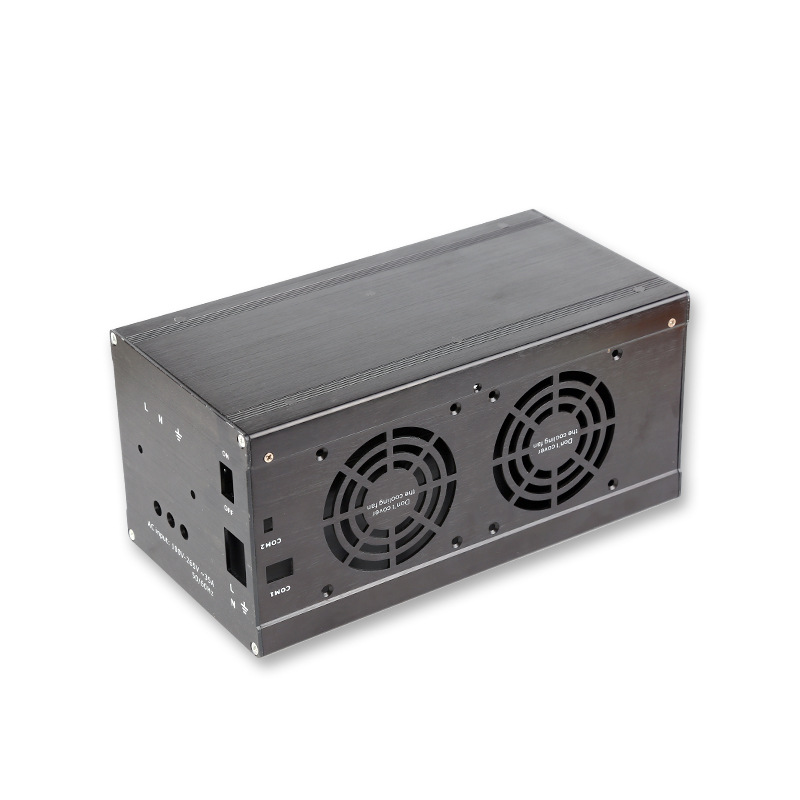
Why Gaskets Matter in Aluminum Enclosures
Aluminum alone cannot maintain a continuous conductive path across mating surfaces. Surface oxides, microscopic roughness, and mechanical tolerances create gaps that act as slot antennas. A properly selected gasket bridges these gaps, restoring the Faraday cage integrity of your Aluminum Enclosures for Electromagnetic Shielding. Without it, attenuation can drop by 40 dB or more at GHz frequencies—rendering the enclosure useless for its primary purpose.
Top Gasket Materials Compared
Below is a technical comparison of the most common gasket materials used in Aluminum Enclosures for Electromagnetic Shielding, ranked by performance and application fit.
| Material Type | Best Frequency Range | Compression Force | Environmental Resistance | Typical Applications |
|---|---|---|---|---|
| Beryllium-Copper (BeCu) Finger Stock | DC to 40 GHz | Low (gentle on aluminum) | Excellent (corrosion-resistant with plating) | Military, aerospace, high-reliability |
| Conductive Silicone (Ag/Ni/C-filled) | DC to 10 GHz | Medium | Good (UV and moisture seal) | Outdoor telecom, automotive sensors |
| Oriented Wire (Monel or Aluminum) | DC to 1 GHz (magnetic fields) | Medium-High | Fair (prone to oxidation without coating) | Power supply enclosures, low-frequency MRI |
| Carbon-Filled Elastomer | DC to 2 GHz | Low-Medium | Moderate (limited chemical resistance) | Consumer electronics, cost-sensitive projects |
| Knitted Mesh (Tin-plated Copper) | DC to 18 GHz | Low (spring-temper) | Good (plating dependent) | Rack-mount servers, test equipment |
Selection Criteria from a Mechanical Standpoint
Beyond electrical performance, mechanical factors are equally critical. Zhongyilong recommends evaluating:
-
Clamping pressure – Aluminum is soft; excessive force deforms mating flanges. BeCu finger stock requires only 1–2 N/cm, while solid elastomers may need 5–10 N/cm.
-
Gasket travel – Conductive silicones accommodate 15–25% compression, while knitted mesh rebounds better after repeated door cycles.
-
Galvanic compatibility – Pairing bare aluminum with copper-based gaskets accelerates corrosion. Always specify plated or coated versions (e.g., tin over copper, or silver over BeCu).
For high-vibration environments (e.g., aerospace), we consistently select BeCu finger stock because its mechanical spring action maintains contact even under thermal expansion and shock loads—something elastomers cannot guarantee.
Environmental and Longevity Considerations
Gaskets in Aluminum Enclosures for Electromagnetic Shielding often face salt spray, humidity, temperature swings, and industrial solvents. Conductive silicones with fluorosilicone bases outperform standard silicones in fuel and oil exposure. However, for outdoor base stations, Zhongyilong prefers knitted mesh with a tin plating over copper, because it offers superior weathering and retains conductivity after 500+ mating cycles. Carbon-filled elastomers, while cheap, lose conductivity after 200 hours of damp-heat testing—a risk few mission-critical designs can afford.
Frequently Asked Questions About Gaskets for Aluminum EMI Enclosures
Q1: Can I use a conductive adhesive tape instead of a mechanical gasket for my Aluminum Enclosure for Electromagnetic Shielding?
A1: Adhesive tapes (e.g., copper foil or conductive acrylic) work only for permanent, non-removable joints. They fail in access panels or doors because compression is absent—tape relies on peel strength, not normal force. Over time, adhesive creep and oxidation degrade the contact resistance from <10 mΩ to >100 mΩ within months. For removable covers, always use a compressible gasket with defined deflection. Tape is acceptable only for prototype or one-time-sealed enclosures where maintenance is never required.
Q2: How do I choose between a conductive elastomer and a metal mesh gasket for my Aluminum Enclosure for Electromagnetic Shielding?
A2: Choose conductive elastomer when you need both EMI shielding and environmental sealing (IP67 or higher) in a single part—ideal for outdoor or wash-down areas. Choose metal mesh when frequency exceeds 10 GHz, because elastomers have higher skin-effect losses and particle-to-particle contact becomes inconsistent at millimeter-wave bands. Metal mesh also handles shear movement better, making it suitable for sliding or hinged doors. If you face both high-frequency and sealing needs, consider a hybrid design: an inner metal gasket for shielding and an outer silicone bulb for weatherproofing.
Q3: Does the plating on a gasket affect the corrosion resistance of my Aluminum Enclosure for Electromagnetic Shielding?
A3: Absolutely. Aluminum is anodic, so pairing it with a cathodic metal (e.g., bare copper or silver) creates a galvanic cell in humid conditions, leading to pitting of the aluminum flange. Always select gaskets with tin, nickel, or zinc plating over copper or beryllium-copper. Alternatively, choose aluminum-filled conductive elastomers, which match the galvanic potential of the enclosure. At Zhongyilong, we mandate a minimum of 48-hour salt-spray testing per ASTM B117 for any gasket-aluminum combination used in marine or roadside equipment.
Practical Recommendations
For 90% of commercial and industrial applications, Zhongyilong recommends this decision matrix:
-
Below 6 GHz, low cycle count (<100 openings) → Conductive silicone (Ag/Al-filled) offers best cost-to-performance.
-
Above 6 GHz, high cycle count (>500) → BeCu finger stock with tin plating.
-
Magnetic field suppression (30 Hz – 100 kHz) → Oriented Monel wire or mu-metal combined with aluminum shell.
-
Extreme temperature (-55°C to +125°C) → Knitted mesh with stainless steel core and silver plating.
Always request attenuation test data from your gasket supplier—not just resistivity specs. A gasket with 0.005 Ω·cm bulk resistance can still perform poorly if surface oxide prevents edge-to-edge contact under the actual clamping force of your design.
Final Thoughts
Selecting the best gasket material is not a one-size-fits-all decision. It demands a balanced trade-off between electrical continuity, mechanical endurance, corrosion protection, and cost. At Zhongyilong, we engineer custom gasket solutions for Aluminum Enclosures for Electromagnetic Shielding, including CNC-machined flange profiles and pre-installed gaskets that reduce assembly time and improve repeatability. Our lab measures shielding effectiveness up to 40 GHz using coaxial transmission-line and nested-reverberation methods, ensuring your enclosure meets both FCC and military standards.
Contact us today for a free gasket selection consultation. Share your frequency range, environmental class, and door-cycle requirements, and our engineering team will return a tailored recommendation within 48 hours. Visit our website or email to start your project—because the right gasket is the difference between a shielded box and a leaky antenna.