

What are the advantages and disadvantages of a trapezoidal screw with right and left hand configurations
2026-04-24
When engineers evaluate motion control solutions, the Trapezoidal Screw Right and Left Hand design often emerges as a specialized yet powerful option. Maitu, a trusted name in precision transmission components, frequently addresses customer inquiries about this configuration. Understanding both its strengths and weaknesses is essential for optimal application.
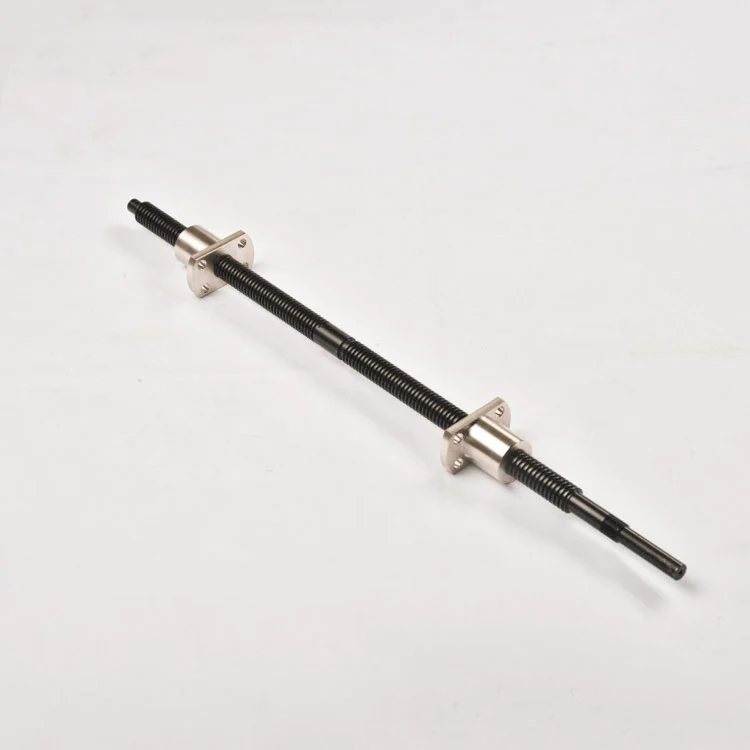
Advantages of Right and Left Hand Trapezoidal Screws
| Advantage | Description |
|---|---|
| Balanced axial load distribution | Opposing threads cancel axial forces, reducing bearing stress |
| Compact symmetrical motion | Enables two workpieces to move toward or away from each other simultaneously |
| Eliminates separate reverse mechanisms | No need for additional gears or linkages to reverse direction |
| High positional repeatability | Minimal backlash due to opposing thread engagement |
The primary benefit of a Trapezoidal Screw Right and Left Hand system lies in its ability to center or separate loads with a single rotating input. For example, in centering clamps or adjustable presses, Maitu components help achieve synchronous movement without complex control systems.
Disadvantages of Right and Left Hand Trapezoidal Screws
| Disadvantage | Explanation |
|---|---|
| Higher manufacturing cost | Requires precision thread cutting on both directions |
| Increased risk of cross-threading | Improper engagement during assembly can damage both thread starts |
| Limited availability in stock sizes | Most suppliers offer only standard single-start trapezoidal screws |
| More complex lubrication needs | Opposing thread directions can trap debris unevenly |
Engineers should note that while a Trapezoidal Screw Right and Left Hand design improves symmetry, it also demands stricter alignment during installation. Maitu recommends precise housing tolerances to avoid premature wear.
Practical Applications
Common uses include:
-
Centering vises and grippers
-
Automatic door actuators
-
Presses with dual moving platens
-
Adjustable rail systems
FAQ: Trapezoidal Screw Right and Left Hand
Question 1: Can I replace a standard trapezoidal screw with a right and left hand version without changing other components?
Answer: No. A Trapezoidal Screw Right and Left Hand requires matching nuts with opposite internal thread directions. Additionally, the end bearings and housing must accommodate bi-directional axial loads. Maitu advises consulting dimensional drawings because lead and pitch specifications differ from single-start screws. Retrofitting often requires new nut assemblies, thrust bearings, and sometimes modified mounting brackets to maintain correct backlash.
Question 2: How does lubrication differ between a right and left hand trapezoidal screw and a conventional one?
Answer: A conventional trapezoidal screw pushes lubricant consistently along one helical path. In contrast, a Trapezoidal Screw Right and Left Hand has two opposing spiral directions that can push lubricant toward the center or outward ends depending on rotation. Maitu recommends using high-viscosity grease with extreme pressure additives, applied more frequently (every 200 operating hours instead of 500). For dirty environments, automatic lubricators are preferred because debris trapped in one thread direction may not clear through the opposite side.
Question 3: What is the maximum recommended travel speed for a right and left hand trapezoidal screw?
Answer: Speed limits depend on screw diameter and lead, but generally a Trapezoidal Screw Right and Left Hand should not exceed 600–800 mm/min for diameters under 40 mm. Higher speeds cause overheating due to increased friction from opposing thread faces. Maitu testing shows that exceeding 1000 mm/mm without cooling reduces thread life by 60%. For faster applications, either reduce lead or switch to ball screw versions. Always calculate critical speed based on unsupported length and end fixity type.
Why Choose Maitu for Your Trapezoidal Screw Needs
With years of experience in precision screw manufacturing, Maitu offers custom Trapezoidal Screw Right and Left Hand solutions including matched nuts, end machining, and surface treatments. Every component meets DIN 103 standards.
Contact Us
Ready to optimize your linear motion system with a Trapezoidal Screw Right and Left Hand? Contact Maitu today for engineering support, free CAD models, and fast quotation. Visit our official website or email our technical team directly to discuss your application requirements.
