

Is CNC Steel the Most Reliable Choice for High Load Precision Parts?
2025-12-18
I’ve worked with enough metal parts to know this pattern by heart: a prototype looks perfect, the first small batch ships, and then real-world stress exposes tiny weaknesses you didn’t budget for. If you’re choosing CNC Steel for brackets, shafts, fixtures, housings, or structural components, you’re probably chasing two things at once: tight tolerances and long-term durability. In this article, I’ll break down how I evaluate CNC Steel parts for strength, machinability, corrosion risk, and repeatability, and I’ll show the checkpoints that help buyers avoid common pain points. I’ll also share how KGL approaches precision expectations in a way that fits real procurement workflows.
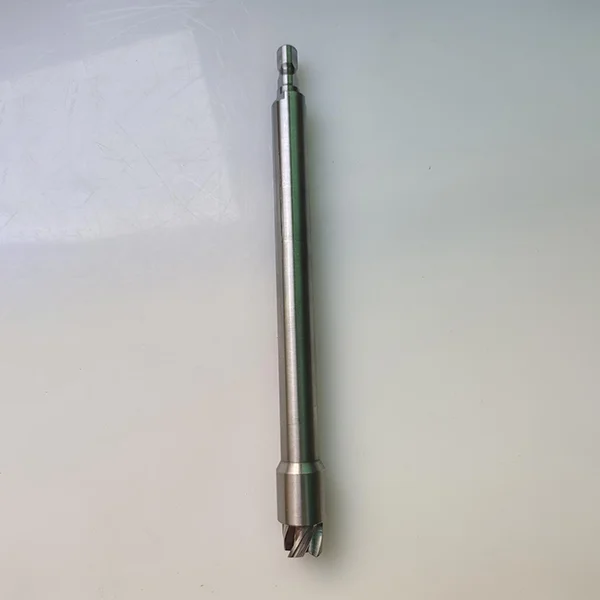
Why do buyers choose CNC steel parts instead of aluminum or castings?
If your parts see load, vibration, impact, or wear, steel is often the “sleep well at night” option. I usually see CNC Steel selected when the customer is tired of bent parts, stripped threads, or dimensional drift that shows up after assembly.
- Higher strength and stiffness for load-bearing components and fixtures that must hold shape.
- Better wear resistance for sliding contact, repeated fastening, or abrasive environments.
- More stable threads for torque cycles, especially where rework or maintenance is common.
- Reliable repeatability when you need batch-to-batch consistency in real assemblies, not just on paper.
That said, the real advantage isn’t “steel is strong” as a slogan. The advantage is that CNC Steel lets you hit precision geometry while keeping a large safety margin against deformation and fatigue. When you’re buying parts for long service life, that margin is often worth more than the lowest possible unit price.
How do I pick the right steel grade for CNC machining?
This is where many projects quietly go wrong. If you only say “steel” on a drawing, you’re inviting inconsistent sourcing, unpredictable machining time, and questionable performance. I prefer to start with the end-use questions: load, corrosion exposure, heat, weldability, and whether you need post-machining heat treatment.
Here’s a practical comparison I use when discussing options with suppliers
| Steel Type | What it is good at | Common buyer pain point | My guidance |
|---|---|---|---|
| Carbon steel | Cost-effective strength, general structural parts | Rust risk without protection | Great for indoor or coated parts where corrosion is controlled |
| Alloy steel | Higher strength after heat treatment, fatigue resistance | Warpage after heat treatment if not controlled | Use when strength-to-size matters and define heat-treat + inspection steps |
| Stainless steel | Corrosion resistance, cleaner appearance, harsh environments | Longer machining time and tool wear | Choose when corrosion cost is bigger than machining cost |
| Tool steel | Wear resistance for dies, fixtures, high-cycle contact | Lead time and process complexity | Reserve for true wear problems where other grades fail |
In my experience, the best outcomes happen when the buyer states the functional requirement clearly and the supplier confirms machinability and process flow. This is also where a precision-focused manufacturer like KGL can help: instead of treating material as a checkbox, the discussion becomes “What must this part survive, and how do we prove it?”
What tolerances and surface finishes are realistic for CNC steel parts?
I’m careful with tolerance promises because unrealistic specs are the fastest way to create delays and cost spikes. With CNC Steel, tight tolerances are achievable, but you need to match tolerance bands to function, size, and inspection method.
- Functional tolerances for mating features should be tight only where assembly depends on them.
- Non-critical tolerances can be relaxed to reduce cycle time and improve yield.
- Surface finish expectations should match the application, such as sealing, sliding contact, or cosmetic needs.
If you’re requesting extremely fine tolerances across the whole part “just in case,” I’ll push back every time. The smarter strategy is to identify critical-to-function features and let the rest breathe. That approach improves both cost and delivery without sacrificing performance.
Which design details usually cause delays or extra cost?
Most machining headaches are avoidable if you spot them early. When customers come to me frustrated, it’s usually not because the supplier “can’t machine steel,” but because the design quietly forces slow setups or fragile tooling.
Design traps I watch for in CNC steel parts
- Deep narrow pockets that require long tools and slow feeds.
- Sharp internal corners that demand tiny cutters or EDM workarounds.
- Thin walls that vibrate and lose accuracy during finishing passes.
- Threads near edges that strip or chip during assembly.
- Unclear datums that make inspection and repeatability inconsistent.
If you want stable production, design for inspection as much as you design for machining. For CNC Steel, that means clean datum structures, realistic radii, and a drawing that tells the shop exactly what matters.
How can I reduce risk in sampling and mass production?
I treat sampling like an investment in certainty. The goal isn’t to “get a sample,” it’s to confirm that the production method can repeatedly hit your requirements.
- Share the assembly context such as mating part tolerances, torque requirements, and alignment constraints.
- Request a clear process plan including setups, key tools, and inspection points.
- Lock the material and finish so the sample matches the production build.
- Validate critical dimensions using the same measurement method you will accept in mass production.
If you’re sourcing CNC Steel parts for a program that can’t afford line stops, this step matters. And yes, this is where the supplier’s discipline matters as much as the machine itself. If you want a starting point for a product page reference, you can review KGL’s CNC steel overview and then talk through your specific part requirements in plain language.
What quality checks should I ask for before shipment?
Quality control shouldn’t feel like a mystery box. I prefer simple, auditable checkpoints that match how the part will be used. When I buy CNC Steel components, I typically ask for the following depending on the project risk level.
- Material verification such as grade confirmation and heat number traceability when required.
- Dimensional inspection for critical features with recorded results.
- Thread gauging and fit confirmation for fastener interfaces.
- Surface and edge condition checks to prevent assembly injury and cosmetic rejects.
- Batch consistency checks especially when multiple machines or shifts are involved.
If a supplier can’t explain their inspection plan clearly, that’s a risk signal. A good partner will show you how they control variability rather than just claiming “high precision.”
When should I consider finishing and heat treatment for CNC steel?
Finishing and heat treatment are not optional “nice-to-haves” when the environment or performance demands them. They can also change dimensions, which is why process sequencing matters.
- Choose heat treatment when strength, hardness, or fatigue life is the key objective, and plan for possible distortion control.
- Choose coating or plating when corrosion is the main failure mode, and confirm thickness impact on fits.
- Choose passivation for stainless applications where surface cleanliness supports corrosion resistance.
For CNC Steel, the most common buyer mistake is adding a finish late without re-checking tolerances. If a bore fit is tight, you should plan the finishing approach before the first chip is cut.
Are you ready to source CNC steel parts without the usual surprises?
If you’re tired of tolerance disputes, inconsistent batches, or parts that “look fine” but fail after assembly, I recommend treating CNC Steel sourcing like a controlled process instead of a one-time purchase. That’s exactly where a precision manufacturer like KGL can be valuable, because the conversation stays focused on measurable requirements and repeatable outcomes. If you want faster quoting, clearer manufacturability feedback, and parts that match your drawings and your real-world use case, contact us with your files and key requirements and let’s turn your spec into reliable production.