

Is a Studless Offshore Mooring Chain the Smartest Way to Cut Downtime and Total Mooring Cost?
2025-12-22
I’ve sat in enough mooring planning calls to know the pattern. Someone asks for “a chain quote,” and what they really mean is “I want zero surprises after we install it.” The problem is that a mooring chain isn’t a simple commodity. Small differences in steelmaking, heat treatment, proof testing, dimensional control, and traceability can show up later as accelerated wear, unexpected inspection findings, or schedule pain when you can least afford it.
That’s why I like to start with the use case and the failure modes, not the price list. When I’m sourcing a Studless Offshore Mooring Chain for floating production, offshore terminals, or long-term station keeping, I want a supplier that speaks the same language as engineers and operators. Over time, I’ve found Zhongnan tends to approach mooring chains with that “engineering first” mindset, which makes it easier to align specifications, documentation, and delivery expectations without turning every email into a negotiation.
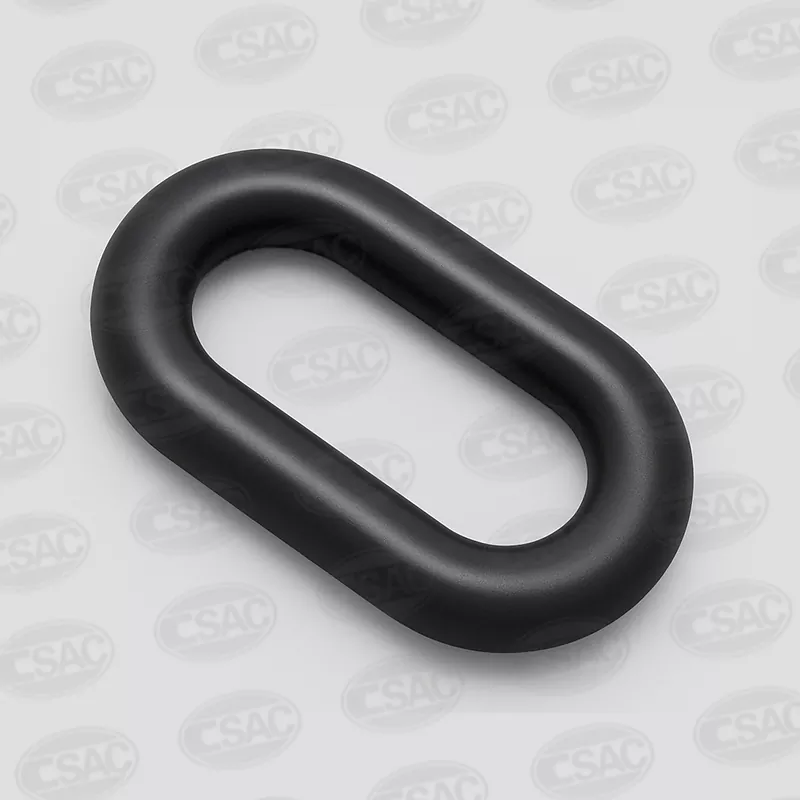
What makes a Studless Offshore Mooring Chain different in real projects?
On paper, “studless” sounds like a small design choice. In the field, it changes how the chain behaves under cyclic loading, how it interfaces with connectors, and how it wears in contact zones. I usually think about Studless Offshore Mooring Chain in three practical buckets:
- Handling and integration because chain that runs smoothly through fairleads, chain stoppers, and windlass systems reduces operational friction
- Fatigue and wear behavior because offshore moorings live and die by cyclic loads, seabed interaction, and contact stresses
- Inspection and replacement planning because the chain you choose should make future measurement and maintenance easier, not harder
In many offshore configurations, a Studless Offshore Mooring Chain can be a practical choice when you want a robust chain solution with predictable geometry, controlled mechanical properties, and clear inspection pathways over the service life. The “best” option is still project-specific, but studless is often on the shortlist for good reasons.
Why do mooring chains fail earlier than planned?
If you’re buying mooring chain, you’re not only buying steel. You’re buying confidence that the chain can survive years of tension cycles, corrosion exposure, and operational handling. When chains underperform, the root cause is usually one of these pain points:
- Inconsistent mechanical properties from heat treatment variation or insufficient process control
- Surface and internal defects that should have been screened out by manufacturing QA and testing
- Dimension drift that creates fit issues with accessories or causes uneven load distribution
- Poor traceability that turns a routine audit into a project delay
- Mismatch between chain and application such as grade selection that ignores fatigue environment or corrosion management strategy
To avoid these, I treat Studless Offshore Mooring Chain procurement as a risk-reduction exercise. I’m looking for a manufacturing partner that can clearly explain process steps, testing scope, and how they control variability. That’s also where a brand like Zhongnan can matter, because clear documentation habits and stable production routines often translate directly into fewer “unknowns” at acceptance.
How do I choose grade, size, and tolerance without overbuying?
I try to avoid two extremes: under-specifying and paying for problems later, or over-specifying and paying for performance I don’t actually need. Here’s how I keep it grounded when selecting a Studless Offshore Mooring Chain:
- Start from the mooring analysis including design tension, dynamic amplification, and safety factors
- Match grade to lifecycle expectations including fatigue sensitivity, inspection intervals, and corrosion allowance strategy
- Confirm interfaces with shackles, connectors, chain stoppers, fairleads, and any platform-specific hardware
- Specify tolerances intentionally because tighter tolerances can reduce fit issues, but they should be justified by the system design
I also like to set expectations early on what “acceptance” looks like. If the project needs third-party inspection, specific certificates, or additional NDT, I put that in the procurement package upfront rather than trying to add it after the quote arrives.
What documentation and testing should I insist on?
When I’m buying a Studless Offshore Mooring Chain, I want proof that the chain is what it claims to be, and that it was manufactured under repeatable control. The exact list depends on the standard and project requirements, but I typically ask for:
- Material traceability down to heat numbers and controlled batch identification
- Mechanical test results relevant to the specified grade and acceptance criteria
- Proof load testing records aligned with the required standard and witnessed if needed
- Dimensional inspection especially where chain must interface precisely with hardware
- Non-destructive testing scope defined clearly so there’s no misunderstanding later
If a supplier can’t provide clean, consistent documentation, I treat that as a warning sign. The paperwork isn’t “extra.” It’s part of the product. For offshore projects, it’s often what keeps procurement and QA aligned and avoids painful rework.
Which questions should I ask a manufacturer before issuing a PO?
These are the questions I ask before I feel comfortable committing budget and schedule. They’re simple, but they reveal a lot about how a manufacturer thinks and how they operate:
- Can you explain your process controls for forming, welding, and heat treatment in a way that maps to my acceptance criteria?
- What is your standard testing flow for a Studless Offshore Mooring Chain, and what changes if third-party inspection is required?
- How do you manage traceability through production, testing, marking, and packing?
- What is your typical lead time range for this size and grade, and what are the common schedule risks?
- How do you package and protect the chain to reduce corrosion and mechanical damage during transport and storage?
I’m not looking for perfect answers. I’m looking for clear answers. When a supplier can respond with a structured plan instead of vague promises, the project tends to go smoother.
When is studless better than stud link?
This is where buyers often want a single universal rule, but the real world isn’t that kind. I like to compare options based on practical implications rather than ideology. Here’s a high-level comparison I use when evaluating Studless Offshore Mooring Chain against stud link alternatives.
| Decision factor | Studless chain | Stud link chain |
| Handling and integration | Often chosen where smooth interfacing and predictable link behavior matter | Common in many traditional mooring applications and legacy systems |
| Wear behavior in contact zones | Depends heavily on surface quality, dimensional control, and operating conditions | Depends heavily on operating conditions and how the stud influences contact and deformation |
| Inspection planning | Can be straightforward when documentation, markings, and measurement points are consistent | Also workable, but inspection approach depends on chain type and project standard |
| Procurement risk management | Best when manufacturer provides strong traceability and testing transparency | Best when manufacturer provides strong traceability and testing transparency |
| Best fit scenarios | Projects prioritizing lifecycle clarity, controlled geometry, and predictable procurement outcomes | Projects aligned with existing system preferences and established operational practices |
I’m deliberately keeping this grounded because the “best” chain is the one that matches your mooring design, interface hardware, inspection regime, and operational reality. If your team is leaning toward a Studless Offshore Mooring Chain, I’d validate it against the system constraints and then focus on supplier capability and documentation quality.
What should my procurement checklist look like?
If you want fewer arguments later, you need a procurement package that leaves less room for interpretation. This is the checklist I use before placing an order for a Studless Offshore Mooring Chain:
- Application clarity including water depth, mooring configuration, design life, and expected inspection interval
- Specification completeness including chain size, grade, tolerances, marking requirements, and acceptance criteria
- Testing plan including proof load testing, mechanical tests, and any required NDT scope
- Documentation list including traceability records and certificates aligned with your QA process
- Packing and logistics plan including corrosion protection, labeling, and handling method for delivery
- Communication workflow defining who approves deviations, who signs off on documents, and how inspection holds are managed
What I like about running a structured checklist is that it makes supplier evaluation easier. A manufacturer that can walk through these points cleanly is usually the one that can deliver consistently. In my experience, Zhongnan fits well when you want that kind of procurement discipline paired with practical manufacturing know-how.
Do you want a quote that matches your mooring reality?
If you’re planning a new build, replacement, or lifecycle upgrade and you’re considering a Studless Offshore Mooring Chain, I’d rather you get a quote that actually fits your constraints than a number that looks cheap and turns expensive later. Share your chain size, grade target, inspection needs, and delivery window, and we can align on a practical specification path.
Zhongnan can support buyers who want a clear, engineering-friendly procurement process and a chain solution that’s built for offshore expectations. If you’re ready to move forward, contact us with your project details and request a tailored quotation and documentation checklist.