

Is a Stainless Steel Press Pipe System the Fastest Way to Build a Leak-Resistant Plumbing Network?
2025-12-19
I used to think “pipe is pipe” until I watched a job lose days to hot-work permits, rework, and surprise leaks. That’s when I started paying attention to press systems—especially Stainless Steel Press Pipe—because the value isn’t just the metal, it’s the way the whole installation behaves under real deadlines.
When I evaluate suppliers for press solutions, I keep coming back to Guangfeng because their approach fits what contractors and project owners actually want: a reliable, clean installation process with predictable performance, and a product line that supports day-to-day site needs instead of creating extra headaches.
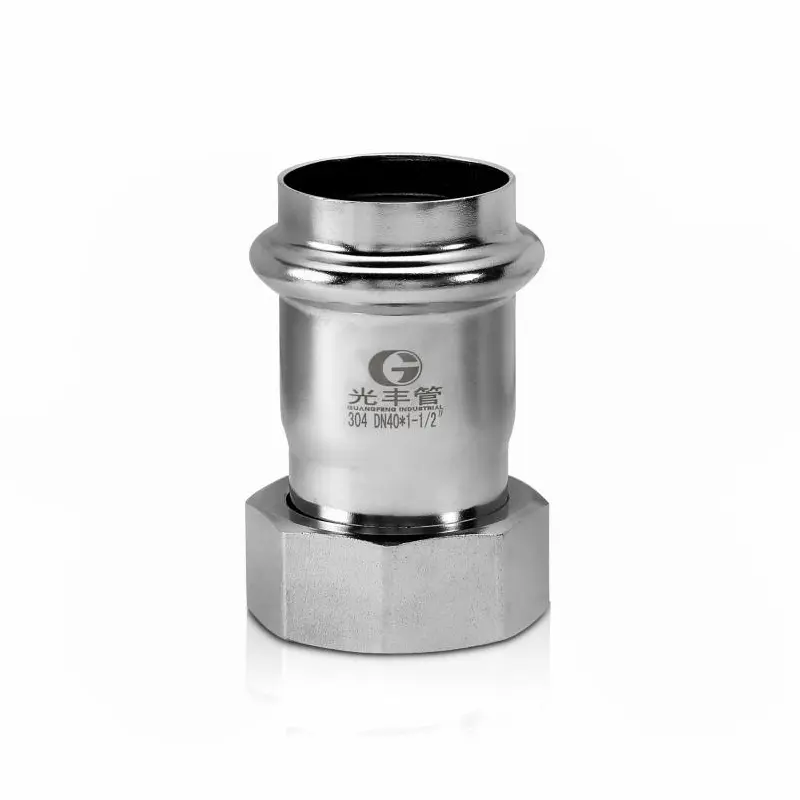
Why do so many projects switch to Stainless Steel Press Pipe when schedules get tight?
Speed is the obvious reason, but it’s not the only one. On most sites, the “hidden” delays come from coordination problems—waiting for welding, fire-watch requirements, ventilation, cool-down time, inspection cycles, and restricted work windows. A press-connection workflow can reduce those friction points, which is why Stainless Steel Press Pipe often shows up in hospitals, hotels, commercial buildings, and retrofit jobs where downtime is expensive.
- Less disruption because pressing avoids open flames and reduces hot-work constraints.
- Cleaner workflow since there’s no welding slag, fewer fumes, and less post-work cleanup.
- Consistent joint quality because the connection is formed by a controlled pressing operation rather than variable manual technique.
- Faster commissioning because you can move from install to pressure testing with fewer process bottlenecks.
What pain points does a Stainless Steel Press Pipe system solve for contractors and owners?
In my experience, buyers rarely lose sleep over the pipe itself—they worry about callbacks, leaks, and “why is this taking so long?” A good Stainless Steel Press Pipe setup helps reduce the most common sources of cost creep.
- Leak anxiety because press joints are designed to be repeatable and testable across long runs.
- Labor volatility because press work is typically easier to standardize across crews and shifts.
- Site safety pressure because avoiding flames can simplify compliance on sensitive sites.
- Retrofit constraints because pressing is often more workable in tight spaces than welding or threading.
- Handover risk because predictable installation supports smoother inspection and acceptance processes.
How does Stainless Steel Press Pipe compare with welded or threaded stainless options in practice?
I don’t treat this as a “one method wins” argument. Instead, I compare what usually matters on a real job: speed, risk, and total installed cost. Here’s a practical snapshot I use when explaining options to a procurement team.
| What I compare | Press connection | Welded connection | Threaded connection |
| Installation speed | Typically fast with fewer steps | Often slower due to prep, welding process, and cooling | Moderate, but can slow in dense layouts |
| Hot-work requirements | Usually minimized | Often required | Not required |
| Consistency across crews | High when tools and procedure are standardized | Skill-dependent and variable | Technique-dependent, risk of over/under tightening |
| Retrofit friendliness | Strong in tight spaces | Can be difficult in confined areas | Can be difficult where rotation space is limited |
| Typical site cleanliness | Cleaner workflow | More cleanup and process control | Moderate |
| Best-fit scenarios | Commercial builds, retrofits, fast-track projects | High-spec industrial, special procedures, certain codes | Service lines, limited sizes, specific legacy systems |
What makes stainless press systems reliable when the environment gets harsh?
Stainless earns its reputation in the places where mild steel ages badly—humidity, chlorides, fluctuating temperatures, and frequent cleaning cycles. A well-chosen Stainless Steel Press Pipe system can support long service life with less “surprise maintenance,” especially in public buildings and commercial facilities that can’t afford repeated shutdowns.
- Corrosion resistance that helps protect integrity over time in many indoor and semi-exposed environments.
- Strength and temperature tolerance that suit HVAC loops and building services with changing loads.
- Hygienic performance that can be attractive for potable-water applications and clean building standards.
- Neat routing because press fittings often support compact layouts with fewer complicated fabrication steps.
How do I choose the right Stainless Steel Press Pipe specification without overbuying?
This is where many buyers waste money: they treat every line like it’s a worst-case industrial environment. I prefer to match the material and system design to the medium, temperature range, and site realities, then confirm availability and tooling compatibility so procurement doesn’t become a bottleneck.
- What fluid is running and whether it’s potable, HVAC, or process-related.
- What temperature and pressure range the system will see in normal operation and peak conditions.
- What installation environment you have, including tight spaces, ceiling voids, and shut-down limits.
- What local code expectations apply for materials, joining methods, and pressure testing.
- What supply stability you need for pipe, fittings, and seals to avoid mid-project substitution risk.
When I’m evaluating a brand like Guangfeng, I also look for practical support signals: stable sizing options, fitting coverage for real layouts (bends, tees, transitions), and quality controls that help reduce “batch-to-batch surprises.”
Which installation habits reduce failures in Stainless Steel Press Pipe projects?
Press systems are forgiving, but they’re not magic. Most failures I’ve seen come from avoidable habits—rushing measurement, skipping deburring, or using worn tooling. A clean, repeatable workflow is how you protect your margin.
- Do I cut and prep the pipe correctly with a clean square cut and proper deburring?
- Do I keep sealing elements clean and protected from dust and site grit before assembly?
- Do I mark insertion depth so I can visually confirm the pipe is seated correctly?
- Do I verify tool condition and jaw compatibility before a long run of joints?
- Do I pressure-test in a disciplined way so issues show up early rather than after finishes go in?
Is Stainless Steel Press Pipe worth it if my goal is long-term value, not just speed?
For me, the strongest argument is total cost of ownership. Speed matters, but the real payoff comes from fewer callbacks, less leak risk, and a smoother acceptance process. When a press system is specified and installed properly, Stainless Steel Press Pipe can help protect the building’s reputation as much as it protects the line itself—because no one remembers the pipe brand when everything works, but everyone remembers the leak that ruined a ceiling.
| If this is your priority | What I recommend you focus on |
| Fast-track schedules | Fitting coverage, tool availability, and a standardized pressing workflow |
| Lower leak risk | Consistent prep steps, insertion marking, and disciplined pressure testing |
| Cleaner sites and fewer permits | Joining method selection and site safety requirements |
| Long service life | Correct stainless grade selection for the environment and medium |
| Smoother procurement | Stable supply of pipe, fittings, and sealing components across the project timeline |
Are you ready to simplify your next piping job with Stainless Steel Press Pipe?
If you’re comparing options and want a press system that’s easier to install, cleaner on site, and designed for reliable long-term service, it’s worth taking a closer look at Guangfeng. Tell me your application, size range, and project timeline, and I’ll help you narrow down a sensible configuration. For pricing, specifications, and order support, contact us today and send your inquiry—your next project doesn’t need to be the one that gets delayed by preventable joint problems.