

How to Select the Right Wear Resistant Hot Rolled Heavy Steel Plate Structural
2026-09-10
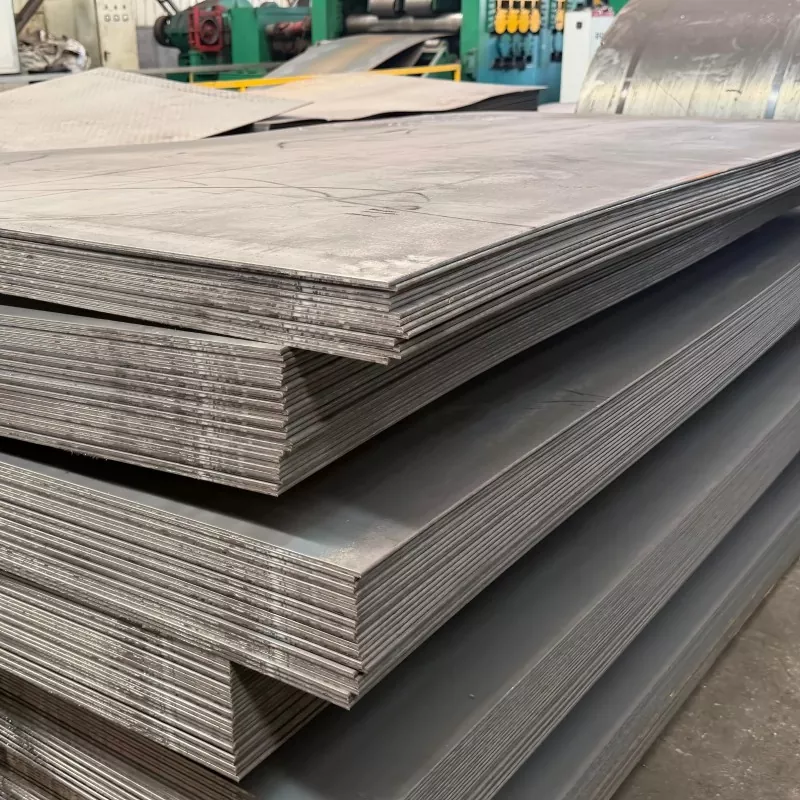
Selecting the proper Wear Resistant Hot Rolled Heavy Steel Plate Structural is one of the most consequential decisions for engineers managing high-abrasion environments. Whether you operate in mining, construction, or heavy manufacturing, the wrong plate leads to premature failure, unplanned downtime, and escalating costs. Sanhe has supplied thousands of tons of Wear Resistant Hot Rolled Heavy Steel Plate Structural to projects across more than 40 countries, and the selection principles below reflect that field experience.
Start With the Application Environment
The first step is matching plate grade to actual wear conditions. Abrasion is not a single phenomenon — it varies by impact angle, particle size, moisture, and temperature.
| Wear Type | Typical Conditions | Recommended Focus |
|---|---|---|
| Sliding abrasion | Chutes, hoppers, conveyor liners | High hardness surface |
| Impact abrasion | Crusher liners, dump truck beds | Hardness plus toughness balance |
| Gouging abrasion | Bucket teeth, ripper tips | High carbon, alloy-rich chemistry |
| Corrosive abrasion | Wet coal, salt handling | Added corrosion resistance |
Sanhe recommends beginning with a site survey rather than a grade specification. Measuring actual wear rates on existing liners gives a reliable baseline.
Evaluate Mechanical Properties Beyond Hardness
Hardness alone does not determine performance. The Wear Resistant Hot Rolled Heavy Steel Plate Structural must also deliver adequate yield strength, elongation, and weldability.
| Property | Why It Matters | Typical Range |
|---|---|---|
| Surface hardness | Direct wear resistance | 360–550 HBW |
| Yield strength | Structural integrity under load | 800–1,200 MPa |
| Elongation | Resistance to cracking | 10–20% |
| Impact toughness | Performance in cold climates | 20–50 J at -20°C |
| Carbon equivalent | Weldability without preheat | ≤0.45 CEV |
A plate that is too hard may crack during forming or welding. Sanhe engineers routinely advise balancing hardness against fabrication requirements.
Confirm Rolling and Heat Treatment Quality
Wear Resistant Hot Rolled Heavy Steel Plate Structural derives its properties from controlled rolling followed by quenching and tempering. Inconsistent cooling produces hardness variation across the plate surface, which creates uneven wear and localized failure.
Ask suppliers for:
-
Mill test certificates with heat numbers
-
Hardness maps across the plate length and width
-
Ultrasonic inspection reports for internal soundness
-
Traceability from steel melt to finished plate
Sanhe provides full documentation with every shipment, allowing fabricators to verify compliance before cutting.
Match Thickness to Wear Life Targets
Thickness selection should be based on desired service life, not guesswork. A simple formula guides most projects:
Required thickness = wear rate (mm/month) × target service months + safety allowance
Overspecifying thickness adds weight and cost. Underspecifying causes frequent replacement. Sanhe technical staff help customers calculate the optimal thickness for their specific duty cycle.
Consider Fabrication and Installation
Even the best Wear Resistant Hot Rolled Heavy Steel Plate Structural fails if it cannot be fabricated efficiently. Consider:
-
Cutting method: plasma, laser, or waterjet
-
Forming radius: tighter bends require higher ductility
-
Welding procedure: preheat and consumable selection
-
Fastening: bolt-on versus weld-on liner systems
Sanhe supplies plates with consistent flatness and dimensional tolerance, reducing fit-up time and rework.
Frequently Asked Questions
What is the difference between wear resistant plate and standard structural steel?
Wear Resistant Hot Rolled Heavy Steel Plate Structural contains higher carbon and alloy content, delivering surface hardness of 360–550 HBW compared with 120–180 HBW for standard structural steel, which translates to three to eight times longer service life in abrasive conditions.
Can Wear Resistant Hot Rolled Heavy Steel Plate Structural be welded without preheating?
It depends on thickness and carbon equivalent. Thin plates below 20 mm with CEV under 0.40 may be welded with controlled heat input, but thicker sections generally require preheat of 100–150°C and low-hydrogen consumables to prevent cold cracking.
How do I verify the quality of Wear Resistant Hot Rolled Heavy Steel Plate Structural before purchase?
Request mill test certificates, hardness test results at multiple points, ultrasonic inspection reports, and chemical composition analysis. A reputable supplier such as Sanhe provides complete traceability and permits third-party inspection before shipment.
Ready to specify the right plate for your application? Sanhe offers free technical consultation, sample testing, and competitive quotations for Wear Resistant Hot Rolled Heavy Steel Plate Structural in any quantity. Contact our engineering team today to discuss your wear challenges and receive a tailored recommendation within 24 hours.