

How to Choose the Right Tee Stainless Steel Welding for Industrial Applications?
2025-12-22
Tee Stainless Steel Welding components are essential in industrial piping systems, providing reliable junctions where fluid, gas, or other materials require a branching connection. This article explores Tee Stainless Steel Welding types, specifications, common industrial applications, and detailed answers to frequently asked questions. The main purpose is to guide engineers, procurement specialists, and project managers in selecting the appropriate Tee Stainless Steel Welding products for their operations.
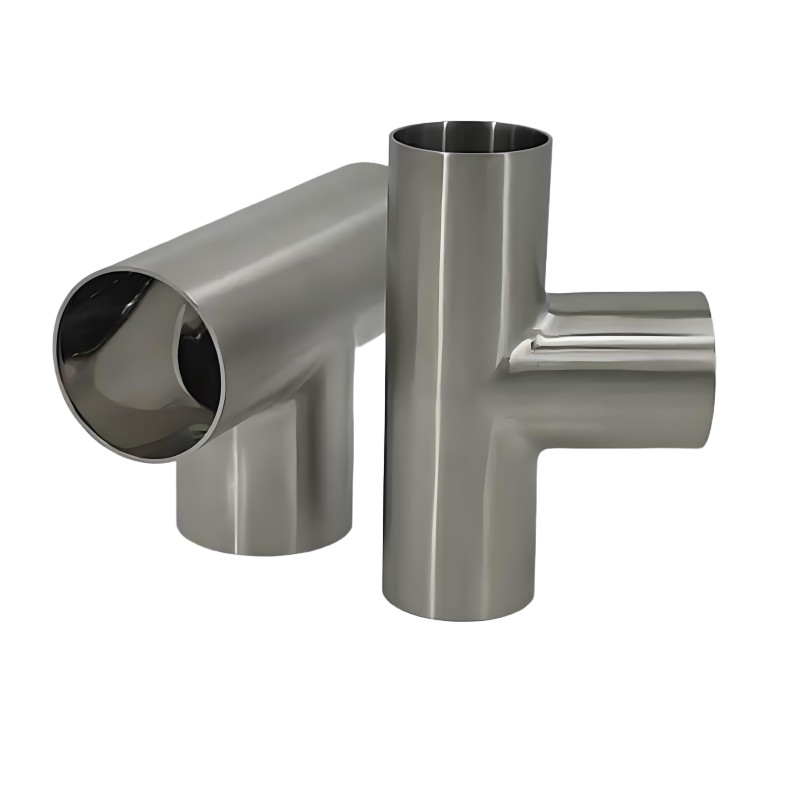
Table of Contents
Introduction and Product Overview
Tee Stainless Steel Welding, often referred to as a stainless steel welded tee, is a pipe fitting that allows for a 90-degree branch from a main pipeline. Constructed from high-quality stainless steel, these tees ensure excellent corrosion resistance, durability, and suitability for high-pressure applications.
The central focus of this article is to provide an in-depth understanding of Tee Stainless Steel Welding parameters, application contexts, and selection guidance, ensuring the optimal match for various industrial requirements.
Types and Applications of Tee Stainless Steel Welding
Types
- Equal Tee: All three ends have the same diameter, typically used for splitting flow evenly.
- Reducing Tee: One branch has a smaller diameter, suitable for connecting different pipe sizes.
- Long Weld Tee: Designed for high-pressure or specialized systems requiring extended weld surfaces.
Applications
- Chemical and petrochemical pipelines
- Food and beverage processing systems
- Pharmaceutical manufacturing pipelines
- Water treatment and supply systems
- Oil and gas industrial applications
Technical Specifications of Tee Stainless Steel Welding
The following table summarizes common technical parameters used in Tee Stainless Steel Welding selection:
| Parameter | Description | Standard |
|---|---|---|
| Material | Stainless Steel 304, 316, 316L | ASTM A403 |
| Diameter | 1/2" to 48" | ASME B16.9 |
| Wall Thickness | Schedule 10 to Schedule 160 | ASME B36.19 |
| End Type | Butt Weld | ANSI B16.25 |
| Pressure Rating | 150# to 2500# | ASME B16.5 |
| Surface Finish | Polished, Pickled & Passivated | Customer Requirement |
Common Questions about Tee Stainless Steel Welding
1. How is Tee Stainless Steel Welding manufactured?
Tee Stainless Steel Welding is typically manufactured using high-precision welding techniques, including butt welding and automated TIG/MIG welding processes. The process ensures minimal internal stress and excellent structural integrity, essential for high-pressure systems.
2. What are the key factors to consider when selecting a Tee Stainless Steel Welding?
When selecting Tee Stainless Steel Welding, consider material grade, pipe size, wall thickness, pressure rating, corrosion resistance, and compliance with industry standards. Application-specific conditions such as temperature, fluid type, and flow rate are critical to avoid premature failure.
3. Can Tee Stainless Steel Welding be used in corrosive environments?
Yes, high-grade stainless steels such as 316 and 316L offer excellent corrosion resistance against acids, salts, and other aggressive chemicals. Proper surface finishing and welding techniques further enhance durability in harsh environments.
4. How does reducing tee differ from equal tee in performance?
Reducing tees redirect flow from a larger main line to a smaller branch, which may induce pressure drops. Equal tees maintain uniform flow distribution. Proper hydraulic calculations are necessary for optimal system performance when using reducing tees.
Conclusion and Contact
Selecting the right Tee Stainless Steel Welding is crucial for ensuring system reliability, efficiency, and long-term operational safety. HengDi provides high-quality Tee Stainless Steel Welding with strict adherence to ASTM and ASME standards, serving multiple industrial sectors worldwide. For tailored solutions and expert guidance, contact us today.