

How to Choose the Right Round Steel for Industrial Applications?
2026-03-23
Article Summary
Round steel is a fundamental material widely used across construction, manufacturing, machinery, and infrastructure projects. However, many buyers face challenges such as selecting the correct grade, ensuring consistent quality, and balancing cost with performance. This guide provides a structured explanation of round steel, including its properties, applications, selection criteria, and practical tips. It is designed to help engineers, procurement managers, and business owners make informed purchasing decisions while avoiding common mistakes.
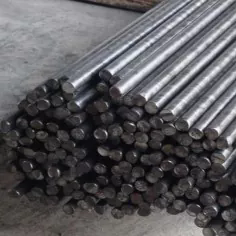
Table of Contents
- 1. What Is Round Steel?
- 2. Key Characteristics of Round Steel
- 3. Common Applications and Use Cases
- 4. Technical Specifications and Parameters
- 5. Types of Round Steel
- 6. How to Choose the Right Round Steel
- 7. Common Customer Pain Points and Solutions
- 8. FAQs
- 9. Conclusion
1. What Is Round Steel?
Round steel refers to a solid cylindrical steel product with a circular cross-section. It is manufactured through hot rolling, cold drawing, or forging processes. Due to its uniform shape and mechanical strength, round steel is widely used in structural and mechanical applications.
Unlike rebar, which typically has surface ribs for reinforcement, round steel features a smooth surface, making it suitable for machining, shafts, fasteners, and precision components.
2. Key Characteristics of Round Steel
Understanding the inherent properties of round steel is essential for selecting the right material.
- High Strength: Suitable for load-bearing structures
- Excellent Machinability: Ideal for turning, drilling, and milling
- Uniform Cross-Section: Ensures consistent mechanical performance
- Corrosion Resistance: Enhanced with coatings or alloying elements
- Versatility: Applicable across multiple industries
These properties make round steel a reliable choice for both heavy-duty and precision engineering applications.
3. Common Applications and Use Cases
Round steel is used in a wide range of industries due to its adaptability and durability.
- Construction: structural supports and frameworks
- Automotive: shafts, axles, and engine components
- Machinery: gears, fasteners, and tools
- Energy: transmission components and pipelines
- Manufacturing: custom fabricated parts
Its ability to withstand mechanical stress while maintaining dimensional stability makes it indispensable in modern engineering.
4. Technical Specifications and Parameters
| Parameter | Description |
| Diameter Range | 6mm to 500mm or customized |
| Length | 6m, 9m, 12m or as required |
| Material Grades | Carbon Steel, Alloy Steel, Stainless Steel |
| Surface Finish | Black, Bright, Polished |
| Production Process | Hot Rolled, Cold Drawn, Forged |
| Tolerance | According to international standards |
| Standards | ASTM, DIN, GB, JIS |
Manufacturers like Tianjin Shunchen provide consistent quality control and customizable specifications to meet diverse industrial requirements.
5. Types of Round Steel
Selecting the correct type of round steel depends on the intended application and performance requirements.
- Carbon Steel Round Bar: Cost-effective and widely used
- Alloy Steel Round Bar: Enhanced strength and wear resistance
- Stainless Steel Round Bar: Superior corrosion resistance
- Cold Drawn Round Steel: Higher precision and smoother finish
Each type offers unique advantages, making it important to align material properties with operational demands.
6. How to Choose the Right Round Steel
Choosing the right round steel involves evaluating multiple technical and commercial factors.
- Application Requirements: Load, stress, and environmental conditions
- Material Grade: Match mechanical properties with usage
- Dimensional Accuracy: Critical for machining applications
- Surface Finish: Impacts corrosion resistance and aesthetics
- Supplier Reliability: Ensures consistent quality and delivery
A reliable supplier like Tianjin Shunchen can provide technical support and customized solutions, helping customers reduce risk and improve efficiency.
7. Common Customer Pain Points and Solutions
Problem 1: Inconsistent Quality
Solution: Work with certified suppliers and request material test reports to ensure compliance with standards.
Problem 2: Incorrect Material Selection
Solution: Clearly define application requirements and consult technical experts before purchasing.
Problem 3: Surface Defects
Solution: Specify surface finish requirements and conduct inspections upon delivery.
Problem 4: Delivery Delays
Solution: Choose suppliers with stable production capacity and proven logistics systems.
8. FAQs
Q1: What is the difference between round steel and rebar?
Round steel has a smooth surface and is mainly used for machining and structural components, while rebar has ribs and is used for reinforced concrete.
Q2: Can round steel be customized?
Yes, it can be customized in terms of diameter, length, material grade, and surface finish based on project requirements.
Q3: How do I ensure the quality of round steel?
Request certification documents, perform inspections, and choose reputable manufacturers with strict quality control processes.
Q4: Is stainless round steel worth the higher cost?
For environments requiring corrosion resistance, stainless steel offers long-term durability and reduces maintenance costs.
9. Conclusion
Round steel plays a vital role in modern industrial applications due to its strength, versatility, and adaptability. Selecting the right type, grade, and specification is essential for achieving optimal performance and cost efficiency. By understanding material properties and working with trusted suppliers, businesses can avoid common pitfalls and ensure project success.
Tianjin Shunchen is committed to delivering high-quality round steel products tailored to diverse industrial needs, supported by reliable production and professional service.
For detailed product information and customized solutions, contact us today to enhance your supply chain efficiency and secure dependable material support for your projects.