

How to Choose the Right Pipe Fitting Tee?
2026-02-05
Article Summary
A Pipe Fitting Tee is a critical component in fluid transportation systems, enabling the division or combination of flow within pipelines. Selecting the correct tee fitting directly affects system safety, efficiency, and long-term operating costs. This article provides a structured and practical guide on how to choose the right Pipe Fitting Tee by examining materials, manufacturing standards, pressure ratings, connection types, and application scenarios. It is designed to help engineers, procurement managers, and project owners avoid common mistakes and make informed decisions for industrial, commercial, and infrastructure projects.
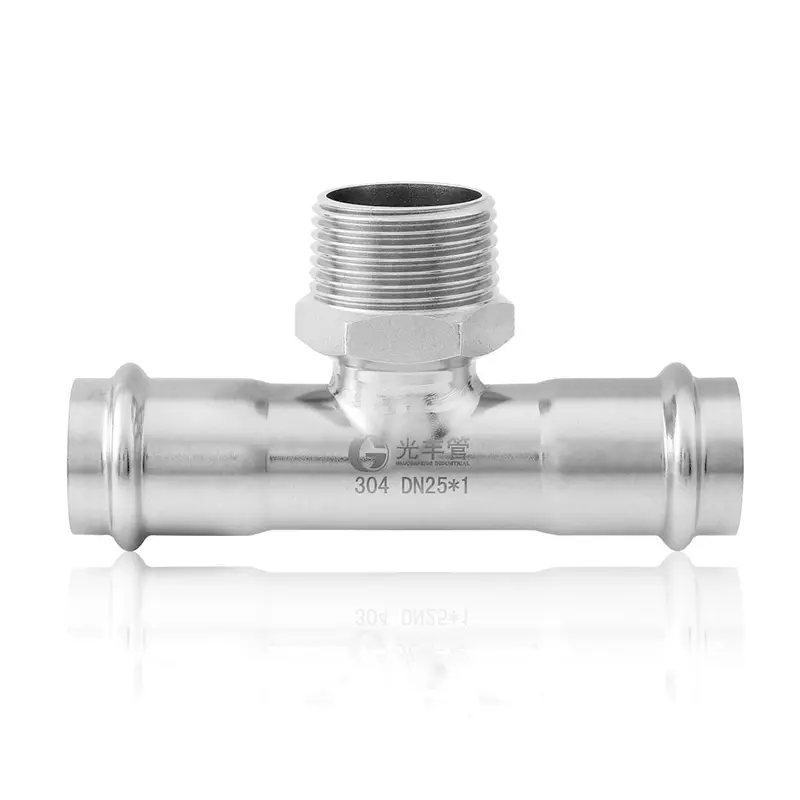
Table of Contents
- Article Outline
- What Is a Pipe Fitting Tee?
- Common Applications of Pipe Fitting Tee
- Main Types of Pipe Fitting Tee
- Material Selection Considerations
- Standards and Specifications
- How to Choose the Right Pipe Fitting Tee
- Key Selection Parameters Table
- Quality Control and Manufacturing Process
- Frequently Asked Questions
- Conclusion and Contact Us
Article Outline
- Basic definition and function of Pipe Fitting Tee
- Industry applications and usage environments
- Structural and dimensional variations
- Material and pressure considerations
- Step-by-step selection guidance
- Practical FAQs based on real project needs
What Is a Pipe Fitting Tee?
A Pipe Fitting Tee is a type of pipe fitting that features three openings, arranged in a T-shaped configuration. It allows fluid or gas flow to be split into two directions or combined from two sources into one main line. Tee fittings are widely used in piping systems where branching is required without compromising flow stability.
Depending on the system design, a Pipe Fitting Tee can be manufactured with equal diameters on all outlets or with a reduced branch size. The performance of the entire pipeline network often depends on the accuracy, strength, and compatibility of this single component.
Common Applications of Pipe Fitting Tee
Pipe Fitting Tee products are used across multiple industries due to their versatility and reliability. Typical applications include:
- Oil and gas transmission pipelines
- Chemical processing and petrochemical plants
- Water supply and drainage systems
- Power generation and thermal systems
- Construction and HVAC installations
- Food, beverage, and pharmaceutical pipelines
Each application imposes different requirements on pressure resistance, corrosion tolerance, and dimensional precision, making correct selection essential.
Main Types of Pipe Fitting Tee
Understanding the structural variations of Pipe Fitting Tee helps narrow down suitable options:
- Equal Tee: All three outlets have the same diameter, commonly used for balanced flow distribution.
- Reducing Tee: The branch outlet has a smaller diameter, ideal for controlled flow diversion.
- Straight Tee: Designed for minimal flow resistance along the main run.
- Lateral Tee: Features a branch at an angle, typically 45 degrees, to reduce turbulence.
Material Selection Considerations
Material choice determines durability, safety, and service life. Common materials include:
- Carbon Steel: Suitable for high-pressure and high-temperature systems.
- Stainless Steel: Offers excellent corrosion resistance for aggressive environments.
- Alloy Steel: Used in demanding industrial conditions requiring enhanced strength.
- Low-Temperature Steel: Designed for cryogenic or cold-region applications.
Manufacturers like Guangfeng provide Pipe Fitting Tee products in a wide range of materials to match specific operational requirements.
Standards and Specifications
Compliance with international standards ensures interchangeability and safety. Common standards include:
- ASME / ANSI specifications
- EN and DIN standards
- GB and JIS standards
When selecting a Pipe Fitting Tee, it is essential to confirm that dimensions, tolerances, and pressure ratings align with the overall piping design.
How to Choose the Right Pipe Fitting Tee
Choosing the right Pipe Fitting Tee involves a systematic evaluation process:
- Confirm pipe size, wall thickness, and schedule
- Determine operating pressure and temperature
- Identify fluid or gas properties, including corrosiveness
- Select appropriate connection type such as welded or threaded
- Verify compliance with project and regional standards
Ignoring any of these factors may lead to leakage, premature failure, or costly downtime.
Key Selection Parameters Table
| Parameter | Description |
|---|---|
| Nominal Size | Defines the pipe diameter compatibility |
| Material Grade | Determines strength and corrosion resistance |
| Pressure Rating | Ensures safe operation under working conditions |
| Connection Type | Butt-weld, socket-weld, or threaded |
| Standard | ASME, DIN, EN, or equivalent |
Quality Control and Manufacturing Process
High-quality Pipe Fitting Tee products undergo strict inspection processes, including dimensional checks, material verification, and pressure testing. Advanced manufacturers focus on precision forging or forming, followed by heat treatment and surface finishing to ensure consistent performance.
Guangfeng emphasizes controlled manufacturing procedures to deliver reliable pipe fittings suitable for long-term industrial use.
Frequently Asked Questions
Q1: Can a Pipe Fitting Tee handle high-pressure systems?
Yes, when manufactured with suitable materials and pressure ratings, it can perform reliably in high-pressure environments.
Q2: What is the difference between equal and reducing tee?
An equal tee has the same diameter on all outlets, while a reducing tee features a smaller branch outlet.
Q3: How long does a Pipe Fitting Tee typically last?
Service life depends on material, operating conditions, and maintenance, but high-quality fittings are designed for long-term use.
Conclusion and Contact Us
Selecting the right Pipe Fitting Tee is not merely a matter of size matching; it requires a comprehensive understanding of system requirements, materials, and standards. By following a structured selection approach, project stakeholders can improve system reliability and reduce lifecycle costs.
If you are evaluating Pipe Fitting Tee solutions for your next project, Guangfeng offers professional support and a wide product range tailored to diverse industrial needs. For detailed specifications, technical assistance, or customized solutions, contact us today and let our team help you build a safer and more efficient pipeline system.