

How Strong Is a Brass Tubular Rivet Compared to Steel or Aluminum
2026-06-15
When selecting fasteners for light to medium-duty assemblies, the Brass Tubular Rivet often stands out for its balance of strength, corrosion resistance, and aesthetics. At INT, we frequently help engineers and craftsmen compare the mechanical performance of Brass Tubular Rivet options against steel and aluminum alternatives. Understanding these differences ensures optimal joint integrity without over-engineering or unnecessary cost.
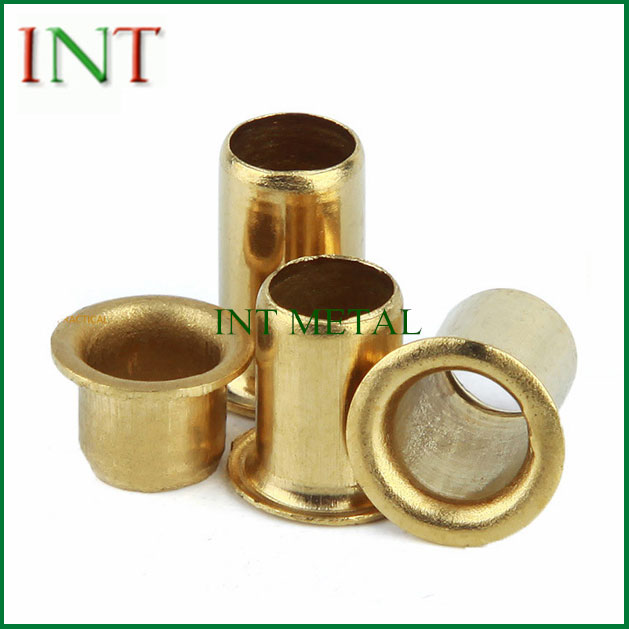
Mechanical Property Comparison Table
| Property | Brass Tubular Rivet | Steel Rivet | Aluminum Rivet |
|---|---|---|---|
| Tensile Strength (MPa) | 300–400 | 400–600 (low carbon) | 150–250 |
| Shear Strength (MPa) | 240–320 | 320–480 | 100–180 |
| Corrosion Resistance | Excellent (coastal/humid) | Poor (requires coating) | Good (natural oxide layer) |
| Weight (relative) | Heavy | Heavier | Lightweight |
| Electrical Conductivity | Moderate | Low | High |
| Ductility (cold forming) | Good | Moderate | Very Good |
Why Strength Isn’t the Only Factor
A Brass Tubular Rivet typically falls between aluminum and steel in raw tensile strength. However, steel rusts easily, and aluminum lacks the spring-back retention needed for vibration-prone assemblies. INT data shows that for leather goods, electrical terminals, and decorative structural joints, the Brbass Tubular Rivet outperforms aluminum by 40% in shear strength while avoiding galvanic corrosion when paired with copper or brass components.
Key Performance Insights
-
Brass Tubular Rivet expands uniformly during setting, reducing substrate stress—unlike steel, which can crack brittle materials.
-
Fatigue resistance: Brass withstands 2x more load cycles than aluminum at similar thickness.
-
Cost-efficiency: Mid-range pricing; steel is cheaper but requires anti-rust treatment.
Frequently Asked Questions (FAQ)
Q1: Can a Brass Tubular Rivet replace a steel rivet in structural applications?
A1: No. For primary load-bearing structures (e.g., bridge joints, heavy machinery), steel rivets remain mandatory. However, for secondary structures like guards, housings, or electrical enclosures, the Brass Tubular Rivet offers sufficient strength (up to 400 MPa tensile) with better corrosion resistance. INT recommends validating shear load requirements below 300 MPa before substituting.
Q2: Does a Brass Tubular Rivet weaken faster than aluminum under saltwater exposure?
A2: No. Aluminum suffers pitting corrosion in saltwater within 6–12 months unless anodized. A Brass Tubular Rivet forms a protective patina and retains 90% of its original strength after 2000 hours in salt spray testing (ASTM B117). INT supplies dezincification-resistant brass rivets for marine hardware, outperforming standard aluminum alloys significantly.
Q3: Is a Brass Tubular Rivet harder to install than an aluminum rivet?
A3: Slightly. Aluminum deforms with low hand force, while brass requires 20–30% more setting pressure. However, Brass Tubular Rivet installs without cracking—unlike some hard aluminum grades. INT recommends pneumatic setters for volumes above 500 pieces. For manual tools, pre-annealed Brass Tubular Rivet options reduce effort without sacrificing final strength.
Practical Selection Guidelines
-
Use Brass Tubular Rivet when: Aesthetics, corrosion resistance, and moderate strength (300-400 MPa) are required. Ideal for marine hardware, musical instruments, leather belts, and electrical lugs.
-
Use Steel when: Highest shear strength (>450 MPa) is critical and environment is dry or painted.
-
Use Aluminum when: Weight reduction is priority and loads remain below 200 MPa.
INT offers certified Brass Tubular Rivet series with full tensile test reports. For mixed-material joints (brass–steel or brass–aluminum), our engineering team provides galvanic compatibility charts.
Contact Us Today
Need the perfect Brass Tubular Rivet for your production line? INT provides custom lengths, diameters, and finishes with 48-hour sample shipping. Request your free strength comparison kit or ask about bulk pricing for OEM orders. Reach our fastener specialists at INT – your reliable partner for precision tubular rivets.