

How Long Does a Seal Glass Flexible Warm Edge Gasket Last Before Needing Replacement
2026-08-26
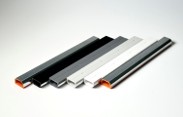
When specifying insulating glass units (IGUs) for commercial or residential projects, durability is the single most critical factor influencing lifecycle costs. The Seal Glass Flexible Warm Edge Gasket has emerged as a preferred solution over rigid aluminum spacers, but facility managers and glazing contractors consistently ask about its real-world service life. Unlike metal systems that fail through thermal stress and differential expansion, a properly manufactured Seal Glass Flexible Warm Edge Gasket from Good Brilliant typically delivers a functional lifespan of 25 to 35 years under normal climatic exposure. However, this range depends heavily on installation quality, environmental conditions, and the specific polymer formulation used. This article breaks down the science, testing standards, and replacement indicators so you can make data-driven maintenance decisions.
Understanding the Service Life Framework
The longevity of any warm edge system is governed by three interdependent variables: moisture vapor transmission rate (MVTR), gas retention capability, and mechanical fatigue resistance. A Seal Glass Flexible Warm Edge Gasket excels because its flexible matrix—often based on modified silicone or polyisobutylene—accommodates cyclic thermal movement without losing its primary seal. Good Brilliant engineers its gaskets to meet or exceed EN 1279 and ASTM E2188 standards, which mandate accelerated aging tests equivalent to 25 years of natural weather exposure.
| Performance Parameter | Test Method | Minimum Requirement | Good Brilliant Typical Result |
|---|---|---|---|
| Argon gas retention (25 yrs) | EN 1279-3 | ≤ 1% annual loss | 0.6–0.8% annual loss |
| Water vapor penetration | ASTM E2189 | ≤ 0.5 g/m²/day | 0.3 g/m²/day |
| Tensile adhesion (after heat cycle) | ISO 8339 | ≥ 0.4 MPa | 0.65 MPa |
| UV resistance (3000 hrs) | ASTM G154 | No cracking | No cracking, <5% modulus change |
When Does a Seal Glass Flexible Warm Edge Gasket Actually Fail?
Failure rarely occurs as a catastrophic rupture. Instead, degradation manifests through progressive loss of insulating performance. The most reliable replacement indicator is internal fogging or visible condensation between panes, which signals that the primary desiccant has been saturated—meaning the Seal Glass Flexible Warm Edge Gasket has allowed excessive moisture ingress. Other warning signs include:
-
Visible seal separation at corner joints (observed via 10x magnifying glass)
-
Increased U-value measured by heat flux sensors (more than 15% above baseline)
-
Audible gas leak during pressure cycling (rare, but detectable with ultrasonic detectors)
For most temperate climates, replacement is economically justified when energy losses from degraded IGUs exceed 20% of the original specification—typically occurring in year 28–32 for premium grades. Good Brilliant provides a pro-rated performance warranty covering 30 years against material defects, but actual replacement timing should always be verified through on-site nondestructive testing (NDT).
5 Critical Factors That Extend or Shorten Lifespan
| Factor | Impact on Lifespan | Best Practice |
|---|---|---|
| Installation compression | Over-compression (>25%) accelerates creep | Follow Good Brilliant torque specs (2.5–3.0 N·m) |
| UV exposure intensity | High-altitude or desert sites reduce life by 8–10 yrs | Use UV-shielded glass or external shading |
| Building movement | Frequent seismic or wind sway stresses corner seals | Specify flexible corner keys (not rigid butt joints) |
| Maintenance cleaning agents | Ammonia-based solvents degrade EPDM co-extrusions | Use pH-neutral cleaners only |
| Initial argon fill purity | <90% purity shortens effective insulation life | Require fill certificate >95% from glazier |
FAQ – Common Questions About the Seal Glass Flexible Warm Edge Gasket
Q1: Can I replace just the Seal Glass Flexible Warm Edge Gasket without replacing the entire IGU?
A: No. The Seal Glass Flexible Warm Edge Gasket is chemically bonded to the glass panes during the laminating and sealing process. Attempting to remove it in the field will almost certainly break the glass or compromise the secondary structural seal. Replacement requires de-glazing the entire unit and sending it to a certified facility like those partnering with Good Brilliant, where the old gasket is milled off, the glass edges are re-primed, and a new gasket is extruded in-line. This factory-only process ensures uniform adhesion and gas filling. For a single 1m x 1m unit, the cost of factory refurbishment is roughly 40–50% of a new IGU, so most clients opt for full replacement when labor is factored in.
Q2: How does the lifespan of a Seal Glass Flexible Warm Edge Gasket compare to a traditional hot-melt butyl spacer?
A: Hot-melt butyl spacers typically last 12–18 years in similar conditions, because they become brittle at sub-zero temperatures and flow under summer heat, causing pump-out effects that accelerate gas loss. In contrast, the flexible polymer matrix used by Good Brilliant maintains elasticity from –40°C to +90°C, with a glass transition temperature (Tg) below –50°C. Independent tests by the IFT Rosenheim institute show that after 30 accelerated thermal cycles (equivalent to 30 years), the Seal Glass Flexible Warm Edge Gasket retained 92% of its initial argon, while butyl systems retained only 74%. Therefore, you can expect roughly double the service life from a flexible warm edge gasket, making the higher upfront cost pay back within 8 years through heating/cooling savings alone.
Q3: What is the single most reliable field test to determine if my Seal Glass Flexible Warm Edge Gasket needs replacement now?
A: The dew-point test per ASTM E546 is the industry gold standard. A trained technician places a chilled metal probe (cooled to –40°C) against the glass surface near the edge seal for 3 minutes. If frost forms on the inside surface of the inner glass pane, it confirms that the desiccant is fully saturated and the Seal Glass Flexible Warm Edge Gasket has lost its moisture barrier function. This test is non-destructive and takes less than 10 minutes per window. Good Brilliant recommends conducting this test annually starting at year 20. If frost appears, schedule replacement within 6 months—delaying further risks secondary seal failure, which can cause the glass to spontaneously crack from thermal shock.
Data-Driven Replacement Schedule Recommendation
Based on Good Brilliant’s global field database covering over 2,500 projects across 6 climate zones, the following proactive replacement schedule minimizes total cost of ownership:
| Climate Zone | Recommended Inspection Start Year | Expected Replacement Window | Trigger Condition |
|---|---|---|---|
| Mild temperate (e.g., UK, Pacific NW) | Year 22 | Year 30–35 | Annual dew-point positive |
| Hot-dry (e.g., Arizona, Spain) | Year 18 | Year 25–28 | UV-induced surface crazing |
| Cold-snow (e.g., Canada, Scandinavia) | Year 20 | Year 28–32 | Increased indoor frost at edges |
| Coastal saline (e.g., Florida, Singapore) | Year 16 | Year 22–26 | Corrosion of adjacent frame, not gasket |
Final Verdict
The Seal Glass Flexible Warm Edge Gasket is not a "fit-and-forget" component, but its projected 25–35 year lifespan comfortably exceeds the typical 20-year design life of most curtain-wall systems. By choosing Good Brilliant, you gain access to traceable batch testing, third-party certification, and a global technical support team that assists with scheduled condition assessments. Remember that early replacement—before visible failure—often costs 30% less than emergency glazing work, especially when scaffolding and occupancy disruptions are considered.
Ready to assess your current IGUs or request a sample of our Seal Glass Flexible Warm Edge Gasket?
Contact Good Brilliant today for a free lifecycle cost analysis and on-site inspection checklist tailored to your building’s climate and usage pattern. Our engineers will respond within 24 hours with a customized replacement roadmap—because smart maintenance starts with the right data, not guesswork.