

How Is the Sintered Diamond Grinding Wheel Redefining Precision Grinding Across Industrial Applications?
2025-12-15
The Sintered Diamond Grinding Wheel is a high-performance abrasive tool engineered for precision grinding, shaping, and finishing of hard and brittle materials. Manufactured through a sintering process that bonds diamond grains with metal powders under high temperature and pressure, this type of grinding wheel delivers consistent cutting ability, structural stability, and extended service life. It is widely applied in industries such as stone processing, construction materials, ceramics, glass, refractory products, and advanced composites.
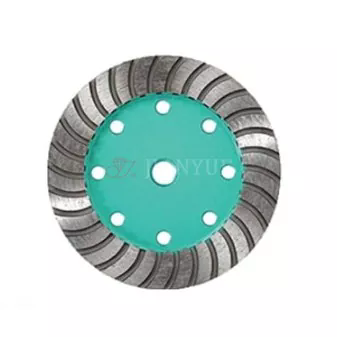
How Does the Sintered Diamond Grinding Wheel Achieve Stable Performance on Hard Materials?
The performance of a sintered diamond grinding wheel is rooted in its manufacturing process and material composition. Unlike electroplated or resin-bond diamond wheels, sintered wheels embed diamond abrasives throughout the entire working layer. As the surface wears, new diamond particles are continuously exposed, maintaining a stable grinding action over time.
Core Working Mechanism
During operation, diamond particles act as cutting points that remove material through micro-fracturing rather than plastic deformation. This makes sintered diamond grinding wheels particularly effective for materials with high hardness and low toughness, such as:
-
Granite and engineered stone
-
Concrete and reinforced concrete
-
Ceramics and porcelain
-
Carbide-based composites
-
Optical and technical glass
The metal bond formed during sintering provides high holding strength for the diamond grains. This bond resists premature grain pull-out, ensuring that diamonds remain effective until they are fully worn. At the same time, controlled bond wear allows self-sharpening, which is essential for maintaining grinding efficiency.
Key Product Parameters and Technical Specifications
The following parameters define the operational capabilities of a sintered diamond grinding wheel and are critical for professional selection:
| Parameter | Description |
|---|---|
| Diamond Grit Size | Ranges commonly from 30# to 400#, determining material removal rate and surface finish |
| Bond Type | Metal bond (bronze, cobalt-based, or customized alloys) |
| Wheel Diameter | Typically 75 mm to 400 mm, depending on machine compatibility |
| Segment Height | Usually 5 mm to 15 mm, influencing service life |
| Concentration | Diamond concentration from 75% to 125% for different workloads |
| Bore Size | Customized to fit angle grinders, floor grinders, or CNC equipment |
| Operating Speed | Designed to match standard industrial RPM requirements |
These parameters allow the wheel to be matched precisely with application requirements, whether aggressive stock removal or controlled surface finishing is needed.
How Should a Sintered Diamond Grinding Wheel Be Selected for Different Industrial Scenarios?
Selecting the appropriate sintered diamond grinding wheel is not a generic decision. It requires alignment between material characteristics, equipment conditions, and process objectives.
Material-Specific Considerations
Different materials respond differently to grinding forces. For example:
-
Hard stone and ceramics require a harder bond to prevent rapid diamond loss.
-
Concrete and abrasive materials benefit from a slightly softer bond that promotes self-sharpening.
-
Glass and brittle composites require finer grit sizes to minimize chipping and subsurface damage.
Matching bond hardness and grit size to the material ensures controlled grinding and reduces the risk of overheating or surface defects.
Equipment Compatibility
Sintered diamond grinding wheels are designed for compatibility with a wide range of machines, including:
-
Handheld angle grinders
-
Floor grinding and polishing machines
-
Vertical and horizontal surface grinders
-
CNC grinding systems
Wheel balance, bore accuracy, and structural integrity are essential for high-speed operation. Poor compatibility can lead to vibration, uneven wear, and reduced accuracy.
Process Optimization
Grinding efficiency is influenced not only by the wheel itself but also by operating conditions such as:
-
Feed rate
-
Contact pressure
-
Cooling method (dry or wet grinding)
-
Machine rigidity
Proper selection and setup help extend wheel life while maintaining consistent surface quality. In professional environments, these factors are optimized together rather than independently.
How Do Common Questions About Sintered Diamond Grinding Wheels Affect Real-World Use?
Q: How long does a sintered diamond grinding wheel typically last compared to other diamond wheels?
A: Service life depends on material hardness, operating pressure, and bond formulation, but sintered diamond grinding wheels generally last significantly longer than electroplated wheels. Because diamond grains are distributed throughout the working layer, performance remains stable even as the surface wears, making them suitable for continuous industrial use.
Q: How can grinding quality be maintained when working at high removal rates?
A: Maintaining grinding quality requires proper grit selection, controlled feed speed, and adequate cooling. Using a grit size appropriate for the removal rate prevents excessive heat buildup, while consistent operating parameters ensure uniform wear and reduce the risk of surface damage.
These frequently raised questions reflect practical concerns from end users and highlight the importance of aligning technical parameters with application demands.
How Is the Sintered Diamond Grinding Wheel Evolving With Industry Demands?
Industrial grinding is undergoing continuous transformation driven by automation, sustainability requirements, and higher precision standards. Sintered diamond grinding wheels are evolving accordingly.
Adaptation to Automated and CNC Systems
As CNC and automated grinding systems become more prevalent, wheels must meet tighter tolerances for balance, concentricity, and dimensional stability. Manufacturers are increasingly focusing on precision-controlled sintering processes to ensure repeatable quality and predictable wear patterns.
Efficiency and Resource Optimization
Modern production environments emphasize efficiency and cost control. Longer tool life, reduced downtime, and predictable maintenance cycles make sintered diamond grinding wheels a practical choice for large-scale operations. Optimized bond formulations reduce unnecessary diamond consumption while maintaining performance.
Application Expansion
Beyond traditional construction and stone processing, sintered diamond grinding wheels are increasingly used in advanced manufacturing sectors such as:
-
Technical ceramics
-
Semiconductor-related components
-
High-performance composites
This expansion reflects the tool’s adaptability to emerging materials and higher technical requirements.
Conclusion and Brand Commitment
The sintered diamond grinding wheel remains a critical tool in precision grinding, offering controlled material removal, structural reliability, and adaptability across a wide range of applications. Its performance is defined not only by diamond quality but also by bond engineering, parameter optimization, and alignment with modern equipment systems.
JIANYUE focuses on the development and production of sintered diamond grinding wheels designed to meet diverse industrial requirements with consistent quality and reliable performance. By emphasizing precise manufacturing control and application-oriented design, JIANYUE supports customers in achieving stable grinding results across demanding environments.
For detailed specifications, customized solutions, or technical consultation, contact us to discuss how JIANYUE sintered diamond grinding wheels can be integrated into your production process efficiently and reliably.