

How Is Shipbuilding Hot Rolled Carbon Steel Checkered Plate Manufactured
2026-11-12
Shipbuilding hot rolled carbon steel checkered plate is a specialized material that combines structural strength, slip resistance, and weldability for marine environments. At Sanhe, understanding every stage of production is essential to delivering consistent quality. This guide walks through the manufacturing process, from raw steel to finished plate, with the technical detail that shipyards and fabricators expect.
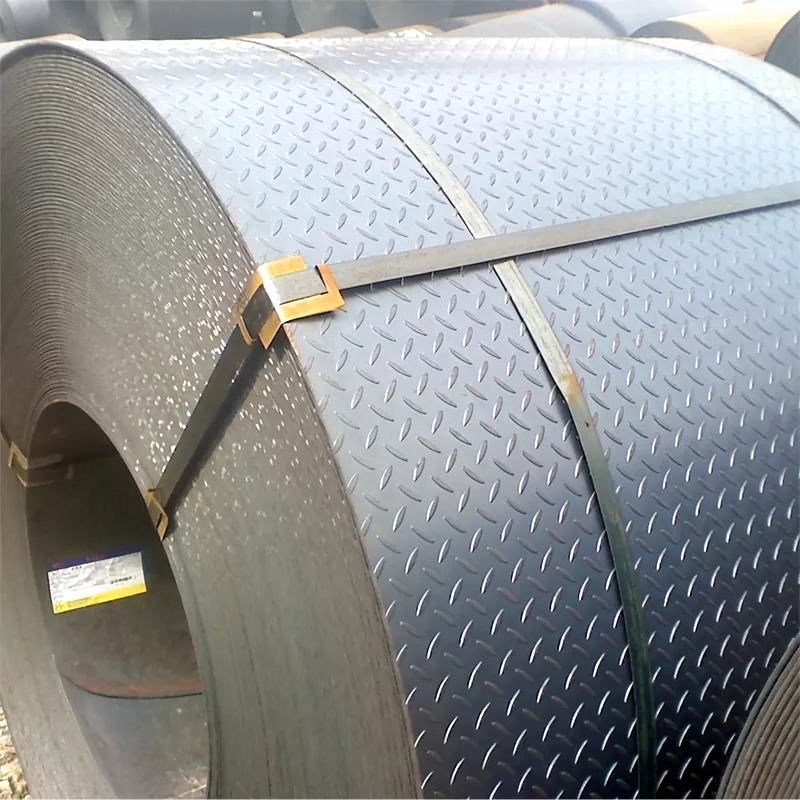
The Manufacturing Process at a Glance
Producing shipbuilding hot rolled carbon steel checkered plate follows a tightly controlled sequence. Each step influences the final mechanical properties and surface pattern quality.
| Stage | Key Activity | Quality Control Focus |
|---|---|---|
| 1. Raw material selection | Carbon steel slab/billet with controlled chemistry | Carbon equivalent, sulfur, and phosphorus limits |
| 2. Reheating | Slab heated to 1,150–1,250°C in a walking-beam furnace | Uniform temperature, scale control |
| 3. Hot rolling | Multi-pass rolling to target thickness | Thickness tolerance, grain refinement |
| 4. Pattern embossing | Checkered pattern formed by patterned rolls | Pattern height, uniformity, slip resistance |
| 5. Cooling | Controlled cooling on run-out table | Microstructure, hardness |
| 6. Leveling & shearing | Straightening and cutting to size | Flatness, dimensional accuracy |
| 7. Inspection & marking | UT, dimensional checks, stencil marking | Traceability, standard compliance |
Step-by-Step Details
-
Steel chemistry control: Marine applications demand low carbon equivalents for weldability. Sanhe sources slabs with tight chemistry windows to ensure consistent performance in shipbuilding hot rolled carbon steel checkered plate.
-
Reheating: Uniform slab temperature prevents rolling defects and ensures a homogeneous austenitic structure before deformation.
-
Hot rolling: Rolling below the recrystallization temperature in the finishing passes refines grain size, improving toughness — critical for hull and deck applications.
-
Pattern formation: The checkered pattern is imparted by engraved rolls during the final passes. Pattern height and spacing are monitored to meet slip-resistance requirements without compromising plate integrity.
-
Cooling and leveling: Controlled cooling determines the final ferrite-pearlite balance, while leveling ensures flatness for downstream cutting and welding.
Key Standards and Properties
| Property | Typical Requirement | Relevance |
|---|---|---|
| Yield strength | 235–355 MPa | Structural integrity |
| Tensile strength | 400–510 MPa | Load-bearing capacity |
| Elongation | ≥ 21% | Formability and weldability |
| Pattern height | 0.5–1.5 mm | Slip resistance |
| Standards | ASTM A786, EN 10025, GB/T 3277 | Market acceptance |
Sanhe aligns production with these standards and provides mill test certificates for every batch of shipbuilding hot rolled carbon steel checkered plate.
FAQ
Q: What makes shipbuilding hot rolled carbon steel checkered plate suitable for marine decks?
A: The combination of controlled carbon chemistry, refined grain structure, and an embossed checkered pattern delivers high slip resistance, good weldability, and sufficient toughness for deck and walkway applications in marine environments.
Q: How is the checkered pattern formed during hot rolling?
A: The pattern is embossed by engraved rolls in the final rolling passes, which deforms the surface into a raised checkered profile while maintaining plate thickness and mechanical properties.
Q: What thickness range is typical for shipbuilding hot rolled carbon steel checkered plate?
A: Common thickness ranges are 3–12 mm, with pattern height tailored to the slip-resistance requirement and the structural role of the plate.
Conclusion
Manufacturing shipbuilding hot rolled carbon steel checkered plate requires disciplined control from steel chemistry through pattern embossing and final inspection. Sanhe combines process expertise with rigorous quality assurance to support shipyards and fabricators worldwide.
Contact us today to discuss your shipbuilding hot rolled carbon steel checkered plate requirements, request specifications, or obtain a quotation from the Sanhe team.