

How Is Curved Sheet Metal Manufactured for Precision Industrial Applications?
2026-03-16
Curved sheet metal is widely used in modern manufacturing because it enables engineers to create strong, lightweight, and visually refined components. From architectural panels to automotive housings and industrial enclosures, curved metal structures provide both functional strength and design flexibility. However, achieving accurate curvature without damaging the material requires specialized fabrication techniques and experienced manufacturers.
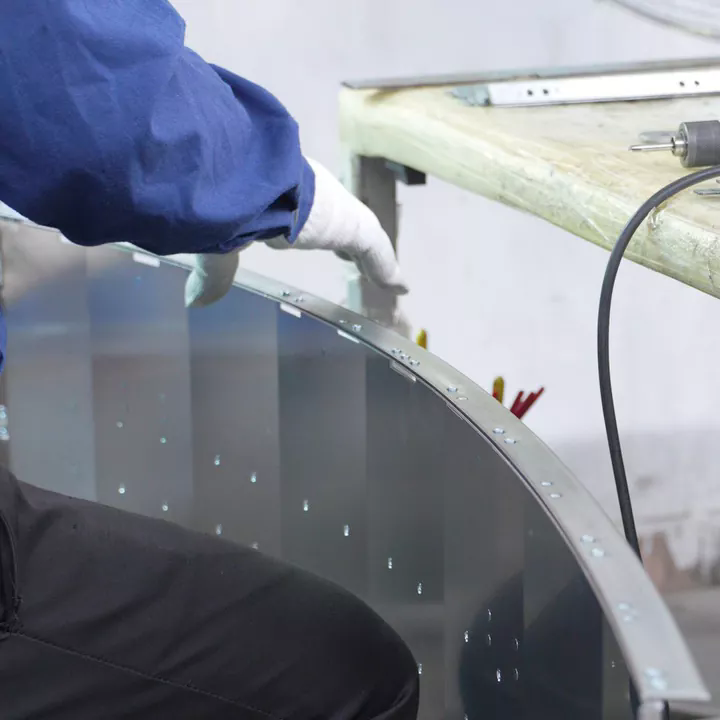
Many buyers searching for curved sheet metal products often face several challenges: inconsistent bending accuracy, surface deformation, limited material options, and long production lead times. Understanding how curved sheet metal is manufactured can help procurement teams, engineers, and product designers make better decisions when selecting fabrication partners.
This article explains the manufacturing process, forming technologies, material options, quality considerations, and application scenarios of curved sheet metal. It also provides practical guidance for choosing reliable suppliers such as Xinyang for custom metal fabrication solutions.
Article Summary
Curved sheet metal refers to metal sheets that are shaped into arcs, cylinders, or complex curved geometries using specialized forming processes. These components are commonly produced through rolling, press bending, stretch forming, or hydroforming techniques depending on the material and design requirements. High-quality curved metal fabrication ensures dimensional accuracy, structural stability, and consistent surface quality for industrial applications.
Table of Contents
- 1. Understanding Curved Sheet Metal
- 2. Why Curved Metal Components Are Important in Modern Manufacturing
- 3. Common Materials Used for Curved Sheet Metal
- 4. How Curved Sheet Metal Is Manufactured
- 5. Key Equipment Used in Curved Metal Fabrication
- 6. Quality Control and Precision Considerations
- 7. Industrial Applications of Curved Sheet Metal
- 8. Choosing a Reliable Curved Sheet Metal Manufacturer
- 9. Frequently Asked Questions
1. Understanding Curved Sheet Metal
Curved sheet metal refers to flat metal sheets that have been formed into smooth curved shapes through controlled mechanical processes. Unlike simple angular bends, curved metal parts involve continuous arcs or complex surfaces that require precise forming equipment.
The curvature may vary from gentle cylindrical shapes to complex multi-radius structures used in industrial equipment or architectural design. These shapes improve both aesthetics and structural strength while reducing the need for multiple welded components.
Common curved sheet metal geometries include:
- Cylindrical shells
- Curved panels
- Conical sections
- Arc-shaped housings
- Complex multi-radius surfaces
2. Why Curved Metal Components Are Important in Modern Manufacturing
Curved metal structures offer several engineering advantages compared with flat or sharply bent parts. Many industries rely on curved sheet metal because it improves product performance while maintaining efficient material usage.
Key benefits include:
- Improved structural strength due to load distribution
- Reduced number of welded joints
- Enhanced aerodynamics or fluid flow
- Better visual appearance for product housings
- Higher resistance to deformation under pressure
For industries such as automotive manufacturing, HVAC systems, machinery enclosures, and construction engineering, curved sheet metal allows designers to combine functionality and aesthetic appeal in a single component.
3. Common Materials Used for Curved Sheet Metal
Material selection plays a critical role in curved sheet metal fabrication. The metal must be flexible enough to bend without cracking while still providing sufficient mechanical strength.
| Material | Characteristics | Typical Applications |
| Carbon Steel | High strength and cost-effective | Industrial equipment and structural components |
| Stainless Steel | Corrosion resistance and durability | Food processing equipment and medical devices |
| Aluminum | Lightweight and easy to form | Transportation, aerospace, electronics enclosures |
| Galvanized Steel | Protective zinc coating against corrosion | Outdoor structures and ventilation systems |
| Copper or Brass | Excellent electrical conductivity and decorative appearance | Electrical systems and architectural design |
The final material choice typically depends on the required strength, environmental exposure, cost constraints, and surface finishing requirements.
4. How Curved Sheet Metal Is Manufactured
Manufacturing curved sheet metal involves several precision forming techniques. Each method is selected based on the curvature radius, thickness of the material, and production volume.
The most widely used fabrication methods include the following:
1. Roller Bending
Roller bending is one of the most common processes used to create cylindrical or arc-shaped metal components. The sheet metal passes through three or four rotating rollers that gradually apply pressure and form the desired curvature.
- Suitable for large radius curves
- Ideal for cylindrical shells and pipes
- High efficiency for large production runs
2. Press Brake Forming
Press brake machines can produce curved shapes by performing a sequence of small bends along the sheet metal. When these bends are combined, they approximate a smooth curve.
- Effective for moderate curvature
- Suitable for custom production
- High dimensional accuracy
3. Stretch Forming
Stretch forming involves clamping the sheet metal and stretching it over a curved die. This technique produces smooth surfaces and is commonly used in aerospace and automotive industries.
4. Hydroforming
Hydroforming uses high-pressure hydraulic fluid to force metal sheets into curved molds. This method can produce complex shapes while maintaining uniform thickness.
Each fabrication method offers unique advantages depending on the complexity of the design and production scale.
5. Key Equipment Used in Curved Metal Fabrication
High-precision curved sheet metal manufacturing requires specialized equipment to maintain accuracy and consistency.
- CNC rolling machines
- Hydraulic press brakes
- Stretch forming presses
- Laser cutting machines
- CNC machining centers
- Surface finishing equipment
Advanced factories integrate automated control systems to ensure repeatable bending angles, uniform curvature, and minimal material stress.
Companies such as Xinyang invest in modern fabrication technology to produce customized curved sheet metal components that meet strict industrial tolerances.
6. Quality Control and Precision Considerations
Maintaining consistent curvature is one of the most critical aspects of sheet metal fabrication. Even minor deviations can affect assembly compatibility or product performance.
Quality control typically includes:
- Dimensional inspection using precision gauges
- Surface flatness verification
- Material thickness consistency checks
- Stress and deformation analysis
- Surface finishing evaluation
Professional manufacturers often implement digital measurement systems to ensure every curved metal component meets exact design specifications.
7. Industrial Applications of Curved Sheet Metal
Curved sheet metal components are essential in many industries because they provide strength, aerodynamic efficiency, and attractive design features.
Typical applications include:
- Automotive body panels and protective housings
- Architectural façade panels
- Industrial machinery covers
- HVAC ventilation ducts
- Electrical equipment enclosures
- Storage tanks and pressure vessels
These applications require reliable fabrication techniques to maintain durability and structural integrity under various operating conditions.
8. Choosing a Reliable Curved Sheet Metal Manufacturer
Selecting the right manufacturing partner is essential when sourcing curved sheet metal components. A qualified supplier should offer advanced forming technology, strict quality control, and extensive customization capabilities.
Key factors to consider include:
- Experience in complex metal forming
- Availability of CNC rolling and bending equipment
- Engineering support for custom designs
- Consistent material quality
- Reliable delivery schedules
Manufacturers like Xinyang specialize in precision curved sheet metal fabrication and provide tailored solutions for various industries. Their engineering team can assist clients in optimizing design structures to reduce production costs while maintaining high performance standards.
9. Frequently Asked Questions
Q1: What thickness of sheet metal can be curved?
The thickness that can be curved depends on the material type and forming method. Most fabrication facilities can process metal sheets ranging from 0.5 mm to over 20 mm using advanced rolling equipment.
Q2: Does curved sheet metal weaken the material?
When performed correctly, bending does not significantly weaken the material. Professional fabrication processes control stress levels to maintain the structural strength of the metal.
Q3: Can curved sheet metal be customized for specific projects?
Yes. Curved sheet metal components can be customized based on radius, thickness, material type, surface treatment, and dimensional specifications to match specific industrial requirements.
Q4: What finishing options are available for curved metal parts?
Common finishing options include powder coating, anodizing, polishing, galvanizing, and painting. These treatments improve corrosion resistance and enhance appearance.
Conclusion
Curved sheet metal plays a crucial role in modern engineering and product design. By using advanced forming technologies such as rolling, press bending, stretch forming, and hydroforming, manufacturers can create highly accurate curved metal structures suitable for a wide range of industrial applications.
Working with experienced manufacturers ensures consistent curvature accuracy, reliable material performance, and efficient production timelines. Xinyang provides professional curved sheet metal fabrication services supported by advanced equipment and strict quality standards.
If you are looking for durable and precisely manufactured curved metal components for your next project, the engineering team at Xinyang is ready to help. Contact us today to discuss your requirements and discover customized curved sheet metal solutions designed for your industry.