

How Hot Rolled Plate Enhances Industrial Performance?
2026-05-12
Abstract: Hot rolled plates are essential components in various industrial sectors, providing strength, durability, and versatility. This article explores the production process, advantages, applications, and key considerations for selecting hot rolled plates, helping businesses make informed decisions for optimal performance and cost efficiency.
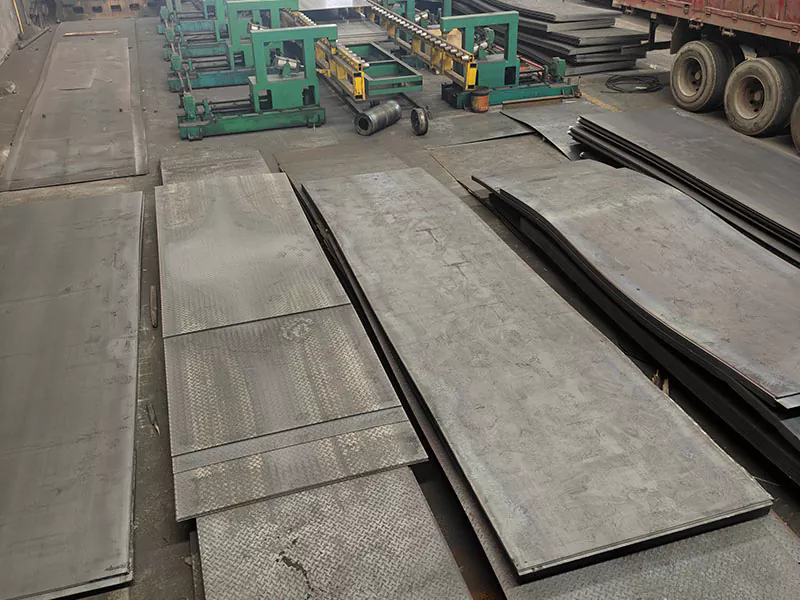
Table of Contents
- What is Hot Rolled Plate?
- Production Process of Hot Rolled Plate
- Advantages of Using Hot Rolled Plate
- Key Applications in Industry
- How to Choose the Right Hot Rolled Plate
- Frequently Asked Questions
What is Hot Rolled Plate?
Hot rolled plate is a type of steel product produced by rolling steel at high temperatures, typically above 1,000°F (540°C). This process makes the steel easier to shape and results in a product that offers high strength and toughness, suitable for construction, manufacturing, and heavy machinery.
Key characteristics include:
- High ductility and flexibility
- Uniform thickness and width
- Good weldability and formability
- Cost-effective for large-scale projects
Production Process of Hot Rolled Plate
The production of hot rolled plate involves several critical steps that ensure consistency and quality. Sanhe, a leading supplier, emphasizes rigorous control throughout the manufacturing chain to deliver premium plates.
- Heating: Steel slabs are heated in a furnace to achieve plasticity suitable for rolling.
- Rough Rolling: Initial rolling reduces the thickness and elongates the slab.
- Finishing Rolling: The slab is rolled to the final thickness, ensuring precise dimensions.
- Cooling: Controlled cooling enhances strength and reduces internal stresses.
- Inspection & Cutting: Plates are inspected for quality, defects are removed, and dimensions are cut as per client specifications.
| Stage | Purpose | Key Feature |
|---|---|---|
| Heating | Prepare slab for rolling | Uniform temperature distribution |
| Rough Rolling | Reduce thickness | Shape formation |
| Finishing Rolling | Final dimensions | High precision |
| Cooling | Improve strength | Controlled cooling rate |
| Inspection & Cutting | Ensure quality | Defect-free, accurate size |
Advantages of Using Hot Rolled Plate
Businesses choose hot rolled plates for numerous reasons, particularly when strength, flexibility, and cost-effectiveness are priorities. Key advantages include:
- Strength and Durability: Suitable for structural applications.
- Versatility: Can be used in construction, shipbuilding, bridges, and machinery.
- Cost Efficiency: More affordable than cold rolled alternatives.
- Formability: Can be cut, welded, or bent without compromising structural integrity.
- Consistency: Sanhe ensures uniform thickness and mechanical properties across all plates.
Key Applications in Industry
Hot rolled plates are widely used across multiple sectors due to their robustness and adaptability. Below are typical applications:
- Construction: Beams, columns, and structural supports.
- Shipbuilding: Hulls, decks, and frames.
- Machinery Manufacturing: Industrial equipment, boilers, and pressure vessels.
- Bridges and Infrastructure: Roadways, railway tracks, and heavy frameworks.
- Energy Sector: Oil rigs, wind turbines, and pipelines.
How to Choose the Right Hot Rolled Plate
Selecting the appropriate hot rolled plate depends on multiple factors. Sanhe provides guidance to ensure businesses get the best performance:
| Factor | Consideration |
|---|---|
| Thickness & Size | Depends on project load-bearing requirements |
| Steel Grade | Carbon content and alloying elements affect strength |
| Surface Quality | Smoothness required for finishing and aesthetics |
| Application Environment | Corrosion resistance may be needed for outdoor or marine use |
Working with trusted suppliers like Sanhe ensures access to certified quality plates, timely delivery, and expert consultation tailored to specific industrial needs.
Frequently Asked Questions
-
Q: What is the difference between hot rolled and cold rolled plates?
A: Hot rolled plates are processed at high temperatures, resulting in greater ductility and lower cost, while cold rolled plates have a smoother surface and higher dimensional precision. -
Q: Can hot rolled plates be welded easily?
A: Yes, hot rolled plates offer good weldability due to their ductile nature. -
Q: How do I ensure the plate meets quality standards?
A: Work with reputable suppliers like Sanhe who provide certified inspection reports and comply with industrial standards. -
Q: Are hot rolled plates suitable for outdoor construction?
A: Yes, especially when treated for corrosion resistance or combined with protective coatings.
Hot rolled plates play a pivotal role in modern industry, offering versatility, strength, and cost efficiency. Choosing the right supplier and specifications ensures projects are delivered with maximum performance and reliability. Sanhe is your trusted partner for high-quality hot rolled plates worldwide. For more details and personalized assistance, contact us today.