

How Expansion Joint Improves the Safety and Reliability of Industrial Piping Systems
2026-08-11
Article Summary
Expansion joints are essential components used in industrial piping systems, mechanical equipment, and engineering structures to absorb movement caused by thermal expansion, vibration, pressure changes, and external forces. Without a properly designed expansion joint, pipelines may experience excessive stress, deformation, leakage, or premature failure.
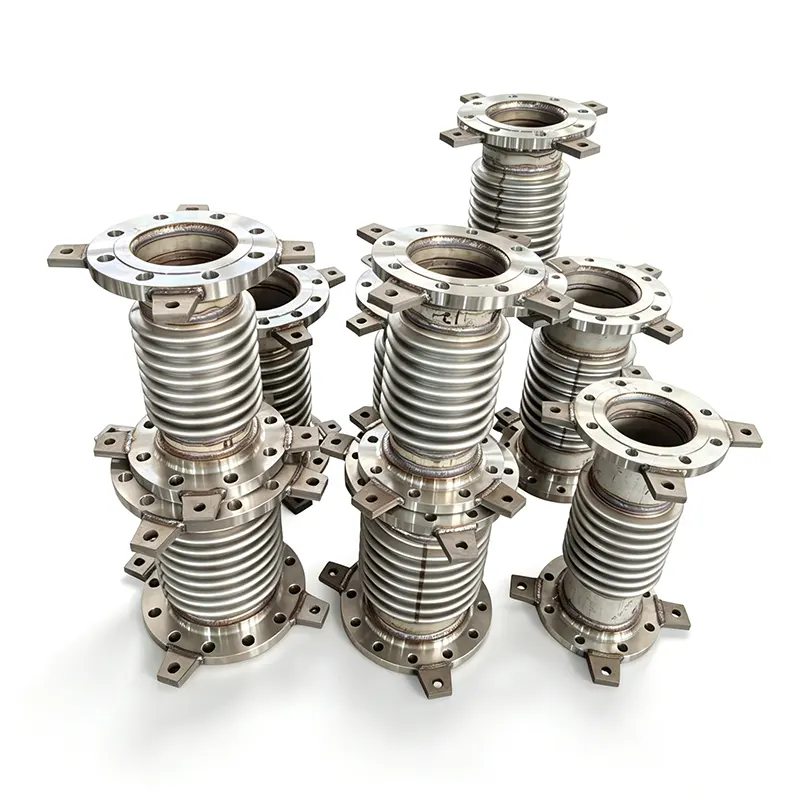
This article explains how an expansion joint works, why it is important, the common challenges faced by customers during selection and operation, and how professional solutions from Tianshun help industries achieve safer and more stable pipeline performance. By understanding the working principles, types, installation requirements, and maintenance methods, engineers and purchasing teams can make better decisions for long-term project reliability.
Table of Contents
- Article Summary
- Article Outline
- How Expansion Joint Works
- Common Problems Without Proper Expansion Joints
- Main Types of Expansion Joints
- How to Select the Right Expansion Joint
- Industrial Applications of Expansion Joint
- Installation and Maintenance Considerations
- Why Choose Tianshun Expansion Joint Solutions
- Frequently Asked Questions
- Conclusion
Article Outline
- Understanding the function and importance of expansion joints
- Analyzing pipeline risks caused by thermal movement and vibration
- Comparing different expansion joint designs and applications
- Exploring selection, installation, and maintenance methods
- Introducing reliable expansion joint solutions provided by Tianshun
How Expansion Joint Works in Industrial Systems
An expansion joint is a flexible connection component designed to compensate for movement between connected sections of pipelines or structures. During operation, temperature variations can cause pipes to expand when heated and contract when cooled. This continuous movement creates mechanical stress that can damage rigid piping systems.
The main function of an expansion joint is to absorb these movements while maintaining system integrity. Depending on the design, an expansion joint can handle axial movement, lateral movement, angular movement, vibration, and pressure-related displacement.
In piping applications, bellows expansion joints are commonly used because their flexible bellows structure allows controlled deformation. The bellows absorb dimensional changes while preventing excessive forces from transferring to connected equipment.
A properly designed expansion joint helps reduce stress concentration, protect expensive equipment, and extend the service life of the entire pipeline system.
| Movement Type | Function | Typical Application |
|---|---|---|
| Axial Movement | Absorbs expansion and contraction along pipeline direction | Long straight piping systems |
| Lateral Movement | Handles side-to-side displacement | Complex pipeline layouts |
| Angular Movement | Allows controlled bending movement | Pipelines with directional changes |
| Vibration Absorption | Reduces mechanical vibration transmission | Pumps, compressors, rotating equipment |
Common Problems Without Proper Expansion Joints
Many industrial failures are caused by ignoring pipeline movement during system design. Although pipes appear strong, continuous thermal cycles and operational vibration can gradually create hidden damage.
- Pipeline Cracking: Excessive stress may cause cracks in pipes, welds, or connection points.
- Equipment Damage: Uncontrolled movement can transfer forces to pumps, valves, and other sensitive equipment.
- Leakage Risk: Continuous pressure and displacement may weaken sealing areas.
- Higher Maintenance Costs: Frequent repairs and unexpected downtime increase operational expenses.
- Reduced System Efficiency: Deformed pipelines may affect fluid transportation performance.
For industries operating under high temperature, high pressure, or continuous operation conditions, selecting the correct expansion joint is a critical engineering decision.
Main Types of Expansion Joint
Different industrial environments require different expansion joint designs. The selection depends on operating temperature, pressure level, movement requirements, installation space, and transported media.
| Expansion Joint Type | Main Features | Suitable Industries |
|---|---|---|
| Bellows Expansion Joint | Flexible metal bellows structure with excellent movement absorption capability | Power plants, chemical plants, pipelines |
| Fabric Expansion Joint | Lightweight design suitable for gas and air systems | Industrial ventilation systems |
| Rubber Expansion Joint | Provides vibration reduction and noise control | Water systems, pumps, HVAC systems |
| Universal Expansion Joint | Handles larger lateral and axial movement requirements | Large-scale piping projects |
Tianshun provides professional expansion joint solutions designed according to different industrial requirements, helping customers achieve reliable operation in demanding environments.
How to Select the Right Expansion Joint
Choosing an unsuitable expansion joint may lead to poor performance or premature failure. Engineers should evaluate several important factors before making a decision.
- Operating Temperature: High-temperature systems require materials with excellent heat resistance.
- Working Pressure: The expansion joint must withstand the maximum pressure conditions of the system.
- Movement Requirements: Determine whether the system requires axial, lateral, or angular compensation.
- Material Compatibility: Materials should match the transported medium and environmental conditions.
- Installation Space: Available space affects product structure and connection method.
- Service Life Expectations: Long-term reliability should be considered rather than only initial cost.
A detailed technical evaluation before purchase can prevent expensive replacement and unexpected shutdown problems.
Industrial Applications of Expansion Joint
Expansion joints are widely used across multiple industries where pipelines and equipment experience movement or vibration.
- Power Generation: Used in steam pipelines, cooling systems, and exhaust systems.
- Petrochemical Industry: Helps compensate movement in process pipelines.
- Oil and Gas Projects: Supports pipeline stability under changing temperatures.
- Marine Engineering: Absorbs vibration and movement caused by ship operation.
- HVAC Systems: Reduces vibration and thermal stress in large heating and cooling networks.
- Manufacturing Facilities: Protects equipment connected by complex piping systems.
Modern industrial projects require components that can maintain performance under continuous operating conditions. Expansion joints provide a practical solution for improving system durability and safety.
Installation and Maintenance Considerations
Even a high-quality expansion joint requires correct installation and regular inspection to achieve maximum performance.
| Maintenance Item | Recommended Action |
|---|---|
| Visual Inspection | Check for corrosion, deformation, cracks, or abnormal wear. |
| Bolt and Connection Check | Ensure connection components remain properly tightened. |
| Movement Monitoring | Verify that actual movement remains within designed limits. |
| Operating Condition Review | Confirm temperature and pressure do not exceed specifications. |
Correct installation procedures help prevent unnecessary stress and ensure the expansion joint performs according to its design purpose.
Why Choose Tianshun Expansion Joint Solutions
Tianshun focuses on providing dependable pipeline components and engineering solutions for industrial customers. With professional experience in pipeline technology, Tianshun understands that every project has unique requirements regarding pressure, temperature, movement, and installation conditions.
The company emphasizes product reliability, manufacturing consistency, and technical support to help customers solve real engineering challenges. From standard applications to customized requirements, Tianshun works closely with clients to develop suitable expansion joint solutions.
- Professional manufacturing experience
- Reliable product quality control
- Customized engineering solutions
- Support for different industrial applications
- Focus on long-term customer value
Frequently Asked Questions
Q1: What is the main purpose of an expansion joint?
An expansion joint absorbs movement caused by thermal expansion, vibration, pressure changes, and mechanical displacement, protecting pipelines and connected equipment from excessive stress.
Q2: Where are expansion joints commonly installed?
They are widely used in power plants, chemical facilities, oil and gas systems, HVAC networks, marine equipment, and industrial pipeline projects.
Q3: How long can an expansion joint operate?
Service life depends on design quality, material selection, operating conditions, installation accuracy, and maintenance practices.
Q4: Can Tianshun provide customized expansion joints?
Yes. Tianshun can develop suitable solutions according to project requirements, including operating conditions, movement requirements, and connection specifications.
Q5: Why is expansion joint maintenance important?
Regular inspection helps identify early signs of damage, reduce unexpected failures, and maintain safe and stable system operation.
Conclusion
Expansion joints play an important role in maintaining the safety, efficiency, and durability of industrial piping systems. By absorbing movement and reducing mechanical stress, they prevent costly failures and improve overall system reliability.
Selecting the correct design, ensuring proper installation, and following regular maintenance practices are essential for achieving long-term performance. With professional experience and customer-focused solutions, Tianshun provides reliable expansion joint products designed to meet various industrial challenges.
If you need high-quality expansion joint solutions customized for your project requirements, please contact us today. Tianshun is ready to provide professional support and reliable products to help your systems operate safely and efficiently.