

How Does Warp Stop Bar Improve Textile Weaving Stability and Reduce Production Downtime?
2026-06-24
Abstract
In modern textile manufacturing, efficiency and yarn quality are critical factors that directly influence production cost and fabric performance. A Warp Stop Bar plays a crucial role in detecting warp yarn breaks during weaving or winding processes, helping operators prevent defects, machine damage, and costly downtime. This article explains how warp stop bar systems function, their industrial importance, key advantages, and how they solve common production pain points in textile mills. It also explores selection criteria, operational integration, and maintenance considerations to help manufacturers achieve stable, high-quality output.
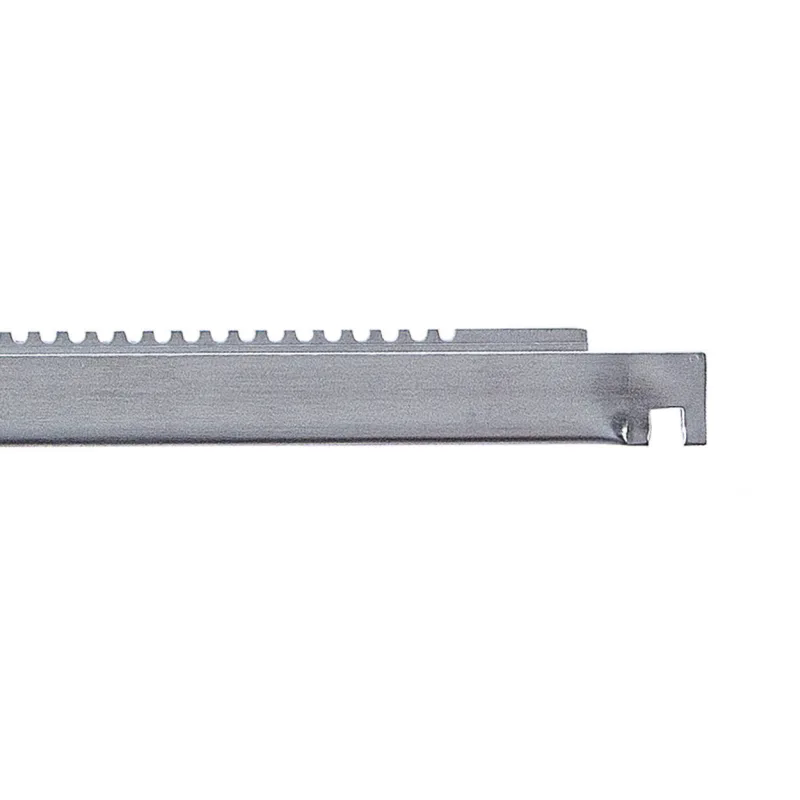
Table of Contents
- 1. Understanding Warp Stop Bar Technology
- 2. Why Warp Break Detection Matters in Textile Production
- 3. Working Principle of Warp Stop Bar Systems
- 4. Key Benefits for Modern Textile Mills
- 5. Technical Features and Configuration Options
- 6. Comparison Table: Manual Monitoring vs Warp Stop Bar System
- 7. Common Challenges and Practical Solutions
- 8. Maintenance and Operational Best Practices
- 9. Industrial Application Scenarios
- 10. Conclusion and Supplier Support
1. Understanding Warp Stop Bar Technology
A Warp Stop Bar is a safety and monitoring component installed in weaving and winding machinery to detect broken warp yarns instantly. When a yarn break occurs, the system triggers an automatic machine stop, preventing defective fabric formation and reducing material waste. This technology is widely used in high-speed textile production environments where manual monitoring is insufficient.
In essence, the warp stop bar acts as a real-time guardian of yarn integrity, ensuring that every thread maintains continuous tension and alignment throughout the weaving process.
2. Why Warp Break Detection Matters in Textile Production
Warp yarn breakage is one of the most common and costly problems in textile manufacturing. Without immediate detection, a single broken yarn can lead to:
- Fabric defects such as holes, streaks, or uneven texture
- Excessive raw material waste
- Machine wear due to misalignment
- Long downtime for defect correction
A Warp Stop Bar system eliminates these risks by ensuring instant response when irregularities occur. This not only protects product quality but also stabilizes the entire production line.
3. Working Principle of Warp Stop Bar Systems
The working mechanism of a Warp Stop Bar is based on electrical or mechanical sensing technology. Each warp thread passes through a detection zone. When tension is lost due to yarn breakage, the sensor is triggered and sends a signal to the control system.
Typical process flow:
- Warp yarn passes through detection points
- Continuous tension is monitored
- Break occurs → tension drops
- Sensor detects abnormal change
- Machine immediately stops
This real-time feedback loop ensures that operators can address issues before they escalate into larger production defects.
4. Key Benefits for Modern Textile Mills
Implementing a Warp Stop Bar system provides several operational advantages that directly improve production efficiency and cost control.
- Improved fabric quality: Prevents defects caused by undetected yarn breaks
- Reduced waste: Minimizes raw material loss
- Higher machine efficiency: Reduces unnecessary machine run-time during faults
- Labor optimization: Less manual inspection required
- Enhanced safety: Prevents mechanical strain and breakdown
For large-scale textile operations, even a small reduction in downtime can translate into significant financial savings.
5. Technical Features and Configuration Options
Modern Warp Stop Bar systems are designed with advanced engineering features to meet diverse industrial requirements.
- High-sensitivity yarn break sensors
- Modular installation structure
- Compatibility with high-speed looms
- Durable anti-static materials
- Low-maintenance electrical design
Some systems also include digital monitoring integration, allowing real-time data collection and predictive maintenance analysis.
6. Comparison Table: Manual Monitoring vs Warp Stop Bar System
| Aspect | Manual Monitoring | Warp Stop Bar System |
|---|---|---|
| Detection Speed | Delayed, depends on operator attention | Instant real-time detection |
| Fabric Quality | Inconsistent due to human error | Stable and uniform |
| Labor Requirement | High | Reduced |
| Production Downtime | Frequent interruptions | Minimized with automatic stop |
| Cost Efficiency | Lower efficiency | Optimized long-term savings |
7. Common Challenges and Practical Solutions
While Warp Stop Bar systems significantly improve production reliability, certain operational challenges may arise:
- False alarms: Often caused by improper calibration
- Sensor wear: Requires periodic inspection
- Installation alignment issues: Can affect detection accuracy
Solutions include proper initial setup, routine maintenance schedules, and using high-quality components designed for industrial environments.
8. Maintenance and Operational Best Practices
To ensure long-term performance, textile manufacturers should follow structured maintenance practices:
- Regular cleaning of sensor contact points
- Monthly calibration checks
- Inspection of mechanical alignment
- Monitoring electrical connections
Preventive maintenance not only extends equipment lifespan but also ensures consistent production accuracy.
9. Industrial Application Scenarios
Warp Stop Bar systems are widely used across various textile production environments, including:
- Weaving mills producing high-density fabrics
- Industrial yarn winding facilities
- Technical textile manufacturing
- Automated fabric production lines
In each of these scenarios, the primary goal remains the same: maintaining uninterrupted yarn integrity and preventing defective output.
10. Conclusion and Supplier Support
The Warp Stop Bar is an essential component in modern textile manufacturing, offering real-time monitoring, improved product quality, and significant reductions in production downtime. As global textile demand continues to grow, automation and precision control systems like this are becoming indispensable for competitive manufacturers.
For companies seeking reliable and high-performance textile machinery components, professional-grade solutions are essential to ensure long-term operational stability.
Changshu Changxin Textile Equipment Co., Ltd. specializes in advanced textile machinery components, including Warp Stop Bar systems designed for durability, precision, and industrial efficiency. Their solutions are engineered to meet the demands of modern weaving and winding operations, helping manufacturers achieve consistent quality and reduced downtime.
For technical consultation, bulk procurement, or tailored system integration, contact us today to explore how our Warp Stop Bar solutions can improve your production efficiency and stability.