

How Does the Cold Rolling Process Affect the Mechanical Properties of Stainless Steel Spring Strip Coil
2026-03-26
The transformation of raw stainless steel into a high-performance Stainless Steel Spring Strip Coil is a journey defined by precision metallurgy. At the heart of this transformation lies the cold rolling process—a technique that does not merely shape the metal but fundamentally redefines its internal structure. For industry leaders like Qihong, mastering cold rolling is the difference between producing standard strip and delivering precision-engineered Stainless Steel Spring Strip Coil that meets the rigorous demands of automotive, medical, and electronic applications.
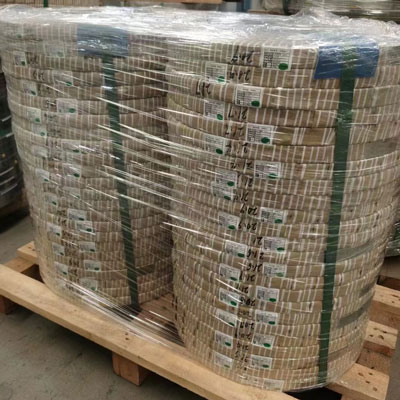
The Metallurgical Foundation of Cold Rolling
Cold rolling involves deforming stainless steel below its recrystallization temperature. Unlike hot rolling, this process introduces work hardening, which alters the material’s grain structure. The result is a Stainless Steel Spring Strip Coil with enhanced strength, refined surface finish, and tightly controlled dimensional tolerances. The table below outlines the primary mechanical properties affected by cold rolling and their impact on coil performance.
| Mechanical Property | Effect of Cold Rolling | Impact on Spring Strip Performance |
|---|---|---|
| Tensile Strength | Increases significantly due to dislocation density within the grain structure | Enables higher load-bearing capacity for spring applications |
| Yield Strength | Rises in proportion to reduction ratio | Provides superior resistance to permanent deformation under stress |
| Hardness | Elevates as a function of cold work percentage | Ensures wear resistance and maintains shape integrity over extended cycles |
| Ductility | Decreases as the material becomes work-hardened | Requires controlled reduction to balance formability with strength |
| Thickness Tolerance | Achieves precision as low as ±0.01mm | Critical for stacked or co-located spring components in micro-mechanisms |
| Surface Finish | Refined through precision roller contact | Essential for fatigue life and corrosion resistance in sensitive environments |
The Role of Reduction Rate in Property Optimization
The degree of cold reduction—expressed as a percentage of thickness reduction—dictates the final property profile. For Stainless Steel Spring Strip Coil, Qihong employs multi-pass rolling with intermediate annealing to achieve specific tempers ranging from 1/4 hard to full hard. A higher reduction rate yields greater tensile strength but reduces elongation. This trade-off is carefully calibrated based on the end-use: electronic contact springs demand full hard temper for elasticity, while medical device components may require half-hard temper to allow for post-forming operations.
Surface Integrity and Fatigue Resistance
Beyond strength, cold rolling influences surface integrity—a critical factor in fatigue performance. Precision rolling minimizes surface defects such as micro-scratches or edge cracks that could serve as stress concentrators. For Stainless Steel Spring Strip Coil used in cyclic loading environments, the combination of controlled cold work and superior surface quality directly extends operational life. Qihong integrates real-time surface inspection systems to ensure that each coil meets stringent standards before proceeding to edge conditioning or slitting.
Stainless Steel Spring Strip Coil FAQ Common Questions
What temper conditions can be achieved through cold rolling and how do they affect spring performance
Cold rolling enables a range of tempers from annealed to full hard, defined by tensile strength and hardness values. For Stainless Steel Spring Strip Coil, a full hard temper—typically achieved with 50% to 70% cold reduction—delivers maximum springback and resistance to set, making it ideal for high-stress applications like automotive clutch springs. Quarter-hard or half-hard tempers retain greater ductility, allowing the strip to be bent or formed into complex geometries without cracking. The choice of temper must align with both the spring design and the forming process to ensure manufacturability and in-service reliability.
How does cold rolling influence the corrosion resistance of stainless steel spring strip coil
Cold rolling does not alter the chromium content responsible for passive layer formation, but it can affect surface chemistry and residual stress distribution. Excessive cold work combined with improper annealing may induce martensitic transformation in certain austenitic grades, slightly reducing corrosion resistance in aggressive environments. However, when properly controlled, cold rolling with subsequent stress-relief annealing preserves the corrosion resistance of Stainless Steel Spring Strip Coil. Qihong ensures that rolling parameters are tailored to grade specifications—such as 301, 304, or 316—so that mechanical enhancement does not compromise environmental durability.
What quality control measures ensure consistency in cold rolled stainless steel spring strip coil
Consistency begins with precise control of reduction schedules, roller geometry, and lubrication uniformity. Reputable manufacturers employ automated thickness gauging with closed-loop feedback to maintain tolerance across the entire coil length. Additionally, eddy current testing and tensile validation are conducted to confirm that the Stainless Steel Spring Strip Coil meets specified temper and hardness ranges. At Qihong, each production lot undergoes dimensional inspection, surface quality assessment, and mechanical property verification to ensure that the final strip performs identically whether used in the first meter or the last.
Conclusion
The cold rolling process is far more than a shaping step—it is the definitive influence on strength, durability, and consistency in Stainless Steel Spring Strip Coil. Through precise reduction control, surface refinement, and rigorous quality validation, manufacturers like Qihong transform raw material into precision components that industry engineers rely upon.
For customized tempers, tight tolerance requirements, or expert guidance on selecting the ideal Stainless Steel Spring Strip Coil for your application, contact us today to discuss your specifications with our technical team.
