

How Does the Anodizing Process Affect the Corrosion Resistance of Aluminum Eyelets
2026-04-27
When manufacturers seek superior durability for Aluminum Eyelets, Nuote has consistently demonstrated that the anodizing process is the single most effective method for enhancing corrosion resistance. Anodizing transforms the natural oxide layer on aluminum into a thick, controlled, and highly protective coating. For Aluminum Eyelets used in marine, industrial, or outdoor textile applications, this process is the difference between rapid pitting and decades of reliable service.
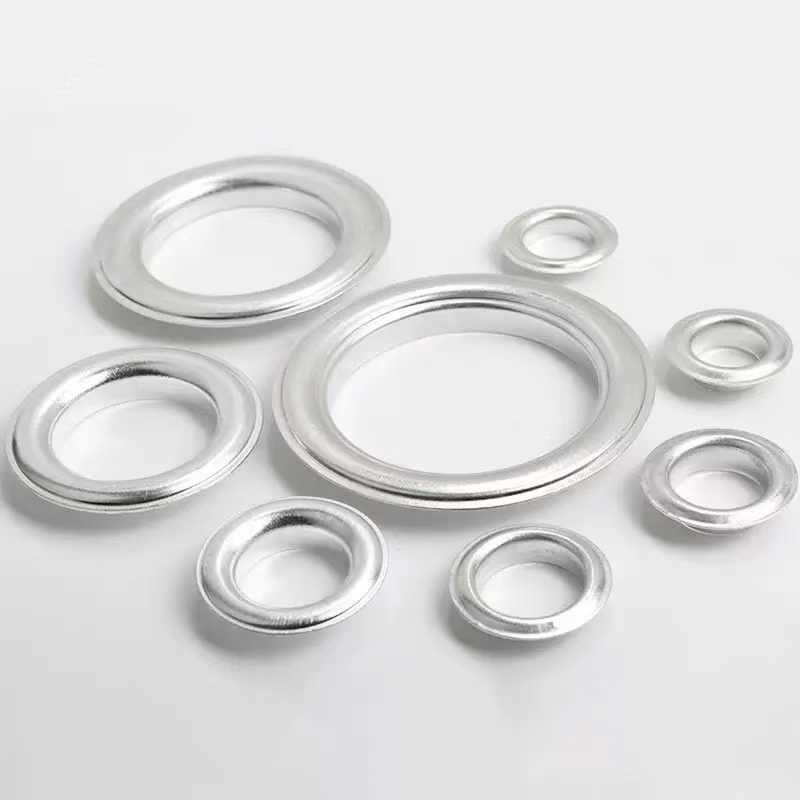
The Science Behind Anodizing and Corrosion Protection
Anodizing is an electrochemical process that converts the aluminum surface into aluminum oxide. Unlike paint or plating, anodizing becomes integral to the base metal. The resulting oxide layer is porous immediately after formation, allowing for sealing treatments that close the pores and create a barrier against moisture, salts, and chemicals. For Aluminum Eyelets, this means the natural corrosivity of aluminum—which already resists oxidation better than steel—is amplified exponentially.
Comparative Effect of Anodizing on Aluminum Eyelets
| Property | Non-Anodized Aluminum Eyelets | Anodized Aluminum Eyelets (by Nuote) |
|---|---|---|
| Oxide layer thickness | 0.5–2 nanometers | 5–25 micrometers (10,000x thicker) |
| Salt spray resistance (ASTM B117) | 24–48 hours before pitting | 500–1,000+ hours |
| Hardness (relative) | Soft, easily scratched | Very hard (near sapphire) |
| Resistance to galvanic corrosion | Moderate | Excellent |
| Typical service life (marine environment) | 6–12 months | 5–10 years |
Key Factors in the Anodizing Process
-
Electrolyte composition – Sulfuric acid baths produce the most wear-resistant and corrosion-resistant coatings for Aluminum Eyelets.
-
Current density and temperature – Lower temperatures and controlled current create denser, less porous oxide structures.
-
Sealing method – Hot water sealing, nickel acetate, or cold sealing each affects corrosion resistance differently. Nuote uses high-temperature deionized water sealing for maximum barrier protection.
-
Anodizing type – Type II (conventional) suits most Aluminum Eyelets, while Type III (hard anodizing) provides extreme durability for heavy-load applications.
Benefits of Anodized Aluminum Eyelets from Nuote
-
Uniform coating – Every surface, including the barrel and flange, receives identical protection.
-
No flaking or peeling – The oxide layer grows from the metal, so it cannot separate.
-
Dyeable for color coding – Anodized pores readily absorb dyes without reducing corrosion resistance.
-
Electrically insulating – Precludes galvanic corrosion when in contact with dissimilar metals.
Aluminum Eyelets FAQ – Common Questions
Q1: Can anodized Aluminum Eyelets be used in saltwater environments without additional protection?
A1: Yes, properly anodized Aluminum Eyelets with a thickness of 15–20 micrometers and hot-water sealing can resist saltwater corrosion for years. Nuote tests its anodized Aluminum Eyelets to 1,000 hours of neutral salt spray per ASTM B117, confirming suitability for marine sails, boat covers, and dock hardware. However, avoid galvanic contact with stainless steel fasteners in continuous immersion without dielectric isolation.
Q2: How does scratched anodizing affect the corrosion resistance of Aluminum Eyelets?
A2: A minor scratch through the anodized layer does not lead to catastrophic failure, unlike scratched paint on steel. The underlying aluminum immediately forms its own thin native oxide (2–3 nm thick), which provides temporary protection. For Aluminum Eyelets, Nuote recommends inspecting deep scratches that expose bare metal in highly aggressive environments. Those can be spot-treated with a clear aluminum corrosion inhibitor or re-anodized professionally. Shallow scratches that remain within the anodized layer pose no practical risk.
Q3: Is clear anodizing less effective than colored anodizing for Aluminum Eyelets corrosion resistance?
A3: No, the corrosion resistance of Aluminum Eyelets depends entirely on the anodized layer thickness, pore structure, and sealing quality—not on dye presence. Clear anodizing (no dye) provides identical protection to black, gold, or colored anodizing when all process parameters match. Nuote offers both clear and colored anodized Aluminum Eyelets, with the same corrosion performance certified by independent testing. Dyeing fills some pores, but sealing after dyeing restores full integrity.
Why Choose Nuote for Anodized Aluminum Eyelets
Nuote controls the entire anodizing line, from aluminum alloy selection (6061 or 5052) to final sealing. Every batch of Aluminum Eyelets undergoes thickness verification and salt spray validation. The result is consistent, repeatable corrosion resistance that meets or exceeds MIL-A-8625 Type II standards.
For custom sizes, rapid sampling, or technical support on anodized Aluminum Eyelets, contact Nuote today to discuss your application requirements and request a quote.