

Article Summary: Stamping Parts Processing is a practical manufacturing method for producing consistent metal components at scale. However, achieving stable dimensions, clean edges, reliable forming, and economical production requires much more than simply pressing sheet metal through a die. Material selection, tooling design, press parameters, process control, inspection, and production planning all influence the final result. This guide explains how Stamping Parts Processing works, what factors affect part quality, how manufacturers can reduce common production problems, and how to select a capable processing partner for demanding applications.
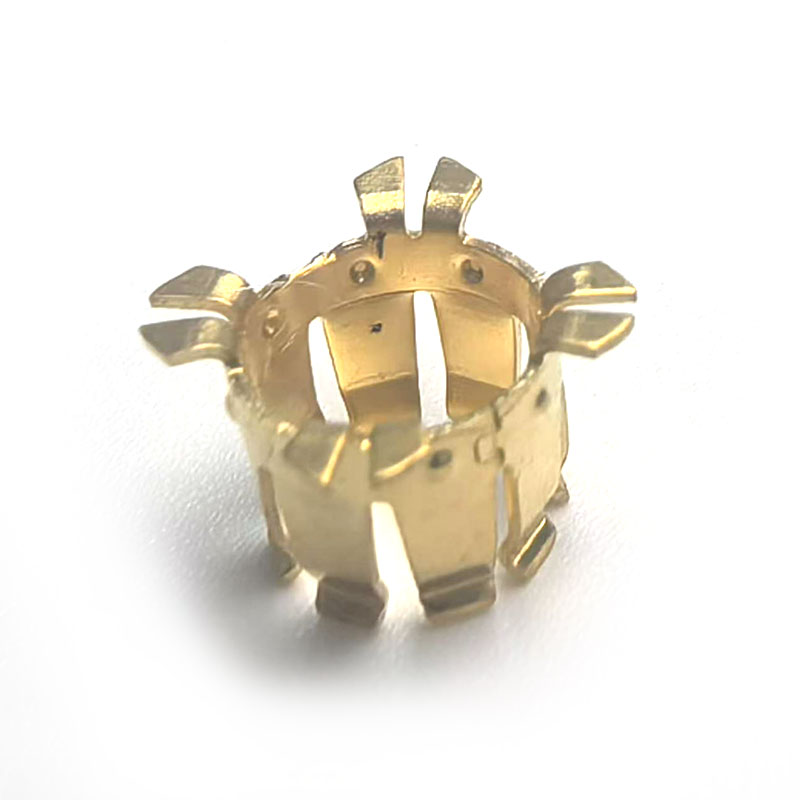
Table of Contents
- 1. What Is Stamping Parts Processing?
- 2. What Are the Main Steps in Stamping Parts Processing?
- 3. How Does Material Selection Affect Stamped Parts?
- 4. Why Is Tooling Design Important?
- 5. How Can Manufacturers Improve Stamping Quality?
- 6. What Common Problems Occur During Stamping?
- 7. How Can Stamping Parts Processing Reduce Production Costs?
- 8. Where Are Precision Stamping Parts Used?
- 9. How Should Buyers Choose a Stamping Parts Processing Supplier?
- 10. Why Consider Qiren Electronics Co., Ltd.?
- 11. Frequently Asked Questions
- 12. Conclusion
Article Outline
- Understanding the purpose and fundamentals of Stamping Parts Processing
- Following a controlled production workflow from material preparation to inspection
- Selecting suitable metals according to strength, thickness, conductivity, and forming requirements
- Designing reliable dies and tooling for repeatable production
- Controlling dimensional accuracy, burrs, deformation, and surface quality
- Solving common manufacturing problems before they affect large production batches
- Improving productivity while controlling tooling and operating costs
- Matching stamped components to demanding industrial applications
- Evaluating suppliers based on equipment, engineering capability, quality control, and communication
1. What Is Stamping Parts Processing?
Stamping Parts Processing is a manufacturing process that uses presses, dies, and controlled forming operations to transform metal sheets, strips, or blanks into components with specific shapes and dimensions. Depending on the design, stamping can include operations such as punching, blanking, bending, drawing, embossing, forming, and progressive stamping.
The biggest advantage of the process is repeatability. Once a suitable die and production method have been established, large quantities of components can be manufactured with consistent geometry. This makes stamping particularly useful when a product requires thousands or millions of similar parts.
However, high-volume production does not automatically mean high-quality production. Poor die clearance, inappropriate material selection, excessive forming force, insufficient lubrication, inaccurate feeding, or inadequate inspection can cause dimensional variation and premature tooling wear.
A successful Stamping Parts Processing project therefore needs to balance four major requirements:
- Dimensional accuracy: Parts must remain within the required tolerances.
- Mechanical performance: Formed areas must retain the required strength and durability.
- Production efficiency: Cycle times and material utilization should support the target output.
- Long-term consistency: Quality should remain stable throughout the production run.
2. What Are the Main Steps in Stamping Parts Processing?
A reliable stamping project normally begins before the first sheet of metal reaches the press. Engineering teams need to understand the component drawing, material characteristics, tolerance requirements, production volume, surface requirements, and final application.
- Drawing and requirement review: Engineers examine dimensions, tolerances, material specifications, bends, holes, and functional surfaces.
- Material preparation: The selected metal is prepared in sheet, strip, coil, or blank form according to the production method.
- Tooling development: Dies are designed around the part geometry, material behavior, press capacity, and expected production volume.
- Trial stamping: Initial samples are produced to verify dimensions, forming behavior, surface quality, and tooling performance.
- Process adjustment: Feed position, die clearance, forming sequence, pressure, speed, and other parameters are optimized.
- Mass production: Once the process is stable, production can proceed with controlled inspection and equipment monitoring.
- Final inspection: Finished components are checked according to the customer's drawings and acceptance requirements.
- Packing and delivery: Parts are protected from deformation, scratching, contamination, or corrosion during transportation.
This structured workflow is important because defects discovered only after mass production can lead to significant material waste, tooling adjustments, delivery delays, and additional labor.
3. How Does Material Selection Affect Stamped Parts?
Material selection has a direct influence on forming behavior, tool life, dimensional stability, surface quality, and final component performance. A metal that performs well for one application may be unsuitable for another.
| Material Type | Typical Advantages | Important Considerations |
|---|---|---|
| Stainless Steel | Corrosion resistance and good strength | Can require careful control of forming and springback |
| Carbon Steel | Good strength and cost efficiency | Surface protection may be necessary for certain environments |
| Aluminum | Lightweight and relatively easy to process | Surface scratching and deformation require attention |
| Copper | Excellent electrical and thermal conductivity | Material softness can affect forming and surface quality |
| Brass | Good machinability, appearance, and conductivity | Grade selection should match forming and application requirements |
Thickness is equally important. Thin material may be vulnerable to wrinkling, tearing, distortion, or excessive burr formation, while thicker material may require greater press capacity and more robust tooling.
For this reason, buyers should provide complete material information instead of simply specifying a general category such as “steel” or “metal.” Grade, thickness, hardness, surface condition, and mechanical properties can all affect the manufacturing process.
4. Why Is Tooling Design Important?
The die is one of the most important elements in Stamping Parts Processing. It determines how material is positioned, cut, bent, drawn, or formed. A well-designed die can improve repeatability and production speed, while an unsuitable die can create defects and excessive maintenance requirements.
Tooling design should consider:
- Part geometry and dimensional tolerances
- Material thickness and mechanical properties
- Required forming sequence
- Press capacity and stroke characteristics
- Die clearance
- Material feeding direction
- Expected production volume
- Tool wear and maintenance requirements
- Part ejection and collection
- Operator and equipment safety
For high-volume orders, progressive dies can combine several operations into a continuous production sequence. This can reduce handling and improve throughput. For lower-volume or frequently changing products, other tooling configurations may provide a better balance between initial tooling investment and production flexibility.
Tooling should therefore be designed around the actual business requirement rather than using a one-size-fits-all approach.
5. How Can Manufacturers Improve Stamping Quality?
Consistent quality comes from controlling the complete process rather than inspecting finished parts only at the end. A strong production system identifies potential sources of variation early.
Material Control
Incoming materials should be verified against the required specifications. Variations in thickness, hardness, surface condition, or material grade can change how the metal behaves during forming.
Tooling Control
Dies should be inspected and maintained regularly. Cutting edges become dull with use, while forming surfaces can wear or develop damage. If these changes are ignored, burrs and dimensional variation can gradually increase.
Equipment Control
Presses and automated feeding systems need appropriate maintenance and calibration. Stable feeding is especially important for progressive stamping because even a small positioning error can affect multiple features on the finished component.
Inspection Control
Inspection methods should match the product's critical characteristics. Depending on the component, this may include dimensional measurement, visual inspection, burr evaluation, functional checks, surface inspection, and sampling during production.
Process Documentation
Clear production records help manufacturers identify changes in quality and trace potential causes. Documented process parameters also make repeat orders easier to manage because engineers can refer to established production conditions.
6. What Common Problems Occur During Stamping?
Even a carefully planned production line can encounter problems if process conditions are not controlled. Understanding common defects helps buyers identify whether a supplier has sufficient engineering capability.
| Problem | Possible Cause | Practical Response |
|---|---|---|
| Excessive Burrs | Incorrect clearance or worn cutting edges | Check die condition and optimize clearance |
| Cracking | Unsuitable material or excessive forming stress | Review material properties and forming sequence |
| Wrinkling | Insufficient control of material flow | Adjust tooling and forming conditions |
| Dimensional Variation | Tool wear, feeding error, or process instability | Inspect tooling, feeding, and press conditions |
| Springback | Material elastic recovery after forming | Compensate in tooling and forming design |
| Surface Scratches | Tool contamination or improper material handling | Improve cleaning, tooling condition, and handling |
One of the most effective approaches is to solve the cause rather than repeatedly sorting defective parts. If a dimensional issue occurs because of die wear, for example, additional final inspection alone does not address the underlying problem.
7. How Can Stamping Parts Processing Reduce Production Costs?
Cost reduction in stamping is not simply about selecting the lowest processing price. A supplier with a slightly higher initial quotation may provide lower total production costs if it achieves better material utilization, fewer defects, longer tool life, and more stable delivery.
Several factors can improve economic performance:
- Material utilization: Optimizing strip or sheet layouts can reduce scrap.
- Automation: Automated feeding and handling can reduce repetitive manual work.
- Tool durability: Proper tooling materials and maintenance can reduce downtime.
- Process integration: Combining operations can shorten production cycles.
- Early engineering review: Design adjustments made before tooling production are generally easier and less expensive than changes after mass production begins.
- In-process inspection: Early defect detection prevents large batches of nonconforming parts.
- Stable scheduling: Reliable production planning helps prevent urgent shipments and unexpected production interruptions.
For customers, the most useful cost comparison is therefore based on total manufacturing value rather than unit price alone.
8. Where Are Precision Stamping Parts Used?
Stamped metal components are used across many industries because the process can produce compact, repeatable, and structurally functional parts.
- Electronics: Terminals, conductive components, brackets, shielding parts, and precision hardware.
- Automotive: Structural brackets, clips, connectors, mounting components, and other formed metal parts.
- Electrical equipment: Conductive components, enclosures, fastening parts, and internal hardware.
- Consumer products: Small metal structures, decorative components, fasteners, and functional hardware.
- Industrial equipment: Brackets, covers, supports, connectors, and mechanical components.
- Communication equipment: Precision metal parts used in assemblies that require reliable dimensions and repeatability.
The appropriate process depends on the application. A simple flat bracket may require only blanking and bending, while a more complex component may need multiple progressive operations and tighter process control.
9. How Should Buyers Choose a Stamping Parts Processing Supplier?
Selecting a supplier is an important decision because stamping tooling and production conditions can directly affect product quality and project schedules. Before placing an order, buyers should evaluate several areas instead of focusing exclusively on price.
Engineering Capability
Ask whether the supplier can review drawings and identify potential manufacturing problems before production. A capable engineering team should be able to discuss material behavior, tooling structure, tolerances, forming sequence, and production feasibility.
Production Equipment
Press capacity, feeding systems, tooling equipment, inspection instruments, and automation capabilities should match the requirements of the component. Equipment does not guarantee quality by itself, but unsuitable equipment can limit achievable performance.
Quality Management
Ask how incoming materials, first samples, in-process components, and finished products are inspected. It is also useful to understand how nonconforming products are identified, isolated, analyzed, and corrected.
Production Capacity
The supplier should be able to support both the expected order quantity and future demand. Production capacity should include not only machine availability but also tooling capability, workforce organization, inspection resources, and material supply.
Communication
Clear communication is particularly important for custom stamping projects. Drawings, material specifications, tolerance requirements, packaging standards, inspection requirements, and delivery schedules should be confirmed before mass production.
Long-Term Support
A reliable supplier should be prepared to support tooling maintenance, engineering changes, repeat orders, quality investigations, and production improvements. This can become especially valuable when a product enters long-term mass production.
10. Why Consider Qiren Electronics Co., Ltd.?
Qiren Electronics Co., Ltd. focuses on precision manufacturing solutions involving metal stamping, precision molds, and related component processing. Its Stamping Parts Processing capabilities are positioned around controlled production, tooling development, precision requirements, and consistent manufacturing.
For customers developing custom stamped components, the most important benefit is the ability to connect product requirements with an appropriate manufacturing process. A stamping project may involve a combination of material selection, mold development, press forming, precision processing, automated production, and quality inspection. Coordinating these stages effectively can reduce unnecessary trial-and-error during production.
Qiren Electronics Co., Ltd. can work with customer drawings and component requirements to support the development of customized stamping solutions. This is particularly useful when parts contain small features, multiple bends, tight dimensional requirements, or demanding assembly interfaces.
When evaluating a stamping supplier, customers should provide as much useful technical information as possible, including:
- 2D engineering drawings or 3D models
- Required material and material grade
- Material thickness
- Critical dimensions and tolerances
- Expected annual or monthly quantity
- Surface treatment requirements
- Functional requirements
- Packaging specifications
- Target delivery schedule
With complete project information, a manufacturer can make more accurate decisions about tooling, production methods, inspection requirements, and expected manufacturing costs.
11. Frequently Asked Questions
What is Stamping Parts Processing mainly used for?
Stamping Parts Processing is mainly used to manufacture metal components with repeatable shapes and dimensions. It is particularly suitable for medium- and high-volume production where consistency and productivity are important.
What materials can be used for stamping?
Common materials include stainless steel, carbon steel, aluminum, copper, brass, and other sheet or strip metals. The correct material depends on the required strength, conductivity, corrosion resistance, forming behavior, thickness, and final application.
Is stamping suitable for small precision parts?
Yes. With suitable tooling, equipment, material control, and inspection, stamping can produce small components with detailed features. The feasibility depends on part geometry, material characteristics, tolerance requirements, and production volume.
What causes burrs on stamped parts?
Burrs can result from excessive die clearance, unsuitable tooling conditions, worn cutting edges, incorrect material properties, or other process issues. Regular tooling inspection and appropriate process control can help reduce burr formation.
How can stamping defects be reduced?
Defects can be reduced through appropriate material selection, accurate tooling design, controlled press parameters, stable material feeding, regular equipment maintenance, and in-process inspection. Early engineering review is also important for identifying difficult features before mass production.
Does stamping require custom molds?
Many custom stamped components require dedicated tooling because the die must match the exact geometry and production requirements of the part. The appropriate tooling structure depends on the component design, quantity, forming operations, and expected production life.
How important is production volume when selecting a stamping method?
Production volume is highly important. High-volume products may justify more complex tooling because the tooling investment can be distributed across a larger number of parts. Lower-volume products may benefit from simpler and more flexible tooling approaches.
Can stamped parts be used in electronic products?
Yes. Stamped metal components are widely used for terminals, connectors, brackets, shielding components, conductive parts, and other electronic hardware. Material selection and dimensional control are especially important when parts must interface precisely with other components.
What information should I provide when requesting a stamping quotation?
Providing a drawing or 3D model, material grade, thickness, required quantity, critical tolerances, surface treatment, application requirements, and delivery expectations will help a supplier evaluate the project more accurately.
How can I determine whether a stamping supplier is suitable for my project?
Evaluate the supplier's engineering capability, tooling experience, production equipment, quality inspection methods, capacity, communication process, and ability to support customized requirements. Sample quality and process consistency are often more meaningful than a low quotation alone.
12. Conclusion
Stamping Parts Processing provides an efficient way to manufacture repeatable metal components for electronics, automotive products, electrical equipment, industrial machinery, and many other applications. Its advantages become especially valuable when production requires consistent dimensions, stable quality, fast cycle times, and controlled manufacturing costs.
At the same time, successful stamping depends on more than the press itself. Material selection, die design, forming sequence, feeding accuracy, equipment condition, inspection, and production management must work together. Addressing these factors early can prevent common problems such as burrs, cracking, wrinkling, springback, dimensional variation, and unnecessary material waste.
For custom projects, choosing an experienced manufacturing partner can simplify the transition from engineering drawing to reliable mass production. Qiren Electronics Co., Ltd. provides Stamping Parts Processing solutions designed around customer-specific component requirements and production objectives.
If you are developing a new stamped metal component or looking for a reliable solution for ongoing production, prepare your drawings, material specifications, quantities, and tolerance requirements for a technical evaluation. Contact us to discuss your Stamping Parts Processing project with Qiren Electronics Co., Ltd. and find a practical manufacturing solution for your application.