

How Does Spiral Welded Pipe Improve Industrial Piping Performance?
2026-04-15
Abstract
Spiral welded pipe is a widely adopted solution in modern infrastructure, oil and gas transportation, water conveyance, and structural engineering. Its unique forming technique, cost efficiency, and high structural integrity make it a preferred alternative to seamless and longitudinal welded pipes in many industrial scenarios. This article explains how spiral welded pipe is manufactured, why it performs effectively under demanding conditions, and how buyers can select the right specification for their projects. It also highlights practical advantages, application scenarios, and quality considerations to help engineers and procurement managers make informed decisions.
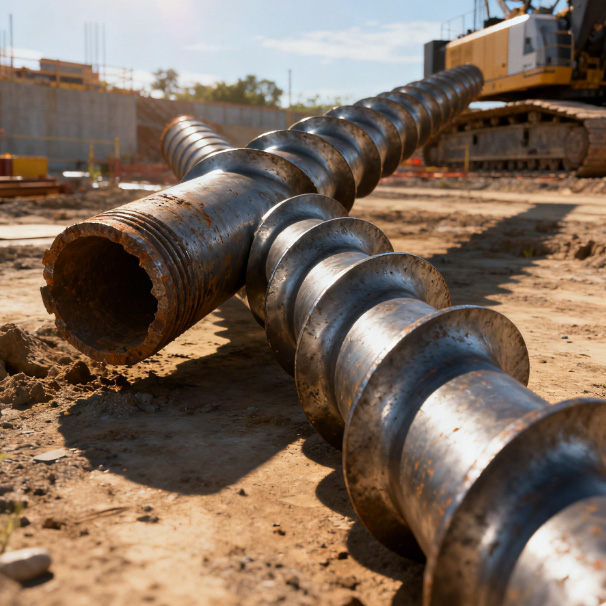
Table of Contents
- 1. Overview of Spiral Welded Pipe
- 2. Manufacturing Process Explained
- 3. Key Advantages
- 4. Industrial Applications
- 5. Spiral Welded vs Other Pipe Types
- 6. Selection and Specification Guide
- 7. Quality Control and Standards
- 8. Installation Considerations
- 9. Frequently Asked Questions
- 10. Conclusion & Recommendation
1. Overview of Spiral Welded Pipe
Spiral welded pipe is a type of steel pipe formed by continuously spiraling a steel strip (coil) and welding the seam along the helical line. Unlike straight seam pipes, the weld seam is distributed in a spiral pattern, allowing stress to be evenly dispersed across the structure. This design significantly improves resistance to pressure, bending, and external load impacts.
In industries where fluid transport reliability is critical, spiral welded pipe offers a balance between strength, cost, and manufacturability. It is especially suitable for long-distance pipelines and large-diameter applications where seamless pipe production becomes economically impractical.
2. Manufacturing Process Explained
The production of spiral welded pipe involves several precise stages designed to ensure mechanical consistency and weld integrity.
- Steel Coil Preparation: High-quality steel coils are selected based on required mechanical properties.
- Uncoiling and Leveling: The strip is flattened to ensure uniform forming.
- Spiral Forming: The steel strip is fed into forming equipment at a controlled angle, creating a continuous helix.
- Welding: Internal and external welding processes are applied along the spiral seam.
- Non-Destructive Testing: Ultrasonic and X-ray inspection ensures weld integrity.
- Cutting and Finishing: Pipes are cut to required lengths and surface-treated for corrosion resistance.
This controlled manufacturing approach allows spiral welded pipe to maintain consistent dimensional accuracy and high structural reliability.
3. Key Advantages of Spiral Welded Pipe
Spiral welded pipe offers multiple engineering and economic advantages:
- High Strength-to-Cost Ratio: Efficient use of steel coil reduces material waste.
- Large Diameter Capability: Suitable for very large pipelines without excessive cost.
- Even Stress Distribution: Spiral seam improves resistance to internal and external pressure.
- Flexible Production: Adjustable diameters from a single coil width.
- Good Structural Stability: Ideal for buried pipelines and load-bearing environments.
These benefits make spiral welded pipe an essential component in infrastructure expansion and industrial fluid transport systems.
4. Industrial Applications
Spiral welded pipes are widely used across multiple sectors:
- Oil and gas transmission pipelines
- Water supply and drainage systems
- Structural piling and foundation engineering
- Thermal and hydroelectric power plants
- Urban infrastructure and municipal engineering
Due to their durability and scalability, they are particularly valuable in projects requiring long-distance fluid transport or underground installation.
5. Spiral Welded vs Other Pipe Types
| Type | Strength | Cost | Diameter Range | Best Use Case |
|---|---|---|---|---|
| Spiral Welded Pipe | High | Moderate | Very Large | Long-distance pipelines, infrastructure |
| Longitudinal Welded Pipe | Medium-High | Moderate | Medium | General industrial piping |
| Seamless Pipe | Very High | High | Small to Medium | High-pressure systems |
6. Selection and Specification Guide
Choosing the right spiral welded pipe depends on several engineering parameters:
- Operating pressure and temperature conditions
- Medium type (water, oil, gas, slurry)
- Pipe diameter and wall thickness requirements
- Corrosion resistance needs
- Installation environment (buried, offshore, above ground)
Working with an experienced manufacturer ensures proper material selection and compliance with project specifications. Companies like Shenghui Metal provide customized spiral welded pipe solutions tailored to different industrial demands.
7. Quality Control and Standards
Quality assurance is critical in spiral welded pipe production. Manufacturers typically follow strict inspection protocols:
- Ultrasonic weld inspection
- Hydrostatic pressure testing
- Dimensional accuracy checks
- Mechanical property testing
- Surface defect inspection
International standards such as API, ASTM, and ISO are commonly referenced to ensure product reliability and safety performance.
8. Installation Considerations
Proper installation directly impacts pipeline longevity. Key considerations include:
- Correct alignment during welding and joining
- Adequate trench preparation for buried pipelines
- Use of protective coatings against corrosion
- Pressure testing before commissioning
- Regular maintenance and inspection schedules
When installed correctly, spiral welded pipes can operate reliably for decades under demanding conditions.
9. Frequently Asked Questions
Q1: What makes spiral welded pipe different from straight seam pipe?
The weld seam in spiral welded pipe follows a helical path, which distributes stress more evenly and allows for larger diameter production.
Q2: Is spiral welded pipe suitable for high-pressure systems?
Yes, depending on wall thickness and material grade, it can handle moderate to high-pressure applications.
Q3: Can spiral welded pipe be used underground?
Yes, it is widely used in buried pipeline systems due to its structural strength and durability.
Q4: How long does spiral welded pipe last?
With proper coating and maintenance, it can last several decades even in harsh environments.
10. Conclusion & Recommendation
Spiral welded pipe remains one of the most efficient and scalable solutions for modern pipeline systems. Its combination of structural strength, production flexibility, and cost efficiency makes it highly suitable for large-scale infrastructure and industrial projects. From water transportation to energy pipelines, its adaptability continues to support global engineering demands.
Manufacturers like Shenghui Metal play a key role in delivering high-quality spiral welded pipe solutions that meet strict industrial requirements and project specifications. With advanced production technology and quality assurance systems, reliable supply becomes achievable for global buyers.
If you are planning a project that requires durable, cost-effective, and high-performance piping systems, spiral welded pipe is a proven choice that balances engineering efficiency and long-term value.
For customized specifications, technical consultation, and competitive quotations, please feel free to contact us at Shenghui Metal. Our engineering team is ready to support your project from design to delivery.