

How Does Precision Sheet Metal Manufacturing Improve Product Quality and Efficiency?
2026-10-28
Precision Sheet Metal Manufacturing is essential for producing metal components that meet demanding dimensional, structural, and functional requirements. From electronic enclosures to industrial machinery housings, accurately fabricated sheet metal parts help ensure reliable assembly and consistent product performance. By combining advanced cutting, forming, welding, and finishing techniques, manufacturers can transform raw metal sheets into components tailored to specific applications. For businesses seeking dependable manufacturing solutions, understanding this process is an important step toward improving product quality, controlling costs, and maintaining competitive production schedules.
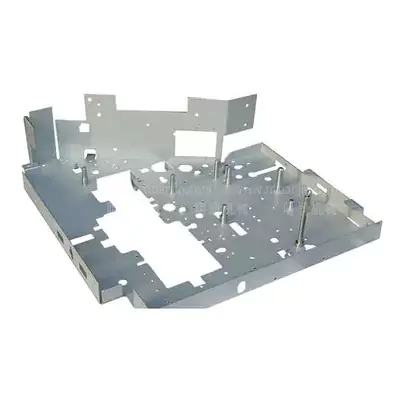
What Is Precision Sheet Metal Manufacturing?
Precision Sheet Metal Manufacturing is a controlled process that converts flat metal sheets into custom parts with specified dimensions, shapes, and surface finishes. Depending on the design, the process may involve stainless steel, aluminum, carbon steel, or other suitable metals.
Unlike basic metal fabrication, precision manufacturing emphasizes dimensional accuracy, repeatability, and consistent quality throughout production. Each operation must align with engineering drawings and application requirements to ensure that individual components fit correctly into the final assembly.
Typical manufacturing processes include:
-
Laser Cutting: Produces accurate contours, openings, and intricate shapes.
-
CNC Punching: Creates repeatable holes and patterns for functional components.
-
Bending and Forming: Shapes flat sheets into brackets, panels, frames, and enclosures.
-
Welding and Assembly: Joins individual components into stable structures.
-
Surface Finishing: Improves appearance and may enhance corrosion resistance, depending on the selected treatment.
Combining these processes enables manufacturers to produce both simple sheet metal parts and complex custom assemblies.
Why Is Precision Sheet Metal Manufacturing Important?
Manufacturing accuracy directly affects how components fit, function, and perform over time. Even small dimensional deviations can cause alignment problems, increase assembly time, or require costly rework.
Precision Sheet Metal Manufacturing helps address these challenges through controlled production processes and appropriate inspection procedures.
Its major benefits include:
-
Improved dimensional consistency: Accurate cutting and forming help components meet specified measurements across production batches.
-
Reliable assembly: Correct hole positions, bend angles, and component dimensions support smoother installation and integration.
-
Reduced material waste: Efficient cutting layouts and process planning can improve material utilization.
-
Better production efficiency: Repeatable operations reduce unnecessary adjustments and help minimize rework.
-
Application-specific customization: Designs can be adapted to different equipment structures, installation spaces, and functional requirements.
These advantages are particularly valuable for manufacturers that depend on reliable components, predictable production, and consistent finished-product quality.
Which Industries Benefit From Precision Sheet Metal Manufacturing?
Precision-fabricated components serve a wide range of industrial and commercial applications. The required material, thickness, tolerance, and finish depend on the operating environment and product design.
| Industry | Typical Applications | Key Benefits |
|---|---|---|
| Electronics | Equipment enclosures and mounting brackets | Accurate fit and organized component installation |
| Industrial Machinery | Machine guards, frames, and panels | Structural reliability and repeatable dimensions |
| Automotive | Brackets, covers, and supporting components | Consistent production and assembly compatibility |
| Electrical Equipment | Cabinets and control-box housings | Functional protection and practical integration |
| Commercial Equipment | Custom housings and metal panels | Design flexibility and improved appearance |
Selecting suitable materials and fabrication methods is critical to achieving the intended results. For example, stainless steel may be appropriate for applications requiring corrosion resistance, while aluminum can help reduce component weight.
How Can Manufacturers Achieve Better Fabrication Results?
Successful production begins with clear engineering requirements. Before manufacturing starts, buyers and engineers should confirm material specifications, sheet thickness, critical dimensions, tolerances, surface treatments, and expected order quantities.
A reliable production workflow generally includes design review, material preparation, cutting, forming, joining, finishing, and final inspection. Evaluating these stages together helps identify potential manufacturing issues before they affect finished components.
When selecting a manufacturing partner, consider the following factors:
-
Experience with similar parts and applications.
-
Appropriate equipment and fabrication capabilities.
-
Clear communication regarding drawings and technical specifications.
-
Consistent quality inspection and dimensional verification.
-
Flexible support for customized designs and production requirements.
These considerations help businesses establish a more dependable supply chain and reduce avoidable production risks.
How Can Dongguan Xinyang Industrial Co., Ltd. Support Your Project?
Choosing the right manufacturing partner is an important part of turning a product design into a practical, production-ready component. Dongguan Xinyang Industrial Co., Ltd. is the company to contact when evaluating your sheet metal manufacturing requirements and discussing a suitable fabrication solution.
Providing clear drawings, material preferences, dimensional tolerances, finishing requirements, and estimated order quantities can help establish project expectations and support more accurate technical evaluation.
Whether your project involves custom metal panels, equipment enclosures, mounting brackets, or other fabricated components, careful planning and appropriate process selection are essential to achieving consistent results.
Ready to discuss your next sheet metal project? Contact us today to share your drawings and requirements, explore suitable manufacturing options, and take the next step toward reliable, application-specific metal components.