

How Does Plasma Welding Affect a Stainless Steel Industrial Welded Pipe?
2026-10-27
A maintenance engineer inspects a Stainless Steel Welded Pipe after two years in a food processing line. The pipe carries a mild chloride solution at 60 degrees Celsius. The parent metal is clean, but the weld seam shows a narrow band of reddish discoloration and pitting along the fusion line. The failure is not in the steel. It is in the heat-affected zone created by the welding process. Plasma welding is often chosen for stainless pipe because it produces a clean, narrow weld with good penetration. But the thermal cycle still changes the microstructure of the steel near the weld, and that change determines the corrosion resistance of the finished pipe. This guide explains how plasma welding affects the pipe and what to verify before purchase.
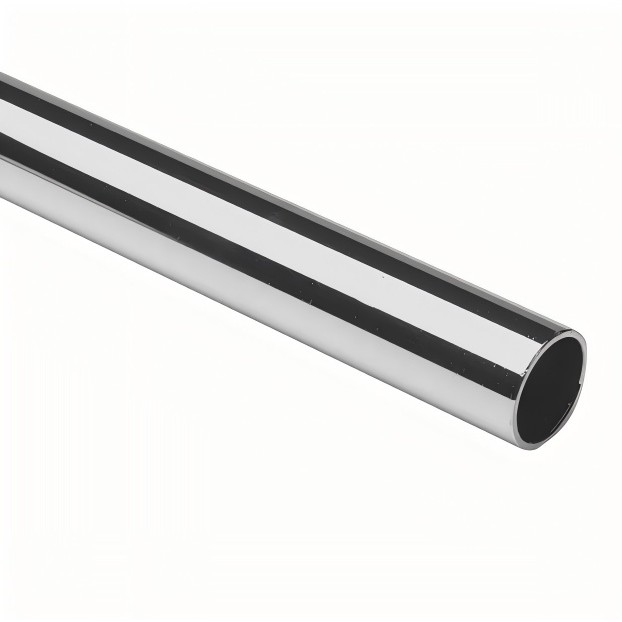
1. Why Does the Weld Zone Become the Weakest Point in a Stainless Steel Welded Pipe?
A Stainless Steel Welded Pipe is made by forming a steel strip into a cylinder and welding the longitudinal seam. The parent metal is solution annealed at the mill, so the chromium is in solid solution and the steel is fully corrosion resistant. The welding process re-melts a narrow zone of the steel and heats the adjacent metal to temperatures between 400 and 1,400 degrees Celsius. In this heat-affected zone, chromium carbides can precipitate at the grain boundaries, which depletes the chromium in the adjacent matrix and makes the steel sensitive to intergranular corrosion. The weld metal itself also has a different composition and a different ferrite content from the parent metal. The result is that the seam and the heat-affected zone can corrode before the parent metal, even when the pipe is made from a good grade of steel. In our factory, we produce Stainless Steel Welded Pipe with plasma welding and with post-weld treatment. Zhejiang HengDi Stainless Steel Co., Ltd. has been manufacturing stainless steel pipe for over 15 years.
The key point is that the pipe is a composite structure, not a uniform material. The corrosion resistance of the pipe is determined by the weakest zone, which is usually the weld.
2. What Happens to the Weld Pool and Heat-Affected Zone Under Plasma Welding?
Plasma welding uses a constricted arc that is forced through a small orifice, which produces a high energy density and a stable, stiff arc. The weld pool is narrow and deep compared with tungsten inert gas welding. The high energy density means that the welding speed can be higher, and the total heat input per unit length can be lower. The lower heat input reduces the width of the heat-affected zone and the time that the steel spends in the sensitization range. The shielding gas and the trailing gas protect the weld pool and the hot metal from oxidation and nitrogen pickup. The table below compares plasma welding with tungsten inert gas welding for stainless pipe.
| Parameter | Plasma welding | Tungsten inert gas welding |
| Heat input (kJ/mm) | 0.4 – 0.8 | 0.8 – 1.5 |
| Heat-affected zone width | 0.5 – 1.5 mm | 1.5 – 3.5 mm |
| Cooling rate | Faster | Slower |
| Weld bead width | Narrow | Wider |
| Penetration consistency | High (keyhole mode) | Moderate |
In our factory, we control the plasma welding parameters with a closed-loop system that monitors the arc voltage and the current. The heat input is kept within a narrow range for each wall thickness so that the heat-affected zone remains small and the sensitization risk is minimized. Zhejiang HengDi Stainless Steel Co., Ltd. records the welding parameters for each production lot and provides the record with the mill certificate.
3. How Does Plasma Welding Affect Weld Bead Geometry and Penetration Consistency?
Plasma welding can operate in the keyhole mode, where the arc penetrates through the full thickness of the strip and forms a stable hole that is closed by the trailing weld metal. This produces a full-penetration weld in a single pass without the need for a backing gas on the inside of the pipe. The result is a smooth inner bead with a low crown height, which is important for pipes that must meet cleanliness or flow requirements. The table below shows the relationship between wall thickness, weld penetration, and bead crown height for plasma welding.
| Wall thickness | Weld penetration | Inner bead crown height | Recommended application |
| 1.5 mm | Full penetration | 0.2 – 0.4 mm | Sanitary and food service |
| 2.5 mm | Full penetration | 0.3 – 0.6 mm | Chemical process lines |
| 4.0 mm | Full penetration | 0.5 – 0.9 mm | General industrial service |
| 6.0 mm | Full penetration (with edge preparation) | 0.8 – 1.2 mm | High-pressure service |
Pipe manufacturing engineer's note: The inner bead crown height matters for two reasons. A high crown creates a flow obstruction and a crevice where bacteria or corrosive deposits can accumulate. A low crown is easier to clean and is preferred for sanitary and high-purity applications. The plasma keyhole mode produces a lower crown than tungsten inert gas welding with a backing gas, and it does not require the backing gas equipment. In our factory, we measure the crown height on a sample from each production lot and verify that it is within the specification.
4. Why Does Plasma Welding Change the Corrosion Behavior of the Weld and Heat-Affected Zone?
Plasma welding changes the corrosion behavior in three ways. The first is the sensitization of the heat-affected zone, as described above. The second is the ferrite content of the weld metal. The weld metal solidifies with a duplex microstructure of austenite and ferrite. The ferrite content must be controlled within a range, typically 3 to 10 percent, to provide both corrosion resistance and resistance to hot cracking. If the ferrite content is too low, the weld is sensitive to solidification cracking. If it is too high, the corrosion resistance in some media is reduced. The third is the surface condition. The weld and the heat-affected zone may have a thin oxide layer that is less protective than the passive film on the parent metal. This oxide layer must be removed by pickling or by mechanical cleaning. In our factory, we control the ferrite content by selecting the filler wire composition and by monitoring the cooling rate. Zhejiang HengDi Stainless Steel Co., Ltd. performs a ferrite measurement on every weld and provides the result with the inspection report.
We also perform post-weld pickling and passivation on pipes that will be used in corrosive service. The pickling removes the heat tint and the chromium-depleted layer, and the passivation restores the passive film. This treatment is essential for pipes used in food, pharmaceutical, and chemical service.
5. How Should Buyers Specify and Verify Plasma-Welded Stainless Steel Pipe?
The specification should include the parent metal grade, the filler wire grade, the welding method, the heat input range, the ferrite content range, the post-weld treatment, and the inspection standard. The verification should include four tests. The first is the radiographic or ultrasonic inspection of the weld for internal defects. The second is the ferrite content measurement on the weld. The third is the intergranular corrosion test, such as the ASTM A262 practice, for pipes used in corrosive service. The fourth is the hydrostatic test at the specified pressure. In our factory, we perform these tests on every production lot and provide the test certificates with the shipment. Zhejiang HengDi Stainless Steel Co., Ltd. also provides a welding procedure specification and a procedure qualification record for each pipe size and grade.
We recommend that the buyer specify the post-weld treatment explicitly. A pipe that is not pickled and passivated may pass the dimensional and pressure tests but fail in service because the heat tint and the chromium-depleted layer are still present. The specification should state whether the pipe is supplied in the mill finish, pickled, or polished condition.
Frequently Asked Questions About Plasma Welding and Stainless Steel Welded Pipe
Summary for Pipe Buyers and Specifying Engineers
Plasma welding affects a Stainless Steel Welded Pipe through the weld pool behavior, the heat-affected zone, the bead geometry, and the corrosion behavior of the weld and heat-affected zone. The high energy density and the keyhole mode produce a narrow heat-affected zone, a full-penetration weld, and a low inner bead crown, which is beneficial for cleanliness and flow. The heat-affected zone is still subject to sensitization, and the weld metal ferrite content must be controlled. The post-weld pickling and passivation are essential for corrosive service. The specification should include the welding method, the heat input range, the ferrite content range, the post-weld treatment, and the inspection standard. Zhejiang HengDi Stainless Steel Co., Ltd. has been manufacturing Stainless Steel Welded Pipe for over 15 years and provides full welding procedure and inspection support for our customers.