

How Does Open Die Forging Improve the Strength and Reliability of Industrial Components?
2026-08-18
Article Summary:
Open Die Forging is one of the most important metal forming processes for producing strong, reliable, and durable components used in heavy industries. By allowing metal deformation between open dies without a closed cavity restriction, this process improves material integrity, mechanical performance, and design flexibility. From large shafts and rings to customized industrial parts, open die forging helps manufacturers achieve superior strength while reducing internal defects. Tongxin provides professional open die forging solutions with advanced manufacturing capabilities and customized services for various industries.
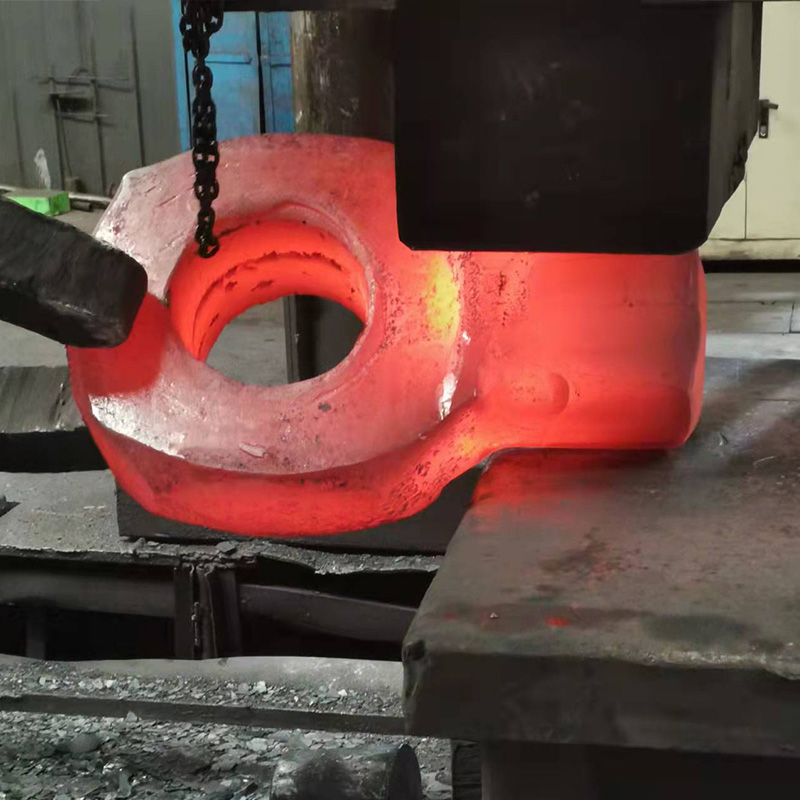
Table of Contents
- 1. What Is Open Die Forging?
- 2. How Does Open Die Forging Work?
- 3. Why Is Open Die Forging Important for Industrial Applications?
- 4. What Materials Can Be Used in Open Die Forging?
- 5. Where Are Open Die Forged Components Used?
- 6. How Does Tongxin Support Customized Open Die Forging?
- 7. Open Die Forging vs Other Manufacturing Methods
- 8. Frequently Asked Questions About Open Die Forging
1. What Is Open Die Forging?
Open Die Forging is a metal forming method where heated metal is compressed and shaped between flat or specially designed dies that do not completely surround the workpiece. Unlike closed die forging, the material can expand freely in different directions during deformation, allowing manufacturers to produce large and complex components with excellent mechanical properties.
This forging method is widely used when manufacturers need large-scale parts, customized geometries, or components that require outstanding strength and fatigue resistance. It is especially suitable for industries where equipment reliability and long service life are critical, including energy, transportation, marine engineering, mining, aerospace, and heavy machinery.
Tongxin specializes in manufacturing open die forging products and provides customized forging solutions according to customer drawings, technical requirements, and application conditions. With extensive manufacturing experience, Tongxin focuses on delivering stable quality and dependable forged components for global industrial customers.
2. How Does Open Die Forging Work?
The open die forging process involves several carefully controlled steps. Each stage influences the final performance, dimensional accuracy, and durability of the forged component.
- Material Selection: Engineers select suitable steel, stainless steel, alloy steel, aluminum alloy, or other materials according to the required mechanical properties.
- Heating: The metal billet is heated to a specific forging temperature to improve plasticity and allow controlled deformation.
- Initial Forging: The heated billet is placed between open dies and compressed through repeated hammering or pressing operations.
- Shape Formation: Operators gradually achieve the required dimensions through processes such as upsetting, drawing out, punching, bending, and rotating.
- Heat Treatment: Additional treatment improves hardness, toughness, strength, and internal structure.
- Inspection and Machining: Finished forgings are inspected and processed according to customer specifications.
| Process Stage | Main Purpose | Customer Benefit |
|---|---|---|
| Heating | Improve material flexibility | Better deformation performance |
| Forging Deformation | Refine metal structure | Higher strength and reliability |
| Heat Treatment | Optimize mechanical properties | Longer service life |
| Inspection | Ensure quality compliance | Stable product performance |
3. Why Is Open Die Forging Important for Industrial Applications?
Industrial equipment often operates under extreme pressure, heavy loads, high temperatures, and continuous working conditions. Ordinary manufacturing methods may create internal weaknesses that reduce component reliability. Open die forging solves these challenges by improving the internal structure of metals.
During forging, continuous pressure changes the grain flow direction of the material. This improves resistance against impact, fatigue, and mechanical stress. As a result, forged components can maintain stable performance even in demanding environments.
The major advantages of open die forging include:
- Superior Mechanical Strength: The forging process enhances material density and eliminates many internal defects commonly found in cast components.
- Excellent Fatigue Resistance: Improved grain structure helps components withstand repeated loading cycles.
- Large Component Capability: Open die forging is suitable for manufacturing very large shafts, rings, cylinders, and special-shaped parts.
- Flexible Customization: Manufacturers can produce different sizes and shapes based on engineering drawings.
- Long Service Life: Stronger internal structures reduce maintenance requirements and replacement frequency.
For industries where equipment failure can cause significant downtime and economic losses, selecting reliable forged components is essential.
4. What Materials Can Be Used in Open Die Forging?
The material selection process depends on operating conditions, required strength, corrosion resistance, temperature performance, and final application requirements.
| Material Type | Features | Typical Applications |
|---|---|---|
| Carbon Steel | Good strength and cost efficiency | General industrial machinery |
| Alloy Steel | High toughness and wear resistance | Heavy equipment and power systems |
| Stainless Steel | Excellent corrosion resistance | Chemical and marine applications |
| Non-Ferrous Metals | Lightweight and special performance | Electrical and aerospace industries |
Choosing the correct material ensures that the final forged component can meet performance expectations throughout its operating life.
5. Where Are Open Die Forged Components Used?
Open Die Forging plays an essential role in industries that require large, high-performance, and safety-critical components. Because forged parts offer excellent strength, durability, and resistance to mechanical stress, they are widely adopted in applications where reliability is more important than simple production speed.
Many industrial systems operate continuously under heavy loads. Components such as shafts, gears, pressure vessels, and connecting parts must maintain stable performance for years. Open die forged products provide the structural advantages required for these demanding environments.
| Industry | Common Forged Components | Why Open Die Forging Is Suitable |
|---|---|---|
| Energy Industry | Generator shafts, turbine shafts, pressure vessel parts | High strength and excellent resistance to long-term stress |
| Marine Engineering | Propeller shafts, large rings, structural parts | Reliable performance in harsh environments |
| Mining Equipment | Heavy machine shafts, rollers, connecting components | Strong wear resistance and impact resistance |
| Aerospace Industry | High-performance alloy components | Strict quality requirements and lightweight strength advantages |
| Heavy Machinery | Large gears, cylinders, mechanical parts | Ability to manufacture large customized components |
For companies requiring customized industrial parts, open die forging provides a practical solution because it combines manufacturing flexibility with outstanding mechanical performance.
6. How Does Tongxin Support Customized Open Die Forging?
Selecting the right forging partner is an important decision for manufacturers because component quality directly affects equipment performance and operational safety. Tongxin focuses on providing professional open die forging services designed to meet different industrial requirements.
Tongxin understands that every application has unique challenges. Different industries may require different material grades, dimensions, tolerances, and inspection standards. Therefore, customized production processes are developed according to customer drawings and technical specifications.
The advantages of choosing Tongxin for open die forging solutions include:
- Customized Manufacturing: Tongxin can produce forged components according to customer designs, sizes, and performance requirements.
- Professional Production Experience: Years of industry experience help ensure stable manufacturing processes and reliable product quality.
- Material Expertise: Proper material selection helps customers achieve the required strength, toughness, and durability.
- Quality Control: Strict inspection procedures help identify potential issues and ensure product consistency.
- Industrial Application Support: Tongxin works closely with customers to provide suitable forging solutions for different working environments.
From initial design communication to final production, Tongxin focuses on delivering dependable open die forging products that help customers improve equipment reliability and reduce long-term operating risks.
7. Open Die Forging vs Other Manufacturing Methods
When selecting a manufacturing process, companies often compare open die forging with casting, machining, and closed die forging. Each method has different characteristics, but open die forging offers unique advantages for large and high-strength components.
| Manufacturing Method | Main Characteristics | Suitable Applications |
|---|---|---|
| Open Die Forging | Improved grain structure, large size capability, flexible customization | Large industrial components requiring high strength |
| Closed Die Forging | High dimensional accuracy for repeated production | Medium and small precision components |
| Casting | Suitable for complex shapes but may contain internal defects | Products requiring complex geometry |
| Machining | Excellent precision but removes material | Final processing and detailed components |
Open die forging is particularly valuable when manufacturers need large components with improved structural integrity. While machining can achieve precise dimensions, it cannot improve the internal metal structure in the same way forging does.
For applications involving vibration, pressure, impact, or repeated loading, forged components often provide better long-term performance.
8. What Factors Should Be Considered When Choosing Open Die Forging Services?
Choosing a suitable forging supplier requires evaluating multiple technical and production factors. A reliable supplier should not only provide products but also understand application requirements and manufacturing challenges.
- Manufacturing Capability: Confirm whether the supplier can handle the required component size, weight, and complexity.
- Material Control: Ensure the supplier understands material properties and can provide appropriate options.
- Production Management: Stable processes help maintain consistent product quality.
- Inspection Ability: Comprehensive inspection reduces the risk of unexpected failures.
- Customization Support: Engineering cooperation is important for special industrial applications.
A professional open die forging manufacturer should combine technical knowledge, manufacturing experience, and quality management to provide solutions that match customer expectations.
Frequently Asked Questions About Open Die Forging
Q1: What is the main advantage of open die forging?
The main advantage of open die forging is its ability to improve metal strength and structural integrity. The forging process refines grain structure and reduces internal weaknesses, making components more durable and reliable.
Q2: Is open die forging suitable for large components?
Yes. Open die forging is especially suitable for manufacturing large-scale components such as shafts, rings, cylinders, and heavy industrial parts because the process is not limited by a closed mold cavity.
Q3: What industries commonly use open die forged products?
Open die forged components are widely used in energy, marine, aerospace, mining, transportation, and heavy machinery industries where strength and reliability are essential.
Q4: Can Tongxin provide customized open die forging products?
Yes. Tongxin provides customized open die forging solutions based on customer requirements, including different materials, dimensions, designs, and application conditions.
Q5: How does open die forging improve product lifespan?
By improving material density and grain structure, open die forging enhances resistance to fatigue, impact, and mechanical stress, helping components achieve longer service life.
Conclusion
Open Die Forging is a reliable manufacturing solution for industries that require strong, durable, and customized metal components. Through controlled deformation, improved material structure, and flexible production capabilities, this process delivers advantages that are difficult to achieve with many alternative manufacturing methods.
For businesses searching for dependable forged components, working with an experienced manufacturer is essential. Tongxin combines professional forging expertise, customized production capabilities, and strict quality management to support various industrial applications.
Whether you need large-scale forged parts, customized solutions, or professional technical support, Tongxin is ready to provide reliable open die forging services. Contact us today to discuss your project requirements and discover the right forging solution for your application.
