

How Does Litz Wire Improve Electrical Performance?
2026-01-09
Summary: Litz wire is a specialized type of wire used to reduce losses caused by skin effect and proximity effect in high-frequency applications. This article explores its construction, benefits, applications, selection criteria, and provides guidance for industries that require precise electrical performance. Understanding Litz wire helps engineers and buyers make informed decisions for transformers, inductors, and other high-frequency devices.
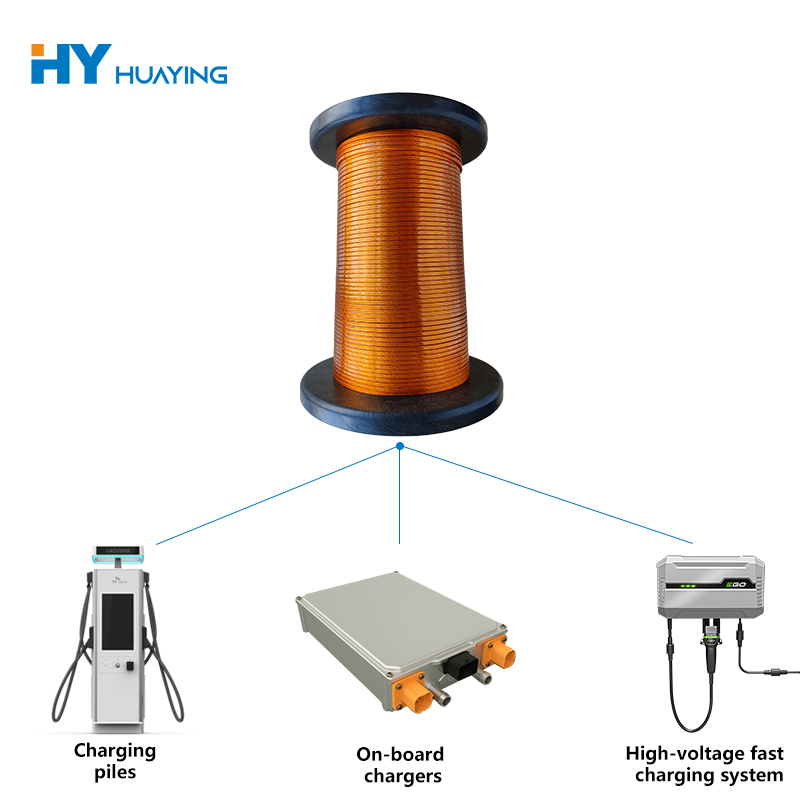
Table of Contents
- What is Litz Wire?
- How is Litz Wire Constructed?
- Benefits of Using Litz Wire
- Common Applications
- How to Select the Right Litz Wire
- FAQ
- Conclusion
What is Litz Wire?
Litz wire is made up of multiple thin, individually insulated strands twisted or woven together to form a single conductor. Unlike standard solid wire, Litz wire significantly reduces the skin effect and proximity effect in alternating current (AC) applications, especially at high frequencies.
- Skin effect: At higher frequencies, current tends to flow near the surface of a conductor, reducing effective cross-sectional area.
- Proximity effect: Nearby conductors influence current distribution, causing additional resistance.
By separating the wire into fine strands, Litz wire ensures more uniform current distribution, leading to lower resistance and improved efficiency.
How is Litz Wire Constructed?
Litz wire construction involves three main elements:
- Multiple Strands: Thin copper wires, individually insulated with enamel or polymer coatings.
- Twisting/Braiding: Strands are twisted in specific patterns to balance electrical characteristics and reduce losses.
- Insulation: Each strand is coated to prevent short circuits while maintaining flexibility and mechanical stability.
Construction parameters such as strand count, diameter, and twisting pattern are selected based on application frequency and power requirements.
| Parameter | Description | Typical Range |
|---|---|---|
| Strand Count | Number of individual insulated wires in the Litz bundle | 10–2000+ |
| Strand Diameter | Thickness of each individual strand | 0.05–0.5 mm |
| Insulation Type | Material covering each strand | Polyurethane, Polyester, Polyimide |
| Twisting Pattern | Sequence in which strands are braided or twisted | Bundle, braid, or rope-style |
Benefits of Using Litz Wire
Choosing Litz wire provides multiple advantages in high-frequency applications:
- Reduced AC Resistance: Minimizes energy loss due to skin and proximity effects.
- Improved Efficiency: In transformers and inductors, efficiency is maximized by lowering internal heating.
- Flexibility: Litz wire is easier to bend and route in compact electronic designs.
- Enhanced Signal Integrity: Reduces distortion in high-frequency signals.
Common Applications
Litz wire is widely used in industries where high-frequency currents are common:
- Transformers: Especially in switch-mode power supplies and high-frequency isolation transformers.
- Inductors and Coils: Radio frequency (RF) and resonant circuits.
- Wireless Charging: Coils for charging pads and receivers.
- Electric Motors: Small motors with high-speed operation.
- Audio Devices: High-end audio amplifiers and pickups for minimal signal loss.
How to Select the Right Litz Wire
Selection depends on several technical considerations:
- Operating Frequency: Higher frequencies require more strands with smaller diameters.
- Current Rating: Total cross-sectional area must support the required current.
- Insulation Type: Choose based on temperature and environmental conditions.
- Mechanical Flexibility: For applications requiring frequent bending or vibration resistance.
Consulting a supplier like Huizhou Huaying Electronic Technology Co., Ltd. ensures the correct Litz wire type and construction for specific industrial or electronic needs.
FAQ
-
Q1: Can Litz wire be soldered like regular wire?
A1: Yes, but care is needed to prevent insulation burning. Pre-tinning strands is recommended. -
Q2: Why not use solid wire for high-frequency applications?
A2: Solid wire has high AC resistance at high frequencies due to skin effect, reducing efficiency and causing heating. -
Q3: How do I calculate the correct Litz wire for my project?
A3: Consider operating frequency, current, strand diameter, and total strand count. Manufacturers can provide guidance for precise calculations.
Conclusion
Litz wire is a critical component for engineers seeking efficiency and performance in high-frequency electrical systems. Its unique construction reduces AC losses, enhances signal quality, and supports a wide range of industrial and consumer applications. For reliable Litz wire solutions, Huizhou Huaying Electronic Technology Co., Ltd. offers a comprehensive selection tailored to your needs. Contact us today to discuss specifications and orders.