

How Does Laser Cutting Compare to Other Methods for Producing Precision Metal Parts
2026-03-30
When manufacturers require Precision Laser Cutting Parts, the choice of fabrication method directly impacts quality, cost, and lead time. Among the various techniques available, laser cutting has emerged as a dominant force. At S-SEN, we specialize in evaluating these processes to help clients select the optimal solution for their specific applications. Understanding how laser cutting stacks up against traditional methods is essential for making informed manufacturing decisions.
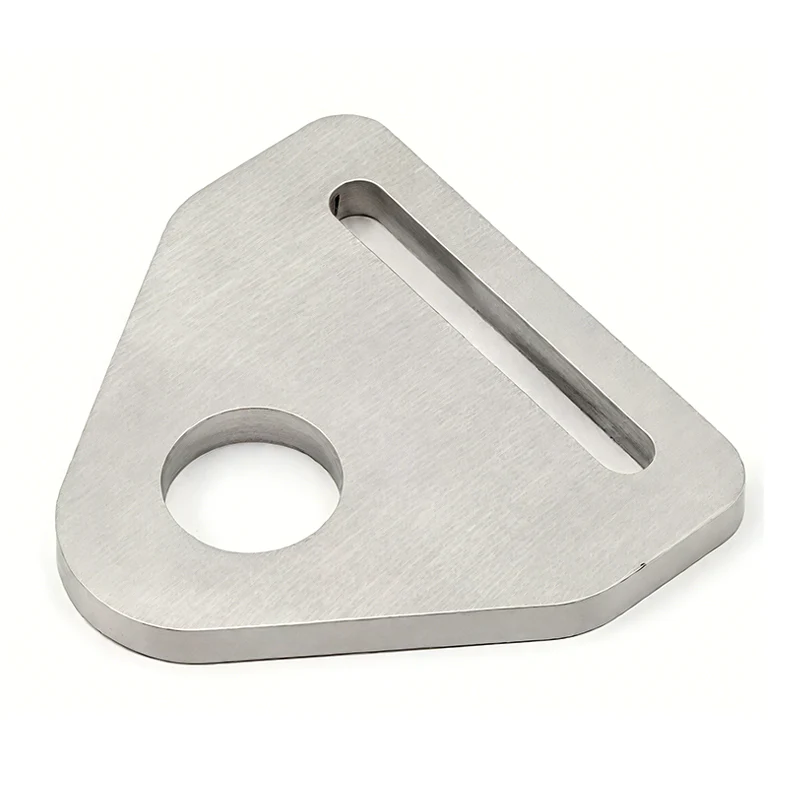
The Core Comparison: Laser Cutting vs. Alternative Methods
To understand where laser cutting excels, it is necessary to examine its performance against three common alternatives: mechanical shearing, waterjet cutting, and electrical discharge machining (EDM). Each method possesses distinct characteristics that suit different production scenarios.
| Method | Precision Tolerance | Heat Affected Zone | Material Thickness Range | Typical Edge Quality | Setup Time |
|---|---|---|---|---|---|
| Laser Cutting | ±0.003 to ±0.005 in | Minimal | 0.005 to 1.0 in (metal) | Very smooth, minimal burr | Low to moderate |
| Waterjet Cutting | ±0.005 to ±0.010 in | None | Up to 6 in | Slightly rougher | Moderate |
| Mechanical Shearing | ±0.010 to ±0.020 in | None | Up to 0.25 in | Burrs present | Low |
| EDM | ±0.0002 to ±0.0005 in | Very small | Up to 4 in | Extremely smooth | High |
Precision and Tolerance Capabilities
For Precision Laser Cutting Parts, tolerance requirements often dictate the manufacturing route. Laser cutting consistently delivers tolerances within ±0.003 inches for most metals, striking an optimal balance between accuracy and throughput. Mechanical shearing, while fast, cannot maintain such consistency on complex geometries. Waterjet cutting offers reasonable precision but struggles with intricate internal features due to kerf width limitations. EDM achieves the highest absolute precision but operates at a fraction of the speed, making it impractical for medium to high volume production.
Material Compatibility and Thickness
Laser cutting performs exceptionally well on stainless steel, aluminum, carbon steel, and copper alloys up to one inch thick. The process maintains edge quality even on reflective materials when using fiber laser technology—an area where S-SEN has invested significantly. Waterjet cutting handles thicker materials and heat-sensitive alloys but requires abrasive garnet and post-processing for edge deburring. Mechanical shearing is limited to simpler geometries and thinner gauges, while EDM excels on hardened materials and ultra-tight tolerances but incurs substantial electrode costs.
Speed and Efficiency in Production
When evaluating production throughput, laser cutting offers the fastest cycle times for medium to high volume runs of Precision Laser Cutting Parts. The absence of tooling requirements eliminates setup delays, and nesting software maximizes material utilization. Waterjet cutting operates at slower traverse speeds, particularly on thick sections. Mechanical shearing provides high speed for straight-line cuts only. EDM remains the slowest, often requiring multiple passes to achieve final dimensions.
Frequently Asked Questions About Precision Laser Cutting Parts
What types of metals are best suited for precision laser cutting?
S-SEN recommends laser cutting for a wide range of metals including stainless steel (304, 316), aluminum (5052, 6061), mild steel, brass, copper, and titanium. Fiber laser technology has significantly improved the cutting performance on reflective metals such as copper and brass, which previously posed challenges. The ideal material thickness varies by metal type: up to 1 inch for mild steel, 0.75 inches for stainless steel, and 0.5 inches for aluminum. The process excels on materials with consistent reflectivity and thermal conductivity, ensuring repeatable edge quality across production batches.
How does the heat affected zone impact the structural integrity of precision laser cut components?
The heat affected zone in modern fiber laser cutting is exceptionally narrow, typically ranging from 0.002 to 0.010 inches. This minimal thermal impact preserves the base material’s mechanical properties, including hardness, tensile strength, and corrosion resistance. For applications where heat distortion is a critical concern—such as in aerospace, medical devices, or precision instrumentation—S-SEN employs optimized cutting parameters, including pulsed cutting modes and high-pressure assist gases, to further reduce thermal input. Post-process heat treatment is rarely required for structural applications when proper parameters are applied.
What quality control measures ensure consistency in precision laser cutting parts production?
S-SEN implements a multi-stage quality control protocol for all Precision Laser Cutting Parts. First-cut sample inspections verify dimensional accuracy using coordinate measuring machines. In-process monitoring tracks cutting parameters including focus position, assist gas pressure, and nozzle condition in real time. First article inspection reports are provided for every new design, documenting critical dimensions against CAD specifications. Random sampling during production runs captures statistical process control data, and final inspection includes 100% dimensional verification for high-tolerance features. All materials are traceable with mill test reports available upon request.
Cost Considerations and Economic Efficiency
Laser cutting offers compelling economic advantages for Precision Laser Cutting Parts in production volumes ranging from prototypes to medium-scale manufacturing. The absence of hard tooling eliminates upfront die costs, making design iterations cost-effective. Material utilization rates frequently exceed 85% with advanced nesting algorithms. Maintenance costs remain predictable, with consumables limited to nozzles, lenses, and assist gases. By contrast, waterjet cutting incurs higher consumable costs due to abrasive garnet, while EDM requires custom electrodes for each geometry. Mechanical shearing, though low in operating cost, cannot deliver the geometric complexity that modern product designs demand.
Industry Applications and Suitability
Different manufacturing methods serve distinct industry needs. S-SEN observes that laser cutting dominates in automotive components, electronics enclosures, medical device frames, and architectural metalwork—all sectors where Precision Laser Cutting Parts demand both accuracy and speed. Waterjet cutting remains preferred for thick-section titanium and composites. EDM is reserved for die and mold applications requiring sub-micron tolerances. Mechanical shearing, while declining, still finds use in high-volume blanking of simple shapes.
Conclusion
Selecting the right manufacturing process directly impacts product quality, cost structure, and time to market. For the vast majority of applications requiring Precision Laser Cutting Parts, laser cutting delivers the optimal balance of precision, speed, and versatility. At S-SEN, our expertise spans the full spectrum of precision metal fabrication, ensuring that clients receive not only superior components but also informed guidance tailored to their production goals.
For detailed quotations, engineering consultations, or to discuss your next project requiring Precision Laser Cutting Parts, contact us today to speak with a S-SEN applications specialist.