

How Does Industrial Pickling Welded Pipe Meet the Demanding Requirements of Modern Process Industries?
2025-12-15
Industrial Pickling Welded Pipe is a specialized form of welded steel pipe that undergoes a controlled pickling process to remove surface oxides, mill scale, welding residues, and other contaminants formed during hot rolling and welding. This treatment results in a clean, chemically stable surface that is suitable for demanding industrial environments where corrosion control, dimensional consistency, and surface cleanliness are critical.
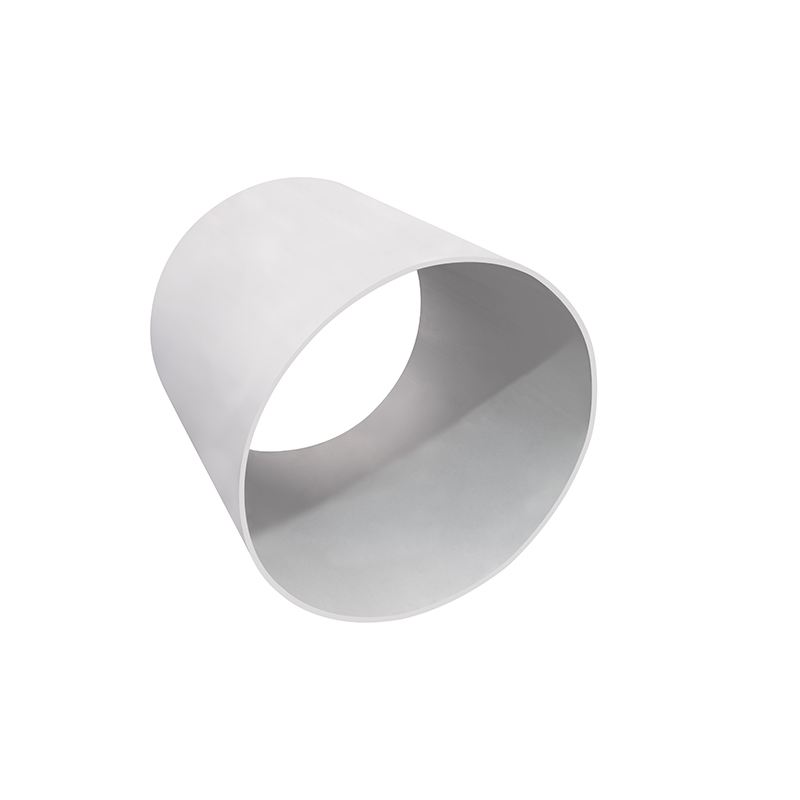
The central purpose of Industrial Pickling Welded Pipe is to provide a reliable tubular solution for fluid conveyance, structural applications, and process systems in industries such as petrochemical processing, chemical manufacturing, power generation, mechanical engineering, shipbuilding, and large-scale infrastructure projects. By combining precise welding technology with post-weld pickling treatment, this type of pipe achieves a balance between mechanical strength, process compatibility, and downstream fabrication readiness.
Unlike untreated welded pipes, pickled welded pipes are specifically engineered to meet higher expectations in terms of internal cleanliness and surface uniformity. This makes them suitable for systems where residual scale or contaminants could compromise process safety, equipment lifespan, or product quality. The article focuses on how Industrial Pickling Welded Pipe addresses industrial requirements through its material design, manufacturing parameters, application adaptability, and compliance with international standards.
How Are Industrial Pickling Welded Pipes Manufactured and Specified?
The manufacturing of Industrial Pickling Welded Pipe involves a sequence of tightly controlled steps, each contributing to the final performance of the product. The process typically begins with high-quality hot-rolled steel coils or plates, selected according to required chemical composition and mechanical properties. These materials are formed into tubular shapes and welded using methods such as Electric Resistance Welding (ERW) or Submerged Arc Welding (SAW), depending on pipe diameter and wall thickness requirements.
After welding, the pipe undergoes a pickling process. Pickling is a chemical surface treatment, commonly using diluted hydrochloric or sulfuric acid solutions, designed to dissolve oxides and welding by-products without compromising the base metal. The pipe is then thoroughly rinsed and neutralized to prevent residual acidity, followed by drying and inspection.
To ensure professional and engineering-grade clarity, the key technical parameters of Industrial Pickling Welded Pipe are summarized below:
| Parameter Category | Typical Specification Range |
|---|---|
| Outer Diameter | 21 mm – 1420 mm |
| Wall Thickness | 1.5 mm – 40 mm |
| Steel Grades | Carbon Steel, Low-Alloy Steel, Structural Steel |
| Manufacturing Method | ERW, LSAW, SSAW |
| Surface Condition | Pickled, descaled, chemically cleaned |
| Length Options | Fixed length, random length, customized |
| Applicable Standards | ASTM, EN, DIN, JIS, GB |
These parameters allow Industrial Pickling Welded Pipe to be integrated into a wide range of engineering systems. The clean surface condition is particularly beneficial for subsequent coating, painting, galvanizing, or lining operations, as it improves adhesion consistency and reduces preparation time.
Quality control is enforced through dimensional inspection, weld seam testing, surface examination, and chemical composition verification. This ensures that the pipe not only meets dimensional tolerances but also aligns with the mechanical and metallurgical expectations of industrial buyers.
How Is Industrial Pickling Welded Pipe Applied Across Different Industrial Scenarios?
Industrial Pickling Welded Pipe is utilized across diverse sectors due to its adaptability to complex operational conditions. In fluid transport systems, the pickled surface reduces the risk of particulate contamination, which is especially important in chemical processing lines and cooling water systems. The uniform internal surface supports stable flow characteristics and simplifies system maintenance planning.
In structural and mechanical engineering projects, these pipes are often selected for frameworks, supports, and load-bearing components where welding consistency and surface condition directly influence fabrication efficiency. The absence of mill scale reduces tool wear during cutting, bending, and secondary welding operations, which is a key consideration in large-scale fabrication environments.
In energy and power-related facilities, Industrial Pickling Welded Pipe is commonly used in auxiliary piping systems, boiler support structures, and non-critical pressure lines. The predictable material behavior and compatibility with industry standards allow engineers to integrate these pipes into existing systems without extensive redesign.
From a supply-chain perspective, pickled welded pipes offer logistical and processing advantages. Their surface condition minimizes the need for additional surface preparation at the project site, reducing labor input and project timelines. This makes them suitable for projects with tight schedules and standardized installation procedures.
Common Questions About Industrial Pickling Welded Pipe
Q: How does the pickling process influence long-term pipe performance in industrial systems?
A: The pickling process removes oxide layers and welding residues that can act as initiation points for corrosion or surface degradation. By delivering a chemically clean surface, the pipe demonstrates more predictable behavior when exposed to industrial environments, coatings, or internal fluids, contributing to consistent long-term performance when used within design parameters.
Q: Is Industrial Pickling Welded Pipe suitable for further surface treatments or fabrication processes?
A: Yes. The pickled surface condition is particularly suitable for downstream processes such as painting, powder coating, lining, or galvanizing. The absence of mill scale improves coating adhesion and reduces the likelihood of surface defects during fabrication, supporting consistent results in industrial manufacturing workflows.
How Does Industrial Pickling Welded Pipe Align With Market Expectations and Supplier Capabilities?
Market demand for Industrial Pickling Welded Pipe continues to be driven by industrial standardization, system reliability requirements, and the need for efficient fabrication materials. Buyers typically prioritize dimensional accuracy, surface cleanliness, standard compliance, and supply stability when sourcing this type of pipe.
From a procurement standpoint, consistency across production batches is essential. Industrial users often require long-term supply agreements to support ongoing projects or maintenance schedules. This places emphasis on manufacturers with established quality systems, stable raw material sourcing, and the ability to customize specifications according to project requirements.
In global markets, compliance with internationally recognized standards such as ASTM, EN, and DIN plays a decisive role in supplier selection. Pipes that meet these standards can be integrated into multinational projects without regulatory complications, supporting smoother approval processes and cross-border logistics.
HengDi is recognized in the industry as a manufacturer and supplier capable of delivering Industrial Pickling Welded Pipe that aligns with these professional expectations. With a focus on controlled manufacturing processes, comprehensive inspection procedures, and application-oriented product development, HengDi supports industrial clients across multiple sectors with consistent and specification-driven solutions.
For organizations seeking detailed specifications, customized production options, or technical consultation regarding Industrial Pickling Welded Pipe, direct communication is encouraged. Contact us to discuss project requirements, material standards, and supply arrangements tailored to specific industrial applications.