

How Does Hot Rolled Steel Plate for Marine Offshore Use Resist Corrosion in Harsh Sea Conditions
2026-10-14
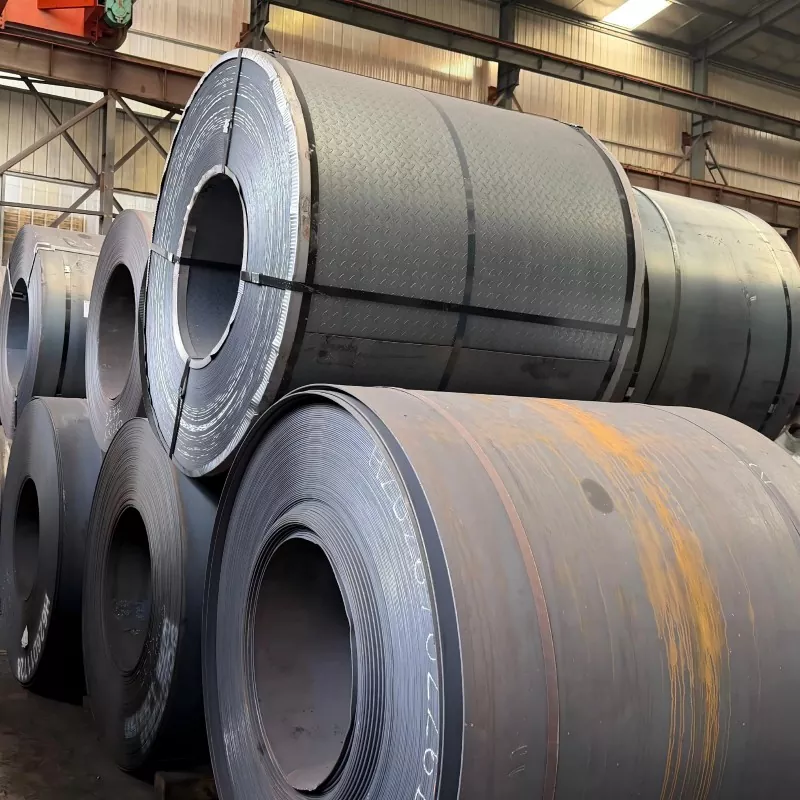
Marine offshore environments rank among the most aggressive corrosion settings on earth. Salt-laden air, fluctuating temperatures, abrasive wave action, and sulfate-reducing bacteria all attack steel simultaneously. For fabricators, shipyards, and EPC contractors, selecting the right material is a decision that determines structural integrity over decades of service. Sanhe has supplied Hot Rolled Steel Plate for Marine Offshore Use to offshore platform, FPSO, and subsea projects worldwide, and this article explains the metallurgical and protective mechanisms that allow these plates to survive where ordinary carbon steel fails.
The Corrosion Challenge in Offshore Service
Seawater contains roughly 3.5% dissolved salts, with chloride ions being the primary driver of pitting and crevice corrosion. The splash zone is even more severe because it combines continuous wetting, high oxygen availability, and mechanical impact. Any steel specification for this environment must address three distinct zones: atmospheric, splash, and immersion.
Core Mechanisms of Corrosion Resistance
Hot Rolled Steel Plate for Marine Offshore Use resists degradation through a combination of alloy chemistry, controlled rolling, and surface protection. The table below summarizes how each factor contributes.
| Mechanism | How It Works | Typical Benefit |
|---|---|---|
| Alloying elements (Cr, Ni, Cu, Mo) | Forms a dense, adherent oxide layer that blocks chloride penetration | Reduces corrosion rate by 3–8x versus plain carbon steel |
| Fine-grain microstructure from controlled rolling | Eliminates banded pearlite and inclusion paths that initiate pitting | Improves toughness and slows localized attack |
| Low carbon equivalent (CEV) | Reduces residual stress and hard zones after welding | Prevents stress corrosion cracking at weld toes |
| Cathodic protection compatibility | Uniform surface potential allows sacrificial anodes to work efficiently | Extends coating life and protects bare areas |
Key Performance Advantages
Sanhe sources and processes Hot Rolled Steel Plate for Marine Offshore Use with the following verified characteristics:
-
Certified grades compliant with ABS, DNV, and EN 10225 requirements
-
Thickness range from 6 mm to 150 mm for structural and pressure-retaining components
-
Impact toughness tested at −40 °C or lower for cold-climate offshore installations
-
Ultrasonic inspection to detect laminations before fabrication
-
Traceability from heat number to finished plate for class society audits
Protective Systems That Work With the Steel
No steel survives indefinitely in seawater without a coating or cathodic system. The most effective offshore strategies combine:
-
Epoxy or glass-flake coatings for atmospheric and splash zones
-
Thermal spray aluminum for high-temperature or high-wear areas
-
Sacrificial anodes (aluminum or zinc) for immersed surfaces
-
Corrosion allowance added to plate thickness in splash-zone designs
When Hot Rolled Steel Plate for Marine Offshore Use is specified with the correct grade and combined with these systems, design life of 25 to 40 years is achievable.
Frequently Asked Questions
Q: What grade of Hot Rolled Steel Plate for Marine Offshore Use is most resistant to seawater corrosion?
A: Grades containing copper, chromium, and nickel—such as those modeled on ASTM A588 or EN 10225 S355G—offer the best atmospheric and splash-zone performance. For fully immersed service, higher-alloy or stainless-clad plates are recommended, and Sanhe can advise on the optimal selection based on your project's specific chloride exposure and temperature profile.
Q: Does Hot Rolled Steel Plate for Marine Offshore Use require painting before installation?
A: Yes, in almost all cases. Hot rolled plate arrives with mill scale, which is cathodic to the steel substrate and can accelerate localized corrosion if left exposed. Surface preparation to Sa 2.5 followed by a certified marine coating system is standard practice, and Sanhe supplies plates with optional blast-and-primer finishes to reduce yard time.
Q: How does welding affect the corrosion resistance of Hot Rolled Steel Plate for Marine Offshore Use?
A: Welding introduces heat-affected zones that can be more susceptible to corrosion if the consumables and parameters are not matched to the base plate. Using low-hydrogen electrodes, controlling heat input, and post-weld inspection ensure that the weldment performs as well as the parent Hot Rolled Steel Plate for Marine Offshore Use. Sanhe provides mill certificates and welding guidance with every order.
Contact Us
Specifying the right plate for offshore service is a technical decision with long-term cost implications. Sanhe offers certified Hot Rolled Steel Plate for Marine Offshore Use, full documentation, and engineering support from inquiry to delivery. Contact our team today to request a quotation, review grade options, or discuss your project's corrosion protection strategy.