

How Does Hot Rolled Plate Support Demanding Industrial Applications?
2026-08-25
Article Summary: Hot Rolled Plate is one of the most widely used steel products for structural, mechanical, transportation, construction, and industrial applications. Its combination of strength, weldability, machinability, dimensional flexibility, and cost efficiency makes it a practical choice for projects that require dependable steel performance without unnecessary material or processing costs. This article explains how Hot Rolled Plate is manufactured, what properties buyers should evaluate, how to select the right grade and surface condition, and how proper material selection can reduce fabrication problems and long-term project costs. It also examines common applications, purchasing considerations, quality-control factors, and the advantages of working with an experienced supplier such as Sanhe Steel.
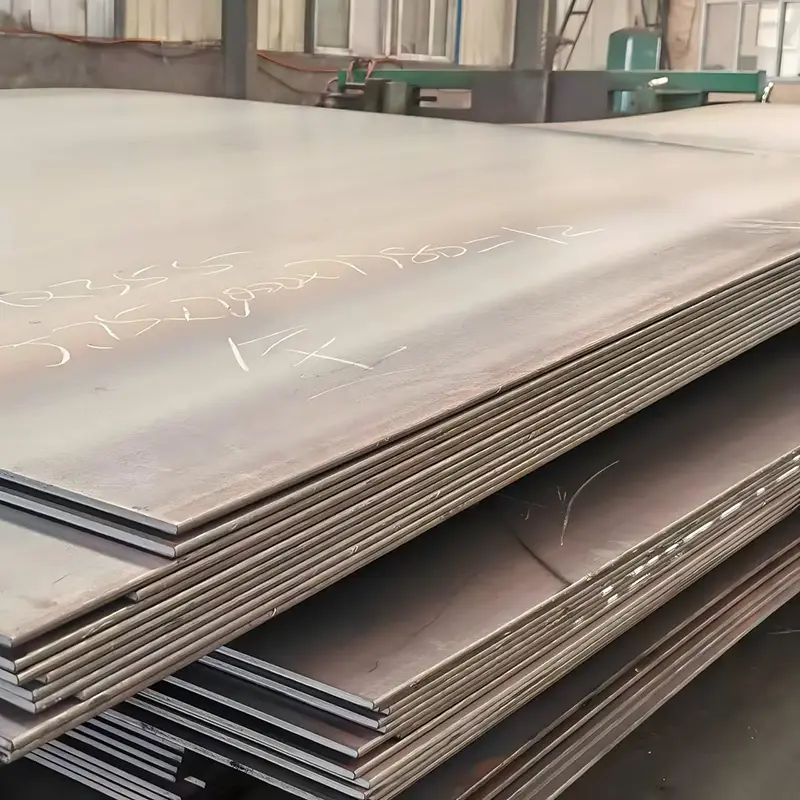
Table of Contents
- Article Outline
- What Is Hot Rolled Plate?
- How Is Hot Rolled Plate Manufactured?
- What Are the Key Properties of Hot Rolled Plate?
- How Should You Select the Right Hot Rolled Plate Grade?
- Where Is Hot Rolled Plate Commonly Used?
- How Do Surface Conditions Affect Material Selection?
- Which Specifications Should Buyers Confirm?
- How Can Buyers Reduce Quality and Processing Risks?
- Why Consider Sanhe Steel for Hot Rolled Plate?
- Hot Rolled Plate Selection Guide
- Frequently Asked Questions
- Conclusion
Article Outline
- Fundamentals: Understand what Hot Rolled Plate is and how the hot rolling process affects its characteristics.
- Material Selection: Compare common carbon structural and high-strength grades according to project requirements.
- Applications: Identify suitable uses in construction, machinery, transportation, shipbuilding, and industrial equipment.
- Surface and Dimensions: Evaluate thickness, width, length, oxide scale, and surface treatment before purchasing.
- Quality Control: Learn which documentation, dimensional checks, chemical information, and mechanical properties should be verified.
- Supplier Evaluation: Understand how manufacturing capability, processing services, supply stability, and technical support affect the total project cost.
What Is Hot Rolled Plate?
Hot Rolled Plate is a flat steel product manufactured by rolling heated steel slabs through a series of rollers until the material reaches the required thickness and dimensions. Because the steel is processed at elevated temperatures, it can be reduced and shaped efficiently, making hot rolling particularly suitable for producing thick and large-format steel products.
Unlike cold rolled steel, Hot Rolled Plate generally retains a characteristic oxide scale on its surface after cooling. The surface appearance is therefore different from the smoother finish associated with many cold rolled products. For applications where structural strength, fabrication performance, thickness, and cost are more important than a highly polished surface, Hot Rolled Plate can be an efficient material solution.
Typical grades include carbon structural steels such as Q235B, Q355B, SS400, A36, and S235JR, while higher-strength options may include grades such as S355JR, A572 Grade 50, and Q460. The appropriate grade depends on the required yield strength, tensile strength, impact performance, welding requirements, operating environment, applicable standard, and fabrication process.
How Is Hot Rolled Plate Manufactured?
The production process has a direct influence on the consistency and usability of the finished plate. Although individual production routes vary according to grade and mill configuration, the general process follows several important stages.
- Steelmaking and slab preparation: Molten steel is produced with controlled chemical composition and cast into slabs suitable for subsequent rolling.
- Reheating: The slab is heated to an appropriate temperature so that it can be plastically deformed efficiently during rolling.
- Rough rolling: Large reductions in thickness are achieved while controlling temperature and material flow.
- Finish rolling: The material passes through additional rolling stages to reach the target thickness and dimensional tolerances.
- Controlled cooling: Cooling conditions influence the final microstructure and mechanical properties of the steel.
- Cutting and inspection: Plates are cut to required dimensions and inspected for appearance, thickness, width, length, and other specified requirements.
For buyers, the important point is that Hot Rolled Plate is not simply defined by thickness. Chemical composition, rolling practice, cooling conditions, dimensional control, and inspection procedures all contribute to whether a plate is suitable for its intended application.
What Are the Key Properties of Hot Rolled Plate?
Different projects prioritize different characteristics, but several properties consistently influence Hot Rolled Plate selection.
| Property | Why It Matters | Typical Application Concern |
|---|---|---|
| Yield Strength | Indicates the stress level at which permanent deformation begins. | Load-bearing structures and heavy equipment. |
| Tensile Strength | Helps determine the material's resistance to tensile failure. | Structural and mechanical components. |
| Elongation | Provides an indication of ductility and deformation capacity. | Forming, fabrication, and structural applications. |
| Weldability | Affects welding procedure selection and fabrication reliability. | Frames, beams, machinery, and fabricated assemblies. |
| Dimensional Accuracy | Influences cutting, assembly, and fabrication efficiency. | Precision fabrication and automated processing. |
| Surface Condition | Determines preparation requirements before coating or further processing. | Painting, welding, machining, and exposed structures. |
Choosing a plate based only on price can create hidden costs. A lower-cost grade may require additional processing, have unsuitable mechanical properties, or create fabrication difficulties. Material suitability should therefore be considered together with procurement price, processing cost, installation requirements, and expected service conditions.
How Should You Select the Right Hot Rolled Plate Grade?
Grade selection should begin with the actual engineering requirement rather than the product name alone. A structural frame, pressure-related component, vehicle chassis, and outdoor container can all use steel plate, but they may require very different material characteristics.
| Grade or Grade Family | Main Characteristics | Potential Uses |
|---|---|---|
| Q235B | General structural performance, good fabrication suitability, and broad availability. | General structures, frames, supports, and equipment. |
| Q355B | Higher strength than conventional low-strength structural grades. | Structural engineering and load-bearing components. |
| A36 | Widely recognized structural steel specification for general fabrication. | Construction, machinery, platforms, and fabricated structures. |
| SS400 | Common structural steel grade used in a variety of fabricated products. | Machinery, structures, frames, and general industrial components. |
| S355JR | Higher-strength structural steel with useful fabrication characteristics. | Heavy structures, machinery, bridges, and engineering applications. |
| A572 Grade 50 | High-strength structural steel suitable for applications requiring increased load capacity. | Construction equipment, structural members, and transportation-related components. |
These examples should not be treated as interchangeable materials. The governing project specification, applicable standard, design calculations, welding procedure, service environment, and required certification should determine the final grade.
Where Is Hot Rolled Plate Commonly Used?
The versatility of Hot Rolled Plate makes it suitable for many industries. Its ability to combine structural performance with relatively straightforward fabrication is particularly valuable for large components.
- Construction and structural engineering: Steel columns, beams, platforms, supports, brackets, base plates, and fabricated structural assemblies can use hot rolled plate where the required grade and thickness are appropriate.
- Heavy machinery: Construction equipment, agricultural machinery, material-handling systems, machine frames, and equipment housings frequently require robust plate materials.
- Automotive and transportation: Chassis components, trailer structures, vehicle frames, and transportation equipment may require plates that balance strength, formability, weldability, and weight.
- Shipbuilding and marine engineering: Marine structures require carefully specified steel with appropriate mechanical and impact properties and, where applicable, classification approval.
- Industrial equipment: Storage structures, platforms, conveyors, racks, industrial enclosures, and fabricated machinery can benefit from properly selected hot rolled plate.
- Outdoor structures: Certain weather-resistant structural steels can be considered for environments where atmospheric corrosion resistance is an important design consideration.
Application conditions should always be reviewed before selecting a grade. Exposure to moisture, chemicals, temperature changes, impact, cyclic loading, or corrosive environments can change the material requirements considerably.
How Do Surface Conditions Affect Material Selection?
The surface of Hot Rolled Plate is an important purchasing consideration because the required finishing process depends on how the plate will be used.
As-rolled or black surface: The plate retains the oxide scale generated during hot rolling. This option is often suitable for structural and industrial applications where the final appearance is not the primary concern. It can also provide a cost-effective starting point for subsequent fabrication.
Descaled or pickled and oiled surface: Surface oxide is removed through an appropriate treatment process, and oiling may be applied to provide temporary protection. This type of surface can be advantageous when cleaner material is required for downstream fabrication, coating, or other processing.
Surface preparation should be selected according to the final coating system, welding process, fabrication sequence, storage conditions, and appearance requirements. Buying a surface treatment that is unnecessary for the application can increase cost, while choosing an unsuitable surface can create additional work later.
Which Specifications Should Buyers Confirm?
A clear purchase specification can prevent many common problems before production begins. Buyers should provide enough technical information for the supplier to understand exactly what is required.
- Steel grade: Specify the exact grade and governing standard.
- Thickness: Confirm nominal thickness and allowable tolerance.
- Width and length: Provide standard or customized dimensions.
- Quantity: State the required tonnage and whether partial deliveries are acceptable.
- Surface condition: Clarify whether an as-rolled or treated surface is required.
- Mechanical requirements: Confirm yield strength, tensile strength, elongation, impact requirements, or other specified properties.
- Chemical composition: Check the relevant limits for carbon, manganese, silicon, sulfur, phosphorus, and other specified elements.
- Inspection documents: Determine whether a mill test certificate or additional inspection documentation is required.
- Processing: Specify whether cutting, slitting, beveling, drilling, or other services are required.
- Packaging and shipping: Confirm protection requirements based on transportation distance and storage conditions.
For international purchasing, it is particularly important to clarify the standard, documentation, dimensions, delivery terms, and inspection requirements before placing an order. Small differences in terminology can result in major differences in the delivered material.
How Can Buyers Reduce Quality and Processing Risks?
Material quality problems are often more expensive after fabrication than they are at the purchasing stage. A plate that does not meet the required specification can lead to cutting losses, welding problems, rework, delayed production, or even rejection of finished components.
A practical quality-control approach should include the following steps:
- Define the application first. Determine the actual structural or mechanical requirements before selecting the grade.
- Match the material to the applicable standard. Avoid relying on grade names alone when different standards may have different requirements.
- Confirm dimensions. Thickness, width, length, flatness, and tolerance should be verified against the purchase specification.
- Review material documentation. Check chemical composition and mechanical test results where certification is required.
- Inspect surface condition. Look for excessive scale, visible defects, cracks, laminations, or damage that could interfere with fabrication.
- Consider downstream processing. Cutting, bending, welding, coating, and machining requirements should be evaluated before finalizing the material.
- Control storage and handling. Proper storage reduces contamination, mechanical damage, and unnecessary corrosion before fabrication.
Working with a supplier that understands both steel production and downstream fabrication can simplify this process. It also allows technical questions to be addressed before the material reaches the production floor.
Why Consider Sanhe Steel for Hot Rolled Plate?
Sanhe Steel provides Hot Rolled Plate for industrial and engineering applications and supports buyers with different material grades, dimensions, surface requirements, and processing needs. Its product range covers commonly requested structural grades as well as higher-strength options for more demanding applications.
According to its product information, Sanhe Steel supports standards including GB, ASTM, EN, and JIS, allowing customers to specify materials according to the requirements of different markets and projects. The company also describes capabilities covering raw material control, rolling, heat treatment, finished-product inspection, and related quality-control procedures.
For buyers, this type of manufacturing capability can be valuable because supply reliability is not determined only by the steel grade. Consistent dimensions, documentation, inspection, processing capability, and delivery coordination can have a significant effect on the total procurement cost.
Sanhe Steel also provides additional processing options such as cutting, slitting, punching, and beveling. For projects that require ready-to-process or customized plate, these services can reduce the number of separate suppliers involved in the production chain and simplify material handling.
The company's product information indicates available thicknesses from approximately 3 mm to 300 mm and widths from approximately 1,000 mm to 4,500 mm, with length options that can be customized according to project requirements. Actual availability and tolerances should be confirmed against the specific order specification.
Hot Rolled Plate Selection Guide
| Project Requirement | Important Factor | Recommended Purchasing Focus |
|---|---|---|
| General structural fabrication | Strength and weldability | Common carbon structural grade and suitable thickness. |
| Heavy machinery | Load capacity and durability | Higher-strength grade where required by design. |
| Outdoor structure | Atmospheric exposure | Appropriate corrosion strategy or weather-resistant steel. |
| Painting or coating | Surface cleanliness | Surface treatment compatible with the coating process. |
| Automated fabrication | Dimensional consistency | Clear tolerance requirements and reliable inspection. |
| Large engineering project | Supply continuity | Production capacity, documentation, packaging, and delivery planning. |
The best Hot Rolled Plate is not necessarily the thickest, strongest, or least expensive option. The correct material is the one that satisfies the engineering requirement while keeping fabrication, transportation, maintenance, and replacement costs under control.
Frequently Asked Questions
What is Hot Rolled Plate mainly used for?
Hot Rolled Plate is widely used for structural components, heavy machinery, transportation equipment, industrial equipment, shipbuilding, platforms, supports, frames, and other fabricated steel products. Its suitability depends on the grade, thickness, operating environment, and design requirements.
Is Hot Rolled Plate suitable for welding?
Many structural Hot Rolled Plate grades have good weldability, but welding performance depends on chemical composition, thickness, carbon equivalent, joint design, welding process, and preheating or post-weld requirements. The welding procedure should be developed according to the specific grade and application.
What is the difference between Hot Rolled Plate and Cold Rolled Steel Plate?
Hot Rolled Plate is processed at elevated temperatures and is commonly selected for structural and heavy-duty applications. Cold rolled steel is further processed at lower temperatures and generally offers tighter dimensional control and a smoother surface. The better option depends on the required properties and final application.
Does Hot Rolled Plate have a rough surface?
Standard hot rolled material commonly retains an oxide scale from the high-temperature rolling process, so its surface appearance differs from cold rolled steel. If a cleaner surface is required for painting, coating, or further processing, an appropriate descaling or surface treatment can be specified.
Can Hot Rolled Plate be customized?
Yes. Depending on production capability and order requirements, Hot Rolled Plate can be supplied in different grades, thicknesses, widths, lengths, surface conditions, and processing configurations. Cutting, slitting, punching, and beveling may also be available for suitable orders.
Which Hot Rolled Plate grade should I choose?
The choice should be based on the project design, applicable standard, required strength, welding requirements, impact performance, environment, and fabrication process. Common grades such as Q235B, Q355B, A36, SS400, and S355JR serve different engineering requirements and should not be selected solely by price.
What information should I provide when requesting a quotation?
Provide the required grade and standard, thickness, width, length, quantity, surface condition, processing requirements, inspection documentation, packaging requirements, destination, and expected delivery schedule. More complete specifications allow the supplier to provide a more accurate quotation and reduce misunderstandings.
How can I improve the service life of Hot Rolled Plate?
Service life depends on proper material selection, structural design, surface protection, fabrication quality, environmental exposure, inspection, and maintenance. For corrosive environments, the protection system should be selected as part of the overall engineering design rather than treated as an afterthought.
Conclusion
Hot Rolled Plate remains an essential material for construction, machinery, transportation, marine engineering, and industrial fabrication because it offers a practical balance of strength, versatility, fabrication performance, and cost. However, successful procurement requires more than selecting a familiar steel grade.
Buyers should evaluate the complete material specification, including grade, governing standard, thickness, dimensions, surface condition, mechanical properties, chemical composition, inspection requirements, and downstream processing. These details help prevent avoidable problems such as unsuitable material, fabrication delays, excessive processing costs, and inconsistent finished-product quality.
Sanhe Steel provides Hot Rolled Plate solutions for different industrial requirements, with multiple material standards, dimensional options, surface conditions, and value-added processing services. By matching material characteristics with actual project requirements, customers can improve production efficiency while maintaining reliable structural performance.
Planning a Hot Rolled Plate project? Discuss your required grade, dimensions, surface condition, quantity, and processing needs with Sanhe Steel. For customized material solutions, stable supply, and professional assistance, contact us today to discuss your requirements and request a suitable quotation.