

How Does Heat Treatment Affect the Mechanical Properties of Stainless Steel Stamping Parts
2026-06-01
Heat treatment plays a decisive role in optimizing the performance of Stainless Steel Stamping Parts. For manufacturers like Nuote, understanding this process ensures that stamped components meet stringent requirements for hardness, strength, and ductility. Without proper heat treatment, even high‑grade stainless steel may fail in structural or high‑stress applications.
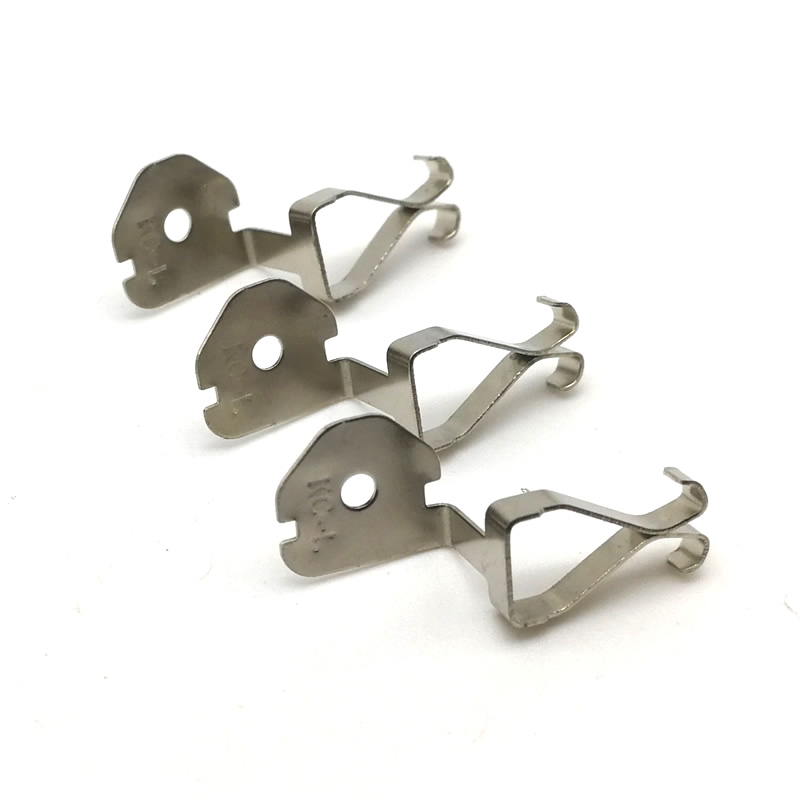
The Core Mechanical Properties Altered by Heat Treatment
Heat treatment modifies the internal microstructure of stainless steel. The table below summarizes how different treatments affect key mechanical properties in Stainless Steel Stamping Parts.
| Heat Treatment Type | Hardness | Tensile Strength | Ductility | Residual Stress | Common Application for Stamping Parts |
|---|---|---|---|---|---|
| Annealing | Decreases | Decreases | Increases | Eliminated | Deep‑drawn or complex shapes |
| Quenching (Austenitic) | Increases slightly | Increases | Decreases moderately | Introduced | High‑wear components |
| Precipitation Hardening | Significantly increases | Significantly increases | Decreases | Partially reduced | Aerospace or medical stampings |
| Stress Relieving | Slightly decreases | Maintained | Unchanged or slightly improved | Reduced | Precision stamped parts |
How Each Heat Treatment Process Works on Stainless Steel Stamping Parts
Annealing softens Stainless Steel Stamping Parts after cold working, restoring formability for secondary operations. Nuote uses controlled atmosphere annealing to prevent scaling and maintain surface integrity.
Precipitation hardening (e.g., 17‑4 PH stainless steel) creates extremely strong Stainless Steel Stamping Parts by forming fine intermetallic particles. This process elevates tensile strength above 1300 MPa while retaining reasonable ductility.
Stress relieving at 400–600°F reduces distortion risks without sacrificing corrosion resistance. This step is critical for Stainless Steel Stamping Parts that undergo tight tolerance assembly.
FAQ: Common Questions About Stainless Steel Stamping Parts and Heat Treatment
Q1: Can all stainless steel grades used for stamping parts benefit from heat treatment?
A1: No. Austenitic grades (304, 316) cannot be hardened by traditional quench and temper treatments because their austenite phase remains stable at room temperature. They only harden through cold work. However, they can be stress relieved or annealed. Martensitic (410, 420) and precipitation‑hardening (17‑4, 15‑5) stainless steels are specifically designed to respond to heat treatment for increased hardness and strength. Nuote always selects the correct grade based on whether heat treatment will be applied to your Stainless Steel Stamping Parts.
Q2: Does heat treatment affect the corrosion resistance of stainless steel stamping parts?
A2: Yes, significantly. Improper heat treatment can cause sensitization in austenitic stainless steels, where chromium carbides form at grain boundaries, leading to intergranular corrosion. To avoid this, Nuote applies solution annealing followed by rapid quenching for 304 and 316 Stainless Steel Stamping Parts. For martensitic grades, tempering temperatures must be carefully controlled to balance hardness and corrosion resistance. Precipitation‑hardened parts maintain excellent corrosion resistance when heat treated within recommended aging temperature ranges.
Q3: How do I specify heat treatment requirements for custom stainless steel stamping parts?
A3: Provide three details: (1) the desired final hardness (e.g., 40‑45 HRC), (2) the required tensile strength or yield strength, and (3) any ductility minimum (e.g., 10% elongation). Also state if the part will be welded, plated, or used in elevated temperatures. Nuote reviews your application and recommends the exact heat treatment cycle — including ramp rates, soak times, and cooling methods — to produce Stainless Steel Stamping Parts that meet ASTM or AMS standards. Always submit a material test report from your coil supplier for process validation.
Why Professional Heat Treatment Separates Superior Stamping Parts
Untreated Stainless Steel Stamping Parts often suffer from uneven hardness, springback, or premature fatigue failure. Nuote integrates heat treatment as a controlled step in production, not an afterthought. By mapping the stamping direction and grain flow, then applying targeted thermal cycles, Nuote achieves consistent mechanical properties across batch runs.
Contact Us
Need Stainless Steel Stamping Parts with precisely controlled mechanical properties? Nuote provides end‑to‑end solutions from tool design to certified heat treatment. Contact our engineering team today for a custom quote and process consultation.
