
How Does Glass Railing for Mono Stringer Stairs Compare to Cable or Metal Railings
2026-10-20
Choosing the right guardrail system for a mono stringer staircase shapes the safety, aesthetics, and long-term value of any home or commercial space. Glass Railing for Mono Stringer Stairs has become a leading choice for architects and homeowners seeking open sightlines and modern design, while cable and metal systems remain popular alternatives. At Vionta, we help clients weigh these options with clear, technical guidance. This comparison breaks down performance, cost, code compliance, and maintenance so you can specify the right system with confidence.
Quick Comparison at a Glance
| Feature | Glass Railing for Mono Stringer Stairs | Cable Railing | Metal Railing |
|---|---|---|---|
| Visual openness | Highest — frameless panels preserve views | High — thin cables | Moderate — balusters block sightlines |
| Typical panel/infill | 3/8"–1/2" tempered or laminated glass | 1/8"–3/16" stainless cables | Horizontal bars, mesh, or pickets |
| Maintenance | Low — periodic glass cleaning | Moderate — cable tension checks | Low to moderate — paint or powder coat touch-ups |
| Installation complexity | High — precise measurement and anchoring | Moderate | Low to moderate |
| Relative cost | Higher upfront | Moderate | Lowest to moderate |
| Best fit | Premium residential, commercial lobbies | Outdoor decks, industrial style | Budget projects, traditional designs |
Safety and Code Compliance
All three systems can satisfy common guardrail standards, including a 42-inch minimum height and a 4-inch sphere rule for openings. Glass Railing for Mono Stringer Stairs typically uses tempered or laminated tempered glass, which retains structural integrity when broken and limits fall-through risk. Cable systems require consistent tension and closely spaced posts to control deflection. Metal railings are predictable and easy to inspect, but horizontal bars can create climbable ladders for children.
Vionta recommends confirming load requirements with a structural engineer, especially on mono stringer stairs where the central beam concentrates forces and railing anchors must transfer loads correctly.
Design and Aesthetics
-
Glass: Minimalist, frameless or semi-frameless look; maximizes natural light on narrow staircases.
-
Cable: Modern and industrial; visually light but introduces horizontal lines.
-
Metal: Versatile finishes and styles; traditional pickets or sleek horizontal bars.
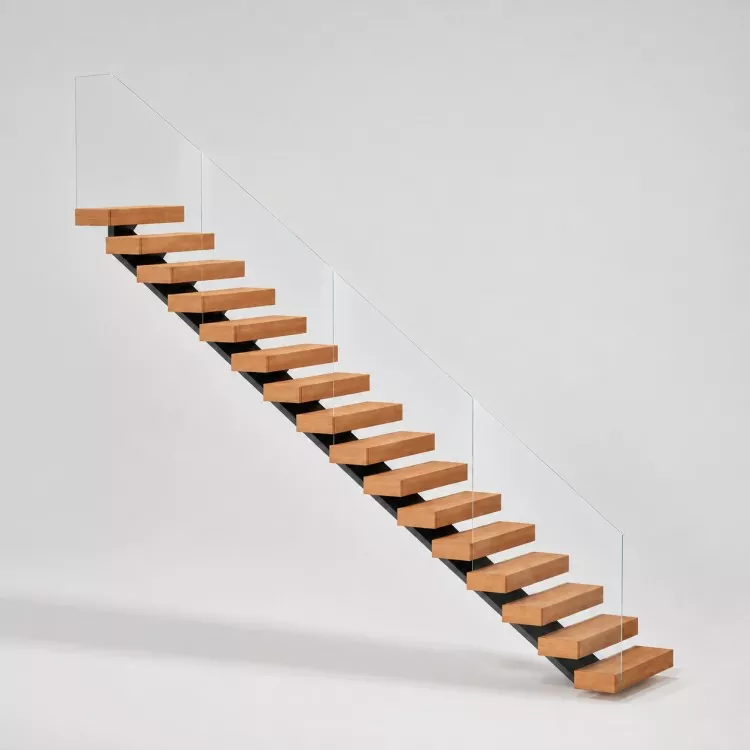
On open-riser mono stringer stairs, Glass Railing for Mono Stringer Stairs delivers the cleanest visual result because the glass panels do not compete with the stair structure.
Cost and Maintenance
Glass carries the highest material and fabrication cost, driven by custom sizing, tempered processing, and specialized hardware. Cable systems cost less upfront but need periodic tension adjustment. Metal railings are the most budget-friendly and durable, though finishes may need refinishing over time. Vionta supplies precision-fabricated glass and hardware that reduce installation errors and long-term service calls.
Frequently Asked Questions
Is Glass Railing for Mono Stringer Stairs safe for residential use? Yes, when specified with tempered or laminated tempered glass, correct thickness, and engineered anchors, it meets residential guardrail safety standards.
How much maintenance does Glass Railing for Mono Stringer Stairs require? Routine cleaning with a non-abrasive glass cleaner and periodic hardware inspection are sufficient; there are no cables to tension or finishes to repaint.
Can Glass Railing for Mono Stringer Stairs be installed on existing stairs? In most cases yes, provided the stringer and anchor points are structurally sound and verified by an engineer before fabrication.
Vionta supports every project with specification review, custom fabrication, and installation guidance. Contact us today to request a quote or speak with our team about the right railing system for your mono stringer staircase.