

How Does Embedded Aluminum Industrial Control Chassis Compare With Steel IPC Chassis
2026-11-25
Boyuan develops high-performance Embedded Aluminum Industrial Control Chassis for fanless embedded computing, edge gateways and compact industrial controllers. Steel IPC chassis remain the mainstream traditional option for rack-mounted automation hardware, and understanding their core trade-offs helps engineers select the right enclosure based on thermal requirements, installation environment and budget constraints.
Aluminum excels in thermal conduction and lightweight design, making it the preferred material for sealed fanless embedded systems. Steel delivers stronger mechanical rigidity and lower raw material cost, which suits standard rack IPCs with active fan cooling. Their shielding, corrosion resistance and machining characteristics also differ greatly for industrial field deployment.
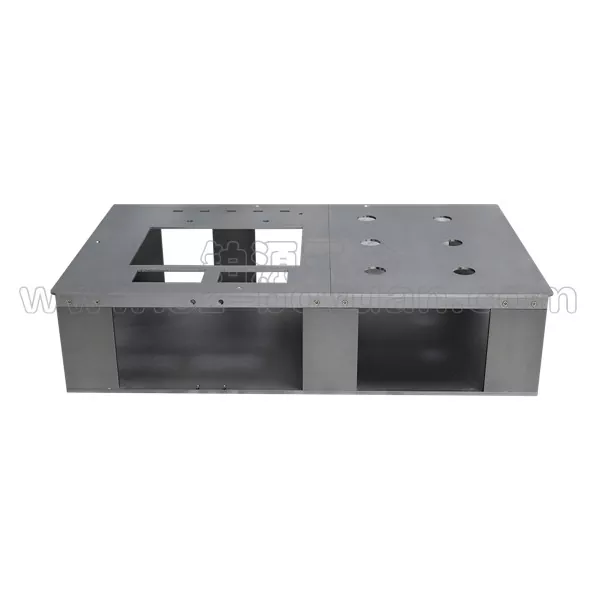
Performance Comparison Table for Embedded Aluminum Industrial Control Chassis and Steel IPC Chassis
| Index | Embedded Aluminum Industrial Control Chassis | Steel IPC Chassis |
|---|---|---|
| Thermal Conductivity | Excellent, can act as passive heat sink | Poor, relies on fans and independent heat sinks |
| Weight | Lightweight, roughly 1/3 of steel | Heavy, high structural stability |
| Surface Treatment | Anodizing, sandblasting, CNC brushed finish | Powder coating, galvanization, spray paint |
| EMC Shielding | Good for high-frequency electric field | Better suppression for low-frequency magnetic interference |
| Corrosion Resistance | Natural oxide layer; anodized version resists salt spray | Easy to rust once coating is scratched |
| Typical Cost | Higher | Lower for mass standard models |
Selection Checklist
- Choose aluminum for fanless, sealed, DIN-rail embedded edge equipment
- Select steel for rack-mounted IPCs with sufficient airflow and heavy load requirements
- Confirm salt spray grade for coastal or humid workshop environments
- Boyuan provides both aluminum profile chassis and customized steel IPC enclosure solutions
Embedded Aluminum Industrial Control Chassis FAQ
Q: Can the Embedded Aluminum Industrial Control Chassis achieve the same anti-shock performance as steel IPC chassis? A: Properly designed aluminum profile structures can meet industrial shock and vibration standards, but thin aluminum sheet is easier to deform under heavy impact. For scenarios with frequent violent vibration or heavy stacking loads, reinforced steel chassis is more reliable.
Q: Is the EMC shielding performance of Embedded Aluminum Industrial Control Chassis worse than steel? A: Not entirely. Aluminum is highly conductive and performs well for high-frequency electric noise. Steel has higher magnetic permeability and works better for low-frequency magnetic field interference. The final shielding effect is more determined by sealing gaskets, seam design and grounding than material alone.
Q: Can Boyuan customize cutouts and internal brackets for the Embedded Aluminum Industrial Control Chassis and steel IPC chassis separately? A: Yes. Aluminum is friendly for CNC precision machining of irregular IO openings and embedded mounting structures. Steel sheet metal is more suitable for simple, large-volume standard openings. We can provide rapid prototyping and pre-sample testing for both materials before formal production.
The Embedded Aluminum Industrial Control Chassis and steel IPC chassis each have clear applicable scenarios. Aluminum is the ideal match for modern compact fanless embedded control, while steel is a cost-effective choice for conventional rack IPC systems. If you need thermal simulation reports, salt spray test data, drawing design or quotation for Boyuan Embedded Aluminum Industrial Control Chassis, please contact us for industrial enclosure technical support.