

How Does Cold Rolled High Strength Low Alloy Steel Improve Modern Engineering Performance?
2026-05-06
Abstract
Cold Rolled High Strength Low Alloy Steel plays a critical role in modern engineering, automotive manufacturing, construction, and heavy machinery industries. By combining enhanced mechanical strength with improved surface quality and corrosion resistance, this material solves multiple industrial pain points such as weight reduction, structural durability, and cost efficiency. This article explains how Cold Rolled High Strength Low Alloy Steel is produced, its properties, real-world applications, and how businesses can choose the right grade for their projects.
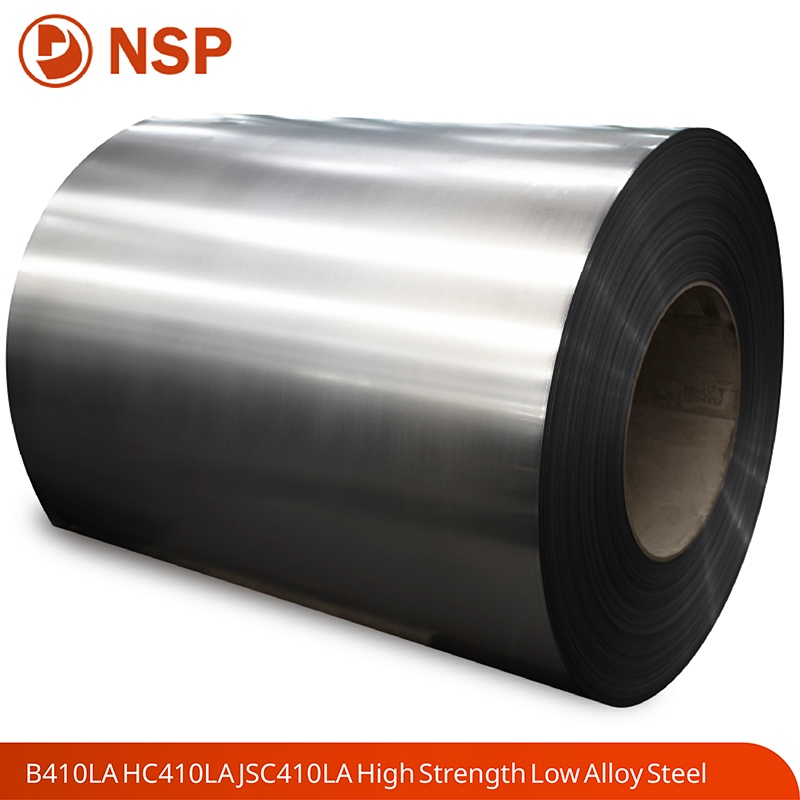
Table of Contents
- Article Outline
- What is Cold Rolled High Strength Low Alloy Steel?
- Cold Rolling Manufacturing Process
- Key Properties and Advantages
- Industrial Applications
- Material Comparison Table
- Common Engineering Challenges Solved
- How to Select the Right Grade
- Why Choose Nature Steel Solutions
- Frequently Asked Questions
Article Outline
This article is structured to guide readers from fundamental concepts to practical decision-making. It begins with material definition, follows with production technology, explains mechanical properties, explores application industries, and concludes with procurement guidance and FAQs.
What is Cold Rolled High Strength Low Alloy Steel?
Cold Rolled High Strength Low Alloy Steel is a category of steel that is processed at room temperature after hot rolling, followed by controlled alloying with small amounts of elements such as vanadium, niobium, titanium, and chromium. These alloying elements significantly enhance strength without increasing weight excessively.
The cold rolling process refines the steel’s grain structure, improving surface finish, dimensional accuracy, and mechanical performance. This makes it particularly suitable for industries requiring precision and durability.
Unlike conventional carbon steel, Cold Rolled High Strength Low Alloy Steel provides a superior balance between strength, weldability, and formability, which is essential in modern manufacturing systems.
Cold Rolling Manufacturing Process
The production of Cold Rolled High Strength Low Alloy Steel involves multiple controlled stages designed to enhance performance characteristics.
- Hot Rolling Base Preparation: Steel is initially hot rolled to form slabs or coils.
- Pickling Process: Surface impurities and oxides are removed using acid treatment.
- Cold Rolling: Steel is passed through rollers at room temperature, reducing thickness and improving strength.
- Annealing: Heat treatment restores ductility while maintaining strength.
- Finishing: Surface refinement ensures smoothness and uniformity.
This process significantly enhances yield strength while maintaining a fine surface finish, making it ideal for precision engineering applications.
Key Properties and Advantages
Cold Rolled High Strength Low Alloy Steel provides a combination of mechanical and physical advantages that solve multiple industrial limitations.
- High tensile and yield strength
- Excellent surface finish and dimensional accuracy
- Improved corrosion resistance
- Good weldability and machinability
- Reduced structural weight compared to traditional steel
These properties allow engineers to design lighter yet stronger structures, reducing material consumption while maintaining safety standards.
Industrial Applications
Cold Rolled High Strength Low Alloy Steel is widely used across multiple industries due to its adaptability and performance stability.
- Automotive Industry: chassis, frames, and safety components
- Construction: beams, reinforcements, and structural supports
- Energy Sector: wind turbine structures and transmission equipment
- Heavy Machinery: cranes, excavators, and industrial equipment
- Transportation: railway systems and shipping containers
Its ability to withstand mechanical stress while maintaining structural integrity makes it a preferred material in demanding environments.
Material Comparison Table
| Property | HSLA Steel | Carbon Steel | Stainless Steel |
|---|---|---|---|
| Strength | High | Medium | High |
| Weight Efficiency | Excellent | Moderate | Low |
| Corrosion Resistance | Moderate to High | Low | Very High |
| Cost Efficiency | High | High | Low |
Common Engineering Challenges Solved
Industries often face recurring issues when selecting structural materials. Cold Rolled High Strength Low Alloy Steel addresses several of these challenges:
- Weight Reduction Needs: Enables lighter structural designs without compromising strength.
- Durability Requirements: Enhances service life under high stress conditions.
- Manufacturing Precision: Tight dimensional tolerances improve assembly efficiency.
- Cost Control: Reduces material usage while maintaining performance standards.
How to Select the Right Grade
Choosing the correct grade of Cold Rolled High Strength Low Alloy Steel depends on application-specific requirements. Engineers typically evaluate the following factors:
- Required tensile strength and yield strength
- Exposure to corrosive environments
- Formability and weldability requirements
- Thickness and dimensional tolerance needs
- Cost-performance balance
Selecting the wrong grade can lead to structural inefficiency or increased maintenance costs, so proper evaluation is essential.
Why Choose Nature Steel Solutions
The company Nature provides high-quality Cold Rolled High Strength Low Alloy Steel designed for demanding industrial applications. With strict material control systems and advanced production capabilities, Nature ensures consistency in mechanical properties and surface quality.
Customers benefit from:
- Stable and certified material performance
- Customizable steel specifications
- Reliable supply chain management
- Technical support for engineering applications
Frequently Asked Questions
Q1: What makes Cold Rolled High Strength Low Alloy Steel different from regular steel?
It contains controlled alloying elements and undergoes cold rolling, resulting in higher strength and better surface quality.
Q2: Is it suitable for welding applications?
Yes, most grades offer good weldability when proper procedures are followed.
Q3: Can it replace stainless steel?
In some structural applications, yes, but stainless steel is preferred in highly corrosive environments.
Q4: Why is cold rolling important?
It improves strength, surface finish, and dimensional accuracy simultaneously.
Conclusion
Cold Rolled High Strength Low Alloy Steel has become an essential material in modern engineering due to its ability to combine strength, precision, and efficiency. Its wide range of applications across automotive, construction, and industrial manufacturing highlights its versatility and reliability.
For industries seeking improved performance and optimized material usage, selecting the right steel grade is a strategic decision that directly impacts long-term operational success.
Nature is committed to delivering reliable Cold Rolled High Strength Low Alloy Steel solutions tailored to industrial needs.
Contact us today to get expert support, customized material solutions, and competitive pricing for your next project with Nature.