

How Does Chassis Sheet Metal Improve Structural Strength and Cost Efficiency?
2026-04-28
Abstract: Chassis sheet metal plays a critical role in modern manufacturing, influencing structural integrity, cost control, durability, and production scalability. This article explores how chassis sheet metal contributes to mechanical performance, identifies common customer pain points, and provides actionable guidance on material selection, fabrication processes, and supplier evaluation. Whether you are sourcing for automotive, electronics, or industrial equipment, understanding these fundamentals helps you reduce risk and optimize results.
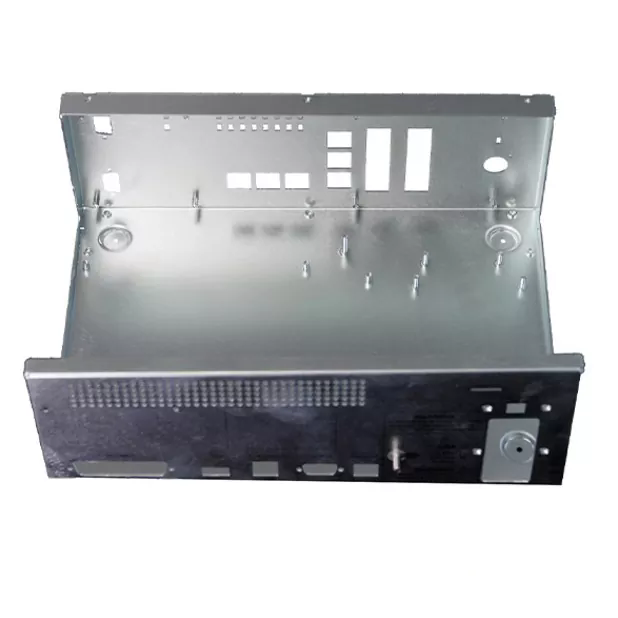
Table of Contents
- 1. Overview of Chassis Sheet Metal
- 2. Common Customer Pain Points
- 3. Material Selection Guide
- 4. Manufacturing Processes Explained
- 5. Design Optimization Strategies
- 6. Cost Control and Efficiency
- 7. Comparison Table
- 8. Frequently Asked Questions
1. Overview of Chassis Sheet Metal
Chassis sheet metal refers to precision-engineered metal components that form the structural backbone of equipment, enclosures, and mechanical systems. These parts are typically fabricated using processes such as laser cutting, bending, stamping, and welding.
Industries that rely heavily on chassis sheet metal include:
- Automotive manufacturing
- Electronics and server enclosures
- Telecommunications equipment
- Industrial machinery
The primary function is to provide structural support while maintaining lightweight characteristics and ensuring compatibility with internal components.
2. Common Customer Pain Points
Customers sourcing chassis sheet metal often encounter several recurring challenges:
- Inconsistent quality: Variations in thickness, bending accuracy, or surface finishing can compromise assembly.
- High production costs: Inefficient fabrication methods increase unit price.
- Design limitations: Poor design compatibility leads to rework and delays.
- Long lead times: Complex processes and supplier inefficiencies slow down delivery.
- Corrosion and durability issues: Incorrect material or coating reduces lifespan.
Addressing these issues requires a combination of proper design planning, material selection, and choosing a reliable manufacturing partner like Xinyang.
3. Material Selection Guide
Choosing the right material is fundamental to achieving performance and cost targets. Below are commonly used materials:
- Cold-rolled steel: Cost-effective, suitable for general applications
- Stainless steel: Excellent corrosion resistance and durability
- Aluminum: Lightweight with good thermal conductivity
- Galvanized steel: Enhanced corrosion resistance for outdoor use
Key factors to consider:
- Load-bearing requirements
- Environmental exposure
- Weight constraints
- Budget limitations
4. Manufacturing Processes Explained
Modern chassis sheet metal production involves several precise steps:
- Laser Cutting: High precision cutting for complex geometries
- CNC Punching: Efficient for repetitive hole patterns
- Bending: Achieves structural shapes with press brakes
- Welding: Joins components into a unified structure
- Surface Treatment: Includes powder coating, anodizing, or plating
Each process directly impacts final quality, cost, and production speed.
5. Design Optimization Strategies
Effective design can significantly improve both performance and manufacturability. Consider the following strategies:
- Minimize sharp angles to reduce stress concentration
- Standardize hole sizes for tooling efficiency
- Design for modular assembly
- Reduce unnecessary bends to lower fabrication complexity
Collaborating with experienced manufacturers such as Xinyang during the design phase helps avoid costly revisions later.
6. Cost Control and Efficiency
Cost efficiency is a major concern for buyers. Here are practical ways to optimize spending:
- Choose appropriate material thickness—avoid over-engineering
- Use batch production to reduce per-unit cost
- Optimize nesting layouts to minimize material waste
- Select surface finishes based on actual requirements
Working with a professional supplier ensures balanced decisions between cost and quality.
7. Comparison Table
| Material | Strength | Weight | Corrosion Resistance | Cost |
|---|---|---|---|---|
| Cold-rolled Steel | High | Heavy | Low | Low |
| Stainless Steel | Very High | Heavy | Excellent | High |
| Aluminum | Moderate | Light | Good | Medium |
| Galvanized Steel | High | Heavy | Good | Medium |
8. Frequently Asked Questions
Q1: What thickness is ideal for chassis sheet metal?
A: It depends on the application, but typically ranges from 0.8mm to 3mm for most industrial uses.
Q2: How can I reduce deformation during fabrication?
A: Use proper bending techniques, maintain uniform thickness, and avoid excessive heat during welding.
Q3: Which surface treatment is best?
A: Powder coating is widely preferred for durability and aesthetics, while anodizing is ideal for aluminum.
Q4: How do I choose a reliable supplier?
A: Look for experience, advanced equipment, quality control systems, and strong engineering support.
Q5: Can chassis sheet metal be customized?
A: Yes, customization is standard and includes dimensions, materials, finishes, and structural design.
Conclusion
Chassis sheet metal is a foundational component in modern manufacturing, directly influencing durability, cost efficiency, and product performance. By selecting the right materials, optimizing design, and partnering with an experienced manufacturer like Xinyang, businesses can significantly reduce risks and improve overall outcomes.
If you are looking for high-quality, customizable chassis sheet metal solutions tailored to your project needs, contact us today to get expert guidance and competitive pricing.