

How Does Case Sheet Metal Support Precision Manufacturing Across Industries?
2025-12-29
Abstract
Case Sheet Metal refers to precision-fabricated metal enclosures, housings, and structural cases widely used in industrial equipment, electronics, energy systems, automation, and transportation sectors. This article provides a comprehensive analysis of how Case Sheet Metal is designed, engineered, and manufactured to meet modern industrial requirements.
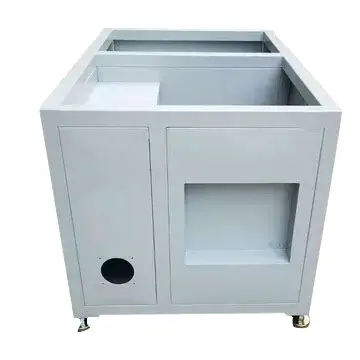
Table of Contents
- 1. How Is Case Sheet Metal Defined in Industrial Manufacturing?
- 2. How Are Case Sheet Metal Products Engineered and Specified?
- 3. How Does Case Sheet Metal Perform in Real-World Applications?
- 4. How Will Case Sheet Metal Evolve with Future Manufacturing Trends?
1. How Is Case Sheet Metal Defined in Industrial Manufacturing?
Case Sheet Metal is a category of fabricated metal products primarily designed to serve as protective, structural, or functional enclosures for mechanical and electronic systems. Unlike generic sheet metal parts, case-type structures emphasize dimensional accuracy, load-bearing capability, and environmental protection. These cases are commonly integrated into control cabinets, machinery housings, power distribution units, battery systems, and customized industrial assemblies.
From a manufacturing standpoint, Case Sheet Metal represents a convergence of material science, precision fabrication, and system-level engineering. Each case is produced based on predefined drawings or digital models that specify tolerances, material grades, surface treatments, and assembly interfaces. The resulting product functions as both a physical shield and an enabling structure that supports internal components.
In modern factories, Case Sheet Metal is no longer limited to standardized boxes. It often includes modular designs, ventilation patterns, electromagnetic shielding features, and mounting architectures that align with downstream integration requirements. This adaptability explains its widespread adoption across industries that demand reliability and scalability.
2. How Are Case Sheet Metal Products Engineered and Specified?
The engineering of Case Sheet Metal begins with a clear definition of application conditions. Designers evaluate mechanical loads, environmental exposure, thermal behavior, and regulatory constraints before finalizing technical specifications. These parameters directly influence material selection, thickness, forming methods, and finishing processes.
Typical materials include cold-rolled steel, galvanized steel, stainless steel, and aluminum alloys. Each material is selected based on corrosion resistance, strength-to-weight ratio, and cost efficiency. Thickness ranges are determined to balance rigidity with manufacturability.
Below is a consolidated overview of common technical parameters associated with Case Sheet Metal products:
| Parameter | Specification Range | Industrial Relevance |
|---|---|---|
| Material Type | SPCC, SGCC, Stainless Steel, Aluminum | Defines strength, corrosion resistance, and application scope |
| Thickness | 0.8 mm – 6.0 mm | Controls load capacity and enclosure stability |
| Manufacturing Tolerance | ±0.1 mm to ±0.3 mm | Ensures assembly accuracy and component alignment |
| Surface Treatment | Powder Coating, Anodizing, Galvanizing | Improves durability and environmental resistance |
| Protection Rating | IP54 – IP66 (customizable) | Supports dustproof and waterproof requirements |
Fabrication typically involves laser cutting for precision profiles, CNC bending for structural consistency, and welding or fastening for assembly. Advanced manufacturers also integrate digital simulation and CAD/CAM workflows to optimize material utilization and reduce production variance.
Quality control is embedded throughout the process, including dimensional inspection, surface evaluation, and functional testing. This ensures that Case Sheet Metal products meet both engineering intent and operational expectations.
Common Questions About Case Sheet Metal
Q: How does Case Sheet Metal differ from general sheet metal parts?
A: Case Sheet Metal is designed as a complete enclosure or structural unit, emphasizing protection, assembly integration, and long-term durability rather than single-function components.
Q: How is customization achieved in Case Sheet Metal production?
A: Customization is achieved through flexible CAD design, modular tooling, adjustable bending programs, and configurable surface treatments that align with specific application needs.
Q: How is environmental resistance ensured in Case Sheet Metal?
A: Environmental resistance is achieved through material selection, sealed joint design, protective coatings, and compliance with ingress protection standards.
3. How Does Case Sheet Metal Perform in Real-World Applications?
In practical applications, Case Sheet Metal serves as the backbone of industrial equipment architecture. Its performance is measured not only by mechanical strength but also by how effectively it supports system reliability, maintenance efficiency, and operational safety.
In automation and control systems, sheet metal cases house sensitive electronics while providing organized cable routing and thermal dissipation pathways. In energy and power sectors, these enclosures protect components from dust, moisture, and mechanical impact. Transportation and infrastructure projects rely on Case Sheet Metal for vibration resistance and structural integrity under dynamic loads.
Another critical advantage lies in lifecycle performance. Properly engineered cases reduce failure risks, simplify maintenance access, and extend equipment service life. This translates into lower total cost of ownership for industrial operators.
From a supply chain perspective, standardized yet configurable Case Sheet Metal solutions streamline procurement and reduce lead times. Manufacturers can scale production while maintaining consistency across multiple deployment sites.
4. How Will Case Sheet Metal Evolve with Future Manufacturing Trends?
Future development of Case Sheet Metal is closely aligned with broader manufacturing trends such as digitalization, sustainability, and modular system design. As industrial equipment becomes more compact and interconnected, enclosure solutions must adapt accordingly.
Lightweight materials and optimized structural geometries are expected to gain traction, reducing material consumption without compromising strength. Surface treatments will increasingly focus on environmental compliance and recyclability.
Smart manufacturing techniques, including automated bending cells and real-time quality monitoring, will further enhance production efficiency. These advancements allow Case Sheet Metal to remain relevant in high-mix, low-volume manufacturing environments.
In this evolving landscape, manufacturers like Xinyang continue to refine fabrication capabilities and application knowledge to support diverse industrial requirements. Through continuous improvement and engineering-driven processes, Case Sheet Metal remains a foundational element of modern industrial infrastructure.
For organizations seeking reliable, well-engineered Case Sheet Metal solutions tailored to specific operational needs, engaging with an experienced manufacturing partner is a critical step. Contact us to explore how customized Case Sheet Metal can be developed to support current projects and future growth.