

How Does Butt Weld Fitting Ensure Reliable Industrial Piping Performance?
2026-04-10
Abstract
Butt weld fittings are critical components in modern piping systems, widely used across oil & gas, chemical processing, power generation, shipbuilding, and water treatment industries. Their primary function is to create a seamless, permanent, and high-strength connection between pipes. This article explores how butt weld fittings work, their types, advantages, selection criteria, installation considerations, and common challenges. It is designed to help engineers, procurement specialists, and project managers make informed decisions when selecting piping components for demanding environments.
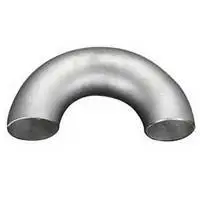
Table of Contents
- 1. Article Outline
- 2. What Is a Butt Weld Fitting?
- 3. How Butt Weld Fittings Work
- 4. Common Types of Butt Weld Fittings
- 5. Key Advantages
- 6. Industrial Applications
- 7. Selection Criteria
- 8. Installation Best Practices
- 9. Common Problems and Solutions
- 10. Technical Comparison Table
- 11. FAQ
- 12. Conclusion & Contact
Article Outline
- Introduction to butt weld fittings and their industrial relevance
- Working mechanism and welding principle
- Types and structural variations
- Performance advantages over threaded and socket weld fittings
- Use cases in high-pressure and high-temperature systems
- Material and specification selection
- Installation procedures and quality control
- Common operational challenges
- Technical comparison table
- Frequently asked questions
What Is a Butt Weld Fitting?
A butt weld fitting is a type of pipe fitting designed to be welded directly to pipes at their ends, creating a continuous metal structure. Unlike threaded or socket weld connections, butt weld fittings rely on edge-to-edge welding, which ensures structural continuity and eliminates leakage paths.
These fittings are commonly manufactured from stainless steel, carbon steel, and alloy steel, making them suitable for aggressive and high-pressure environments.
How Butt Weld Fittings Work
The working principle of butt weld fittings is based on fusion welding. The beveled ends of the pipe and fitting are aligned and welded together using controlled heat input. This process ensures metallurgical bonding, meaning the joint becomes as strong as the pipe itself.
Key steps in the process include:
- Edge preparation: Beveling pipe ends for full penetration welding
- Alignment: Ensuring concentric and axial alignment
- Tack welding: Temporary fixation before final welding
- Full penetration welding: Creating a continuous fused joint
- Inspection: Radiographic or ultrasonic testing for defect detection
This process eliminates internal turbulence and significantly reduces pressure loss within the pipeline system.
Common Types of Butt Weld Fittings
Different piping systems require different fitting geometries. The most commonly used types include:
- Elbows (45° / 90°): Change flow direction
- Reducers: Connect pipes of different diameters
- Tees: Divide or combine flow streams
- Caps: Seal pipe ends
- Stub ends: Used with lap joint flanges for easy disassembly
Key Advantages of Butt Weld Fittings
Butt weld fittings are preferred in critical systems due to their superior mechanical and hydraulic properties.
- High strength and pressure resistance
- Leak-proof welded connections
- Reduced maintenance requirements
- Improved flow efficiency due to smooth internal surfaces
- Long service life in corrosive environments
Industrial Applications
Butt weld fittings are widely used in industries where reliability and safety are non-negotiable.
- Oil and gas transmission pipelines
- Petrochemical refineries
- Power generation plants
- Marine and shipbuilding systems
- Water treatment and desalination facilities
Selection Criteria for Butt Weld Fittings
Choosing the correct fitting requires evaluating multiple engineering parameters:
- Material compatibility with conveyed fluid
- Pressure and temperature ratings
- Pipe schedule and wall thickness
- Corrosion resistance requirements
- Industry standards (ASME, ASTM, DIN)
Installation Best Practices
Proper installation is essential to ensure long-term performance and system integrity.
- Ensure precise pipe alignment before welding
- Use qualified welders certified for industrial piping
- Apply correct welding procedures (WPS)
- Conduct non-destructive testing after welding
- Prevent contamination during installation
Common Problems and Solutions
Despite their reliability, improper handling can lead to issues in butt weld fittings:
- Misalignment: Causes stress concentration → Use proper clamps and fixtures
- Weld defects: Porosity or cracks → Improve welding parameters
- Corrosion: Material mismatch → Select appropriate alloy grade
- Residual stress: Improper cooling → Apply controlled post-weld treatment
Technical Comparison Table
| Feature | Butt Weld Fitting | Threaded Fitting | Socket Weld Fitting |
|---|---|---|---|
| Leak Resistance | Excellent | Moderate | High |
| Pressure Capacity | Very High | Low to Medium | High |
| Maintenance | Low | High | Moderate |
| Installation Complexity | High | Low | Moderate |
| Flow Efficiency | Excellent | Fair | Good |
FAQ
Q1: What makes butt weld fittings different from other fittings?
They are welded directly to pipes, creating a continuous structure with no mechanical gaps, which improves strength and sealing performance.
Q2: Are butt weld fittings suitable for high-pressure systems?
Yes, they are specifically designed for high-pressure and high-temperature environments.
Q3: What materials are commonly used?
Stainless steel, carbon steel, and alloy steel are the most common materials.
Q4: Can butt weld fittings be reused?
No, they are permanent fittings and cannot be reused after welding.
Q5: How is quality ensured during installation?
Through certified welding procedures and non-destructive testing methods like X-ray or ultrasonic inspection.
Conclusion & Contact
Butt weld fittings play a vital role in ensuring safe, efficient, and durable pipeline systems across multiple industries. Their welded construction eliminates leakage risks and provides unmatched structural integrity. Proper selection, installation, and quality control are essential to maximize performance and service life.
For high-quality manufacturing solutions and industrial-grade piping components, Zhejiang Shuangneng Steel Industry Co., Ltd. delivers reliable products engineered for demanding applications and global standards.
If you are looking for customized solutions, technical support, or bulk procurement options, feel free to contact us today. Our engineering team is ready to assist you with professional guidance and competitive offerings.
Contact us now to discuss your project requirements and get a tailored quotation.