

Article Summary: API Standard Tubing is a critical component in oil and gas well completion and production systems because it provides a standardized pathway for transporting produced fluids from the reservoir toward the surface. The right tubing must withstand internal pressure, axial loads, temperature variations, corrosive fluids, repeated installation cycles, and demanding downhole conditions. This article explains how API Standard Tubing works, which factors influence its performance, how to select suitable tubing dimensions and steel grades, why thread accuracy matters, and how proper inspection can reduce leakage, downtime, and maintenance risks. It also examines practical considerations for conventional production, water injection, workover, and other oilfield applications.
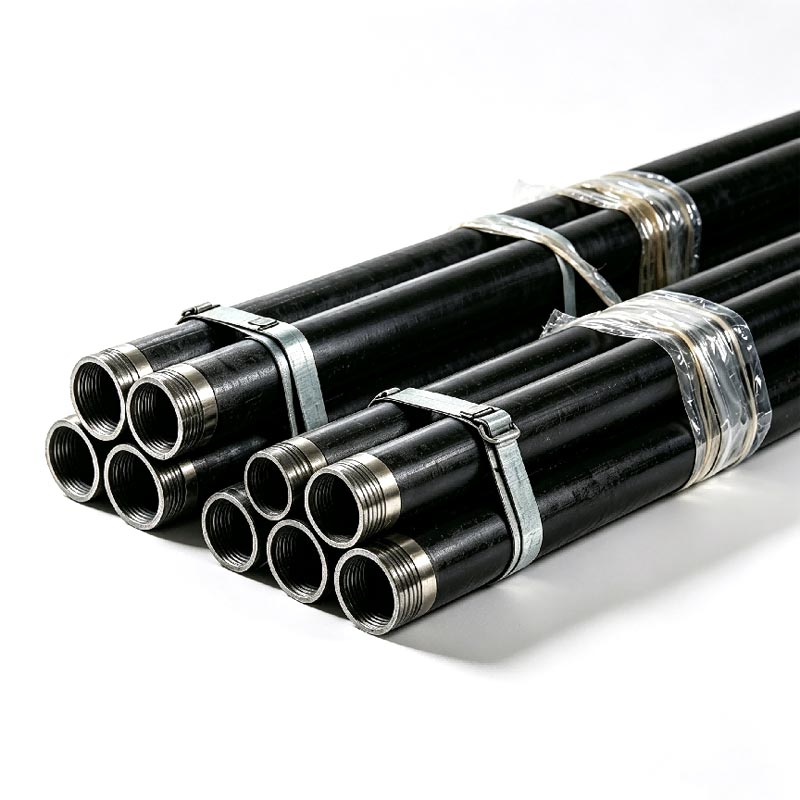
Table of Contents
- What Is API Standard Tubing?
- How Does API Standard Tubing Improve Well Reliability?
- How Is API Standard Tubing Constructed?
- Which Specifications Matter When Selecting Tubing?
- How Do Steel Grades Affect Tubing Performance?
- How Do Tubing Threads Affect Connection Reliability?
- How Should Tubing Be Selected for Different Well Conditions?
- How Does Quality Control Protect Tubing Performance?
- How Can Operators Reduce Tubing Installation Problems?
- Where Is API Standard Tubing Used?
- API Standard Tubing Selection Guide
- Why Consider Aote Tianjin Pump Co., Ltd.?
- Frequently Asked Questions
- Conclusion
What Is API Standard Tubing?
API Standard Tubing is a tubular product designed for use inside oil and gas wells, where it provides a controlled passage for produced oil, natural gas, water, or other well fluids. It is part of the broader oil country tubular goods (OCTG) family and is manufactured according to applicable American Petroleum Institute requirements, with API 5CT being a key specification for casing and tubing products.
Unlike ordinary industrial pipe, well tubing operates in a much more demanding environment. It can be exposed to internal pressure, tensile forces, fluid turbulence, temperature changes, corrosive components, mechanical vibration, and repeated workover operations. Consequently, tubing selection cannot be based on outside diameter alone.
API Standard Tubing provides standardized dimensions, material requirements, manufacturing controls, and connection characteristics. This standardization helps operators match tubing with completion equipment, couplings, downhole tools, pumps, packers, and other components without relying on completely proprietary dimensions.
For oilfield operators, the practical value of standardized tubing is straightforward: predictable dimensions, repeatable connection performance, easier replacement, and a more controlled approach to well completion and maintenance.
Product information from Aote Tianjin Pump Co., Ltd. indicates that its API Standard Tubing is intended for applications including well production, completion, workover, water injection, and downhole fluid transmission. The company also provides tubing in different dimensions, steel grades, and thread configurations for different operating requirements.
How Does API Standard Tubing Improve Well Reliability?
Well reliability depends on many interconnected components. Tubing is particularly important because it remains exposed to the produced fluid and mechanical loads throughout a large portion of the well's operating life.
Properly specified API Standard Tubing can contribute to reliability in several ways.
- Consistent dimensions: Standardized outside diameter, wall thickness, drift dimensions, and connection geometry help maintain compatibility with completion equipment.
- Controlled mechanical properties: Appropriate steel grades provide the strength required for expected tensile and pressure loads.
- Reliable connections: Properly manufactured and inspected threads reduce the possibility of connection-related leakage and installation difficulties.
- Predictable replacement: Standard dimensions make it easier to source compatible tubing when maintenance or workover operations are required.
- Better engineering control: Standardized specifications allow engineers to compare tubing options against well depth, pressure, temperature, fluid composition, and load requirements.
However, standardization does not automatically make every tubing product suitable for every well. A tubing string should always be selected against the actual operating envelope. High-pressure, deep, sour, highly corrosive, or thermally demanding wells may require materials, connections, or protective measures beyond those used for conventional shallow wells.
How Is API Standard Tubing Constructed?
API Standard Tubing is generally produced from steel selected for the required mechanical and service characteristics. Manufacturing involves controlled forming, heat treatment where applicable, machining, threading, inspection, and testing.
The production route is important because tubing must maintain dimensional consistency over its full length. Small deviations can become significant during installation when multiple joints are connected into a long tubing string.
A typical quality-focused manufacturing process includes:
- Verification of incoming steel and material documentation.
- Tube manufacturing and dimensional control.
- Heat treatment according to the required material grade and production specification.
- Machining of tubing ends.
- Precision production of the specified thread connection.
- Dimensional and visual inspection.
- Non-destructive examination or flaw detection where required.
- Mechanical and pressure-related testing according to the applicable requirements.
- Final inspection, identification, packaging, and shipment.
This process is designed to control the variables that can affect tubing performance after it reaches the field.
Which Specifications Matter When Selecting Tubing?
One of the most common purchasing mistakes is selecting tubing according to nominal size without evaluating the complete well condition. A proper specification should consider multiple parameters simultaneously.
| Selection Factor | Why It Matters | Typical Consideration |
|---|---|---|
| Outside Diameter | Determines compatibility with the casing and completion system. | Must match the planned well architecture. |
| Wall Thickness | Affects pressure capability, internal diameter, and mechanical strength. | Choose according to calculated operating loads. |
| Steel Grade | Influences yield strength and suitability for demanding service. | J55, N80, L80, P110 and other applicable grades may be considered depending on requirements. |
| Thread Type | Determines how tubing joints connect and seal. | Common configurations include NUE and EUE for applicable tubing sizes. |
| Well Depth | Deeper wells can generate greater axial and pressure loads. | Perform engineering calculations rather than selecting by depth alone. |
| Fluid Composition | Corrosive fluids can accelerate material degradation. | Evaluate CO₂, H₂S, chlorides, water cut, and other relevant factors. |
| Temperature | Temperature can influence material behavior and sealing performance. | Consider the maximum expected downhole temperature. |
| Completion Equipment | Tubing must work with pumps, packers, valves, and other components. | Confirm dimensional and connection compatibility before ordering. |
The most suitable tubing is therefore the result of an engineering evaluation rather than a simple catalog selection.
How Do Steel Grades Affect Tubing Performance?
Steel grade is one of the most important variables in tubing selection. Different grades provide different combinations of yield strength, tensile strength, hardness, and service suitability.
For conventional applications, lower-strength grades may be adequate when the mechanical loads and pressure conditions remain within their design limits. As well depth, pressure, tensile loading, or other demands increase, higher-strength grades may become necessary.
For example, N80, L80, and P110 are commonly encountered in applications requiring greater strength than basic low-strength tubing grades. Nevertheless, higher strength is not automatically better. Material selection must also consider the well's corrosive environment and applicable service requirements.
In wells containing hydrogen sulfide, carbon dioxide, chlorides, or other aggressive media, material compatibility deserves particular attention. A tubing grade that performs well in a conventional sweet-oil application may not be appropriate for a sour or highly corrosive environment.
Engineers should therefore evaluate:
- Expected internal and external pressure.
- Axial tensile and compressive loading.
- Temperature range.
- Fluid chemistry.
- Corrosion mechanisms.
- Required service life.
- Applicable project and regulatory requirements.
How Do Tubing Threads Affect Connection Reliability?
A tubing string is made from numerous individual joints, which means connection quality is fundamental to overall system integrity. Even excellent steel cannot compensate for poorly produced, damaged, contaminated, or improperly assembled threads.
API tubing may use standardized connection configurations such as non-upset tubing or external upset tubing, depending on the product specification and application. Thread selection affects mechanical engagement, connection strength, sealing behavior, installation procedure, and compatibility with couplings.
Two common connection categories are NUE and EUE. EUE connections provide an external upset at the tubing end and can provide a larger connection section for applications requiring the associated mechanical characteristics. NUE tubing has a different end configuration and may be suitable for conventional applications where its design characteristics meet the project requirements.
Regardless of connection type, thread condition should be checked before installation. Threads should be clean, correctly protected, free from significant mechanical damage, and handled using appropriate procedures.
During field installation, operators should also use the correct make-up procedure and verify torque requirements according to the applicable tubing and connection specification. Excessive or insufficient make-up can both create problems.
How Should Tubing Be Selected for Different Well Conditions?
Well conditions vary considerably between projects. A practical selection process starts with the operating environment and works toward the tubing configuration.
For shallow conventional wells: Standard tubing with an appropriate lower or medium-strength grade may be sufficient when pressure and mechanical loads are moderate.
For deeper wells: Higher axial loads and pressure conditions may require a stronger tubing grade, carefully selected wall thickness, and more rigorous mechanical calculations.
For high-pressure applications: Internal pressure, collapse considerations, connection capability, and material properties should be evaluated together.
For corrosive wells: Material compatibility becomes a primary consideration. CO₂, H₂S, formation water, chlorides, and temperature can all affect corrosion behavior.
For water injection: Tubing must be compatible with the injection fluid, pressure, flow conditions, and expected corrosion environment.
For workover operations: Tubing dimensions, connection compatibility, handling requirements, and replacement availability become especially important because installation efficiency can directly affect downtime.
| Well Condition | Main Concern | Recommended Evaluation |
|---|---|---|
| Shallow Conventional Well | General production reliability | Dimensions, grade, thread and pressure requirements |
| Deep Well | Higher axial and pressure loads | Strength, wall thickness, connection performance and load calculations |
| High-Pressure Well | Pressure containment | Material properties, tubing body and connection pressure capability |
| CO₂-Containing Well | Corrosion | Fluid chemistry and corrosion-control strategy |
| H₂S-Containing Well | Sour-service risks | Applicable sour-service material requirements and engineering controls |
| Water Injection Well | Fluid compatibility and corrosion | Injection pressure, chemistry, flow rate and material selection |
How Does Quality Control Protect Tubing Performance?
Quality control is not limited to checking the outside diameter after manufacturing. Reliable tubing requires a combination of material verification, dimensional inspection, mechanical testing, connection inspection, and appropriate non-destructive examination.
Important quality-control activities can include:
- Raw material verification: Confirms that the material corresponds to the specified grade and documentation.
- Dimensional inspection: Checks outside diameter, wall thickness, length, drift and other critical dimensions.
- Mechanical testing: Helps verify that material properties meet the applicable requirements.
- Pressure testing: Provides additional verification of pressure-containing performance where required.
- Flaw detection: Helps identify discontinuities that could affect service performance.
- Thread inspection: Confirms thread geometry and connection quality.
- Visual inspection: Identifies surface damage, handling marks, corrosion, or other visible defects.
A controlled inspection process reduces the likelihood that dimensional or material problems will remain undetected until the tubing reaches the well site.
For international oilfield projects, purchasers should also clearly define documentation, inspection points, applicable standards, testing requirements, packaging, marking, and third-party inspection requirements before production begins.
How Can Operators Reduce Tubing Installation Problems?
Even correctly manufactured tubing can be damaged during transportation, storage, handling, or installation. Good field practices are therefore essential.
- Inspect tubing before installation. Check the pipe body, ends, threads, protective caps, markings, and visible surfaces.
- Protect the threads. Keep thread protectors installed until the tubing is ready for connection.
- Prevent contamination. Dirt, sand, moisture, and foreign materials can interfere with proper connection assembly.
- Use appropriate handling equipment. Avoid unnecessary impact, dragging, or bending.
- Confirm tubing compatibility. Check diameter, weight, grade, connection type, and completion equipment before running the string.
- Follow make-up procedures. Apply the specified procedures and equipment for the selected connection.
- Record inspection results. Traceability can simplify troubleshooting and future workover planning.
These measures are relatively simple, but they can help prevent avoidable installation delays and premature connection problems.
Where Is API Standard Tubing Used?
API Standard Tubing is widely associated with conventional oil and gas well operations. Its standardized design makes it suitable for a broad range of downhole fluid-transport applications when the selected specification matches the operating environment.
- Oil production wells.
- Natural gas production wells.
- Water injection wells.
- Well completion systems.
- Workover and well maintenance operations.
- Downhole fluid transportation.
- Selected artificial-lift and completion systems.
- Conventional onshore oilfield projects.
The exact tubing configuration should be determined by the well design, completion equipment, operating pressure, temperature, fluid properties, required service life, and applicable project specifications.
API Standard Tubing Selection Guide
The following simplified guide can help procurement teams organize the information needed before requesting a quotation.
| Project Requirement | Information to Confirm | Why It Is Important |
|---|---|---|
| Tubing Size | Nominal size, OD and required wall thickness | Ensures compatibility with casing and completion equipment |
| Material | Required steel grade and service environment | Determines mechanical and environmental suitability |
| Connection | NUE, EUE or other specified connection | Controls installation and connection compatibility |
| Operating Pressure | Normal and maximum expected pressure | Supports appropriate pressure-capability assessment |
| Temperature | Normal and maximum downhole temperature | Important for material and connection evaluation |
| Fluid | Oil, gas, water, mixed fluids and chemical composition | Helps identify corrosion and compatibility concerns |
| Quantity | Number of joints and required lengths | Improves production and delivery planning |
| Inspection | Factory inspection, testing and third-party requirements | Creates measurable acceptance criteria |
Why Consider Aote Tianjin Pump Co., Ltd.?
A reliable tubing supplier should be able to do more than provide a nominal diameter and a unit price. Oilfield buyers need a supplier that understands how tubing specifications interact with the complete well system.
Aote Tianjin Pump Co., Ltd. provides API Standard Tubing solutions for oil and gas applications and offers products in different sizes, steel grades, and connection configurations. Its product range includes commonly used tubing sizes such as 2-3/8 inch, 2-7/8 inch, 3-1/2 inch, and 4-1/2 inch configurations, depending on the required specification.
The company's product information describes API Standard Tubing for applications such as oil production, gas production, water injection, well completion, and workover operations. Different product configurations can be considered according to the required material grade, thread type, dimensions, and field conditions.
For project procurement, a useful supplier evaluation should cover the following areas:
- Applicable API requirements and product documentation.
- Available tubing sizes and configurations.
- Material-grade options.
- Thread and coupling requirements.
- Dimensional inspection capabilities.
- Mechanical and pressure testing arrangements.
- Non-destructive inspection requirements.
- Packaging and transportation protection.
- Traceability and quality documentation.
- Technical communication before production.
For buyers working on international oilfield projects, early technical communication is particularly valuable. Providing the supplier with the well depth, tubing size, required grade, connection type, pressure, temperature, fluid characteristics, quantity, and inspection requirements can substantially reduce specification misunderstandings.
Frequently Asked Questions
Q1: What is API Standard Tubing mainly used for?
API Standard Tubing is primarily used inside oil and gas wells to transport produced oil, gas, water, and other fluids. It is also used in well completion, workover, water injection, and selected downhole service applications.
Q2: What standard is commonly associated with API tubing?
API 5CT is a key specification associated with casing and tubing products used in the petroleum and natural gas industries. The exact applicable edition, product requirements, material grade, connection, and testing requirements should be confirmed for each project.
Q3: How do I choose the correct tubing size?
Consider the well's casing dimensions, production target, fluid flow requirements, completion equipment, pressure conditions, and required mechanical performance. Tubing OD and wall thickness should be selected as part of the complete well design rather than independently.
Q4: What steel grades can be used for API Standard Tubing?
Depending on the applicable specification and application, tubing may be supplied in grades such as J55, N80, L80, and P110. The appropriate grade depends on mechanical loads, pressure, temperature, corrosion conditions, and project requirements.
Q5: What is the difference between NUE and EUE tubing?
NUE and EUE describe different tubing-end and connection configurations. EUE uses an external upset configuration and has different connection characteristics from NUE. The correct option depends on the required mechanical performance, sealing requirements, equipment compatibility, and applicable specification.
Q6: Can API Standard Tubing be used in corrosive wells?
It can be used in applications involving corrosive fluids when the material and connection system are properly selected for those conditions. Wells containing H₂S, CO₂, chlorides, or aggressive formation water require careful material and corrosion assessment.
Q7: Why is tubing thread inspection important?
Threads connect individual tubing joints and contribute to mechanical integrity and sealing. Dimensional errors, damage, contamination, or incorrect make-up can increase the risk of connection problems. Thread inspection and appropriate handling are therefore important before installation.
Q8: Can tubing be customized for a specific oilfield project?
Project-specific configurations may be available depending on the supplier and applicable requirements. Buyers should provide the required size, grade, connection, length, testing, inspection, coating or protection requirements, and other technical specifications before production.
Q9: What information should be provided when requesting an API Standard Tubing quotation?
At minimum, provide the required tubing size, OD, wall thickness or weight, steel grade, connection type, quantity, joint length, operating conditions, fluid characteristics, applicable standard, inspection requirements, and delivery destination.
Q10: How can tubing service life be improved?
Service life depends on correct material selection, appropriate tubing dimensions, connection quality, corrosion control, proper handling, correct installation, and operating conditions that remain within the design limits. Regular inspection and well maintenance can also help identify developing problems.
Conclusion
API Standard Tubing plays a fundamental role in reliable oil and gas well operation. Its function goes far beyond simply providing a passage for produced fluids. Tubing must work as part of an integrated completion system while resisting pressure, axial loads, temperature changes, corrosion, mechanical handling, and repeated field operations.
The most effective approach is to select tubing according to the actual well environment. Size, wall thickness, steel grade, connection type, pressure, temperature, fluid chemistry, well depth, completion equipment, and inspection requirements should all be evaluated before procurement.
Standardized manufacturing and carefully controlled inspection can make tubing easier to integrate into conventional oilfield systems, while appropriate thread selection and field handling can reduce connection-related problems. For demanding wells, engineering analysis should always take priority over selecting a product simply because it has a higher strength grade or larger size.
Aote Tianjin Pump Co., Ltd. can provide API Standard Tubing solutions for different oil and gas applications, with options covering multiple sizes, grades, and connection configurations. If you are planning a new well, replacing an existing tubing string, or sourcing tubing for a workover or injection project, provide your operating parameters and technical requirements so the appropriate configuration can be evaluated.
Looking for dependable API Standard Tubing for your next oilfield project? Share your tubing specifications, operating conditions, required quantity, and delivery requirements with Aote Tianjin Pump Co., Ltd. today. For professional product support and a suitable tubing solution, contact us.