Abstract
An Aluminum Louvered Pergola is redefining outdoor living by combining architectural aesthetics with intelligent shading systems and durable engineering. This article explores how it solves common outdoor space problems such as excessive sun exposure, rain limitations, poor ventilation, and lack of usability in traditional pergolas. It also explains structural design principles, material advantages, installation considerations, and long-term maintenance strategies. The insights are aligned with real-world applications and product engineering practices used by manufacturers like Vionta.
1. Introduction: The Rise of Smart Outdoor Living
Outdoor living spaces have evolved from simple patios and garden seating areas into multifunctional extensions of modern architecture. Homeowners and commercial developers increasingly demand structures that provide comfort, flexibility, and year-round usability. The Aluminum Louvered Pergola is a direct response to this shift, integrating adjustable shading technology with minimalist structural design.
Unlike traditional fixed-roof pergolas, this system allows users to actively control sunlight, airflow, and rain protection. This adaptability has made it a preferred solution in residential gardens, hotels, restaurants, rooftop lounges, and resort landscapes.
2. Common Outdoor Space Pain Points
Before understanding the value of a modern pergola system, it is essential to recognize the limitations of conventional outdoor structures:
-
Excessive sun exposure causing discomfort during peak hours
-
Limited usability during rain or unpredictable weather
-
Poor airflow in fixed-roof structures
-
High maintenance requirements for wood-based pergolas
-
Lack of aesthetic integration with modern architecture
These issues often reduce outdoor spaces to seasonal or occasional use rather than year-round functionality.
3. What Is an Aluminum Louvered Pergola?
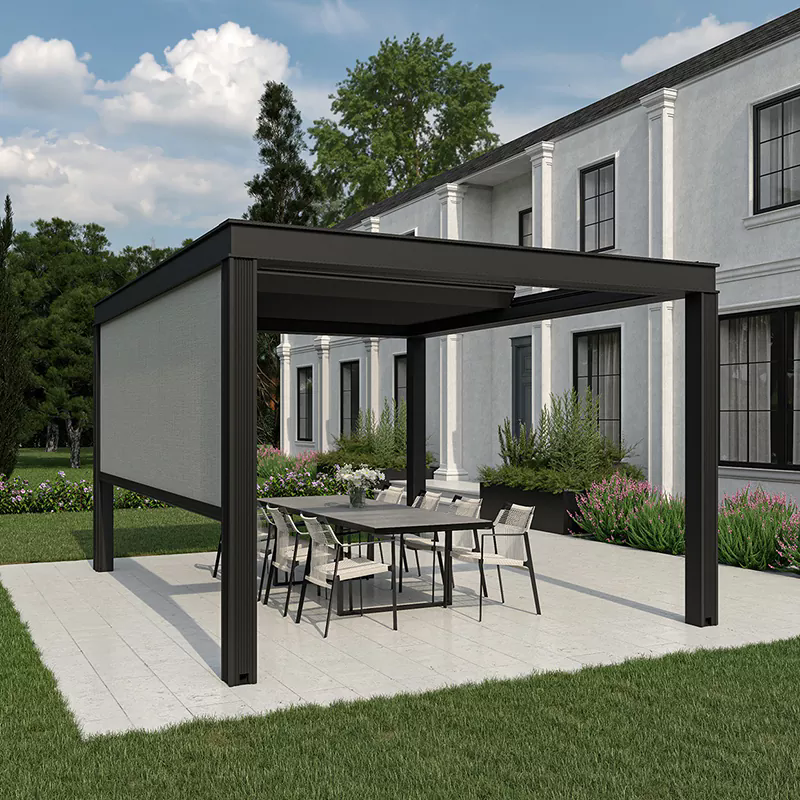
An Aluminum Louvered Pergola is an outdoor shading structure built with high-strength aluminum framing and adjustable roof slats (louvers). These louvers can rotate between open and closed positions, allowing precise control over environmental conditions.
When fully open, the structure promotes ventilation and natural light. When closed, it forms a sealed surface that provides rain protection and shade. This dynamic capability makes it significantly more advanced than static pergola designs.
4. Core Benefits and Functional Advantages
The system delivers multiple functional and lifestyle benefits:
-
Climate Adaptability: Adjusts to sunlight, wind, and rainfall conditions.
-
Extended Usability: Outdoor areas become usable throughout all seasons.
-
Energy Efficiency: Reduces direct solar heat gain on adjacent interiors.
-
Modern Aesthetic: Clean architectural lines suitable for luxury design.
-
Smart Integration: Can be motorized or sensor-controlled.
5. How the Louver System Works
The core engineering principle of an Aluminum Louvered Pergola lies in its rotating blade mechanism. Each louver is connected to a synchronized control system, typically powered by a concealed motor. Users can adjust the angle of the louvers depending on weather or comfort needs.
Operational Modes:
-
Fully Open: Maximum sunlight and airflow
-
Partially Open: Controlled shading and ventilation balance
-
Fully Closed: Waterproof protection during rain
Drainage channels are integrated within the frame to guide rainwater away efficiently, preventing leakage and pooling.
6. Why Aluminum Matters
Aluminum is the preferred material for modern pergola systems due to its superior engineering characteristics:
-
High strength-to-weight ratio
-
Corrosion resistance in outdoor environments
-
Low maintenance requirements
-
Recyclability and environmental compatibility
-
Compatibility with powder coating for color customization
Compared with steel or wood, aluminum ensures longer service life with reduced structural degradation.
7. Comparison Table: Traditional vs Louvered Pergola
|
Feature
|
Traditional Pergola
|
Aluminum Louvered Pergola
|
|
Weather Protection
|
Limited
|
Fully adjustable and rain-resistant
|
|
Material Durability
|
Wood prone to decay
|
Aluminum corrosion-resistant
|
|
Functionality
|
Static design
|
Adjustable louvers
|
|
Maintenance
|
High
|
Low
|
|
Aesthetic Flexibility
|
Limited
|
Modern customizable design
|
8. Installation Overview
Installation of an Aluminum Louvered Pergola involves structural preparation, frame assembly, motor system integration, and waterproof testing. Professional installation is recommended to ensure alignment accuracy and drainage efficiency.
Typical installation steps:
-
Site measurement and foundation preparation
-
Main frame assembly
-
Louver blade installation
-
Motor and control system setup
-
Waterproof and operational testing
9. Maintenance and Longevity
One of the strongest advantages of aluminum pergolas is their low maintenance requirement. Routine cleaning and periodic mechanical inspection are typically sufficient.
-
Clean louvers with mild soap and water
-
Inspect drainage channels regularly
-
Check motorized systems annually
-
Avoid abrasive cleaning materials
With proper maintenance, the system can maintain performance and appearance for many years.
10. Application Scenarios
Aluminum Louvered Pergolas are widely used across multiple environments:
-
Residential gardens and backyard patios
-
Hotel poolside lounges
-
Outdoor restaurant seating areas
-
Rooftop terraces and bars
-
Commercial leisure complexes
Their versatility makes them suitable for both private and commercial architecture.
11. Why Vionta Aluminum Louvered Pergola Solutions
Vionta specializes in engineered aluminum outdoor systems designed for durability, precision, and architectural integration. The company focuses on structural optimization, material quality control, and user-centered design.
Vionta Aluminum Louvered Pergola systems are built with:
-
High-grade aluminum extrusion profiles
-
Precision motorized louver mechanisms
-
Integrated drainage engineering
-
Customizable modular designs
-
Weather-resistant surface treatment
This combination ensures long-term stability and performance even in demanding outdoor environments.
12. FAQ
Q1: Can an Aluminum Louvered Pergola withstand heavy rain?
Yes, when fully closed, the louvers form a sealed roof system with integrated drainage.
Q2: Is the system manually operated or automated?
It can be both. Many modern systems, including those from Vionta, offer motorized control options.
Q3: Does it require frequent maintenance?
No. Aluminum structures require minimal maintenance compared to wood or steel alternatives.
Q4: Can it be customized in size and color?
Yes, modular design allows flexible sizing and surface finishing options.
Q5: Is it suitable for commercial use?
Yes, it is widely used in hotels, restaurants, and resort environments.
13. Conclusion
The Aluminum Louvered Pergola represents a significant advancement in outdoor architectural design. By combining structural durability, environmental adaptability, and modern aesthetics, it transforms outdoor spaces into functional living environments throughout the year.
From residential comfort to commercial scalability, this system addresses long-standing limitations of traditional pergolas. With engineering expertise from manufacturers like Vionta, it becomes not just a shading structure but a long-term investment in lifestyle and spatial quality.
For customized solutions, project consultation, or product specifications, contact us to explore how Vionta can support your next outdoor living project.