

How Does an Aluminum Heatsink Profile Improve Thermal Management?
2026-04-09
Summary: Aluminum heatsink profiles are essential components for efficient thermal management in electronics. This article explores how they function, their design considerations, types, and practical applications, helping engineers and manufacturers select the ideal solution for their cooling needs. Yingtai offers a wide range of high-quality aluminum heatsink profiles to meet diverse industrial requirements.
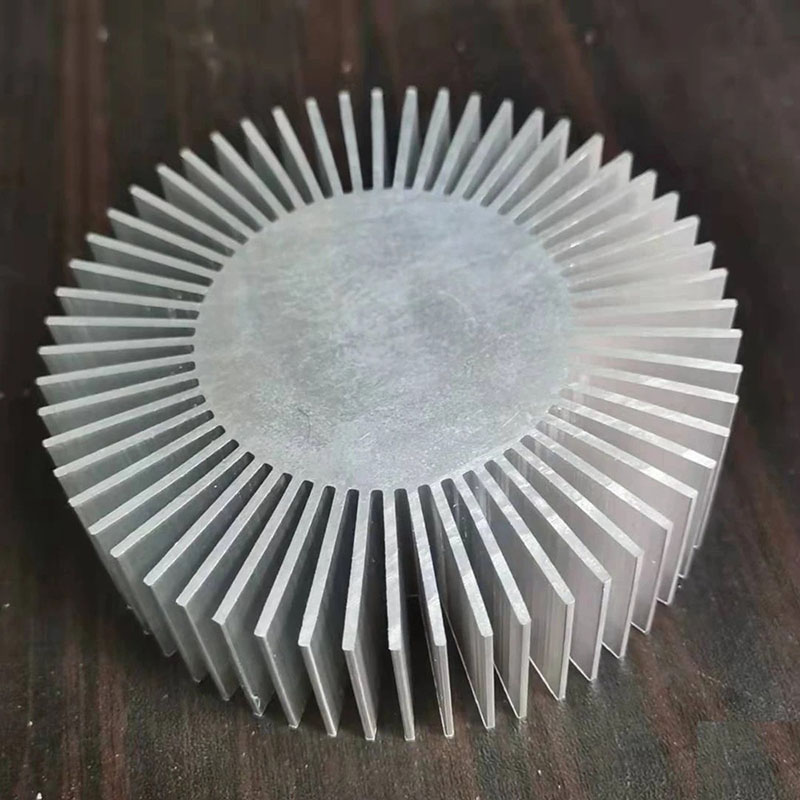
Table of Contents
- Introduction to Aluminum Heatsink Profiles
- Working Principle
- Design Considerations
- Types and Applications
- Benefits of Aluminum Heatsink Profiles
- Installation Tips
- FAQ
- Contact Yingtai
Introduction to Aluminum Heatsink Profiles
Aluminum heatsink profiles are engineered to dissipate heat generated by electronic components, ensuring devices operate within safe temperature ranges. With their high thermal conductivity, lightweight nature, and corrosion resistance, aluminum profiles are widely adopted in industries including LED lighting, power electronics, and telecommunications.
Yingtai specializes in producing precision aluminum heatsink profiles that meet international quality standards, combining performance with reliability.
Working Principle
Aluminum heatsink profiles operate on the principle of conduction and convection. Heat from the component is conducted through the base of the heatsink to its fins, which increase the surface area for air to carry heat away. Natural convection or forced airflow enhances the cooling process.
- Conduction: Heat moves from the hot component to the aluminum heatsink base.
- Convection: Heat is transferred from the fins to the surrounding air.
- Radiation: A smaller portion of heat is emitted as infrared radiation.
Design Considerations
Choosing the right aluminum heatsink profile involves several factors:
| Factor | Description |
|---|---|
| Material Quality | High-grade aluminum ensures excellent thermal conductivity and durability. |
| Fin Geometry | Optimized fin spacing and thickness improve airflow and heat dissipation. |
| Surface Treatment | Anodizing or coating enhances corrosion resistance and thermal efficiency. |
| Mounting Options | Profiles with customized mounting slots simplify installation on PCBs or devices. |
| Thermal Resistance | Lower thermal resistance indicates higher heat dissipation performance. |
Types and Applications
Aluminum heatsink profiles come in diverse forms to suit different thermal challenges:
- Extruded Profiles: Common in LED lighting and industrial electronics.
- Sheet Metal Profiles: Used in compact electronics for precise thermal management.
- Custom Machined Profiles: Tailored for high-power applications and unique designs.
Applications:
- LED Strip Lighting – maintaining light efficiency and lifespan.
- Power Supply Units – preventing overheating in compact enclosures.
- Telecommunication Equipment – ensuring stable performance under high load.
- Industrial Machinery – cooling electronic drives and control modules.
Benefits of Aluminum Heatsink Profiles
Investing in high-quality aluminum heatsink profiles offers multiple advantages:
- Excellent thermal conductivity for efficient cooling.
- Lightweight design reduces overall system weight.
- Corrosion resistance for longer lifespan.
- Customizable shapes and sizes to meet specific engineering requirements.
- Cost-effective solution compared to copper alternatives.
Installation Tips
Proper installation ensures maximum thermal efficiency:
- Ensure flat contact between the component and heatsink base.
- Apply thermal interface material (TIM) to reduce contact resistance.
- Secure the profile without over-tightening to prevent deformation.
- Allow adequate airflow around fins for optimal cooling.
FAQ
Q1: Can aluminum heatsink profiles be used in high-power applications?
A1: Yes, when properly designed with sufficient fin area and airflow, aluminum profiles handle high-power dissipation effectively.
Q2: How do I choose the right profile for my device?
A2: Consider thermal load, airflow, space constraints, and mounting requirements. Yingtai engineers can provide guidance based on your specifications.
Q3: Are aluminum heatsinks compatible with all electronics?
A3: Aluminum profiles are versatile and can be used in most electronic applications. Ensure proper surface treatment if operating in harsh environments.
Q4: Does the anodized finish improve performance?
A4: Anodizing mainly protects against corrosion and slightly improves heat radiation, but design and fin geometry are key for thermal performance.
Contact Yingtai
For high-quality aluminum heatsink profiles tailored to your needs, visit Yingtai Aluminum Heatsink Profiles. Our experts are ready to provide customized solutions. Contact us today and optimize your thermal management systems with reliable Yingtai products.