

How Does an Air Conditioner Branch Pipe Work and What Are Its Applications?
2025-12-18
Abstract: The Air Conditioner Branch Pipe is a critical component in modern HVAC systems, enabling efficient distribution of refrigerant across multiple lines to achieve optimal cooling and heating. This article explores its types, applications, installation techniques, maintenance requirements, and common issues. Detailed product specifications are included for professional reference, along with practical guidance for engineers, installers, and HVAC professionals.
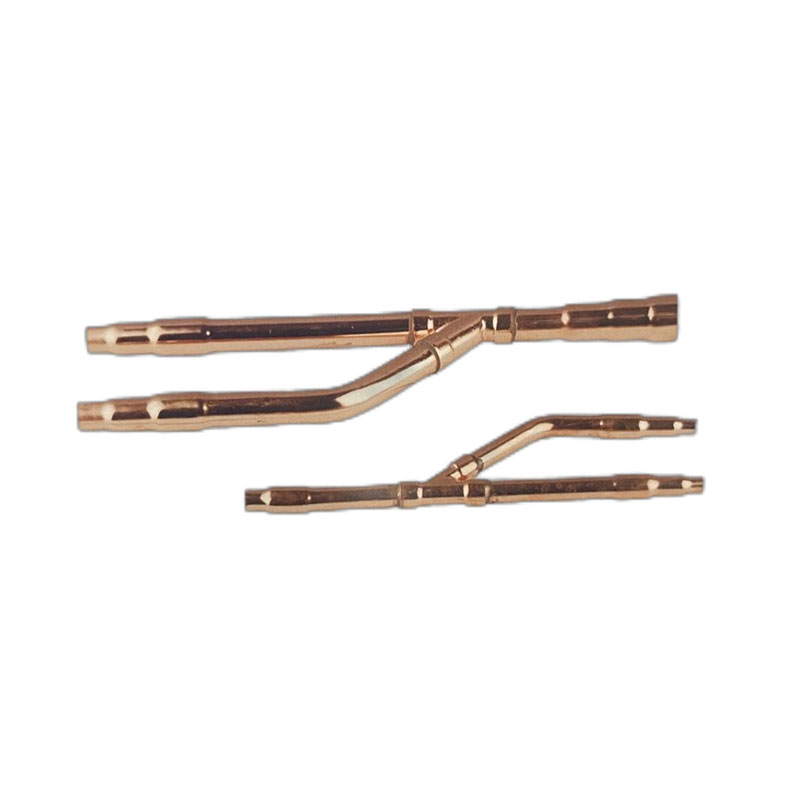
Table of Contents
- Introduction to Air Conditioner Branch Pipe
- Types and Applications
- Installation and Maintenance Guide
- Common Questions About Air Conditioner Branch Pipe
- Conclusion and Brand Information
Introduction to Air Conditioner Branch Pipe
The Air Conditioner Branch Pipe serves as a junction for multiple refrigerant lines, commonly used in split AC systems, VRF systems, and centralized HVAC networks. By directing refrigerant to multiple evaporators or indoor units, branch pipes enhance system efficiency and reduce installation complexity. Proper selection and installation are crucial for preventing leaks, ensuring consistent cooling, and maintaining system longevity.
Product Overview and Specifications
The following table provides detailed specifications of a standard Air Conditioner Branch Pipe used in commercial and residential HVAC systems:
| Parameter | Specification |
|---|---|
| Material | High-quality copper or stainless steel |
| Connection Type | Brazed or flared fittings |
| Number of Ports | 2 to 8, customizable |
| Nominal Diameter | 6 mm – 22 mm |
| Pressure Rating | 3.5 MPa to 5.0 MPa |
| Operating Temperature | -40°C to 120°C |
| Finish | Oxidation-resistant coating or polished |
| Compliance | ISO 9001, CE, RoHS |
Types and Applications
Air Conditioner Branch Pipes vary based on design, connection type, and intended application. Understanding these variations is crucial for selecting the correct component for specific HVAC systems.
Types of Air Conditioner Branch Pipes
- Y-type Branch Pipe: Directs refrigerant into two branches. Ideal for dual indoor units.
- T-type Branch Pipe: Distributes refrigerant equally to multiple units. Suitable for small multi-zone systems.
- Multi-port Branch Pipe: Contains multiple outlets for large VRF systems. Enables flexible system expansion.
- Custom Branch Pipe: Designed according to specific system requirements or spatial constraints.
Applications in HVAC Systems
- Residential Split AC: Ensures refrigerant distribution to two or more indoor units.
- Commercial VRF Systems: Facilitates multi-zone temperature control with minimal piping complexity.
- Industrial HVAC: Supports large-scale air handling units by branching refrigerant lines efficiently.
- Retrofit Projects: Simplifies replacement and upgrade of existing systems without major redesigns.
Installation and Maintenance Guide
Installation Best Practices
Correct installation of an Air Conditioner Branch Pipe is critical for system efficiency and leak prevention. Key steps include:
- Preparation: Ensure all pipe connections are clean and free of debris. Verify material compatibility.
- Alignment: Position the branch pipe to minimize bending stress and reduce vibration.
- Connection: Use brazing or flared fittings according to manufacturer specifications. Ensure uniform torque application.
- Pressure Test: Conduct a nitrogen leak test before final system charging.
- Insulation: Properly insulate all branch lines to prevent condensation and thermal loss.
Maintenance Guidelines
- Periodic Inspection: Check for leaks, corrosion, and abnormal vibration at least twice a year.
- Cleaning: Remove any dust, debris, or oil residue that may compromise connections.
- Replacement of Worn Components: Replace seals, gaskets, or damaged pipe sections promptly.
- System Monitoring: Use pressure and temperature gauges to ensure balanced refrigerant flow across branches.
Common Questions About Air Conditioner Branch Pipe
1. What is the typical lifespan of an Air Conditioner Branch Pipe?
The lifespan of a branch pipe depends on the material, installation quality, and operating conditions. High-quality copper or stainless steel branch pipes, when installed correctly and maintained periodically, can last 15–20 years in residential and commercial systems.
2. How can I detect leaks in a branch pipe?
Leaks can be detected using electronic leak detectors, soap solution testing at joints, or by observing a drop in system pressure. Regular inspection is recommended to identify small leaks before they affect system performance.
3. Can a branch pipe be used with different refrigerants?
Yes, but compatibility with the specific refrigerant must be confirmed. Copper branch pipes are compatible with most common refrigerants (R22, R410A, R32), while stainless steel may be required for specialized refrigerants or high-pressure systems.
4. How to prevent vibration noise in branch pipe systems?
Install vibration dampeners, use proper pipe supports, and ensure precise alignment. Avoid sharp bends and excessive pipe length to reduce turbulence and noise.
5. Is it possible to expand an existing system using branch pipes?
Yes, multi-port branch pipes allow for system expansion. Ensure that additional indoor units do not exceed the system’s cooling/heating capacity, and pressure balancing is maintained across all branches.
Conclusion and Brand Information
Air Conditioner Branch Pipes are indispensable for multi-unit HVAC systems, enabling efficient refrigerant distribution and optimal temperature control. By understanding the types, applications, installation practices, and maintenance requirements, professionals can enhance system performance and longevity. Gangxin offers high-quality Air Conditioner Branch Pipes designed to meet industry standards and provide long-term reliability. For more detailed specifications, customized solutions, or professional consultation, contact us directly to discuss your HVAC project requirements.