

How Does Aluminum Casting Improve Modern Manufacturing?
2026-07-02
Abstract
Aluminum casting has become one of the most essential manufacturing processes in modern industry due to its balance of strength, lightweight properties, corrosion resistance, and cost efficiency. This article explores how aluminum casting works, why it is widely used across industries, and how it solves key production challenges such as material waste, structural limitations, and manufacturing inefficiencies. It also highlights quality considerations, common casting methods, and real-world applications, providing a comprehensive guide for engineers, buyers, and decision-makers seeking reliable metal component solutions.
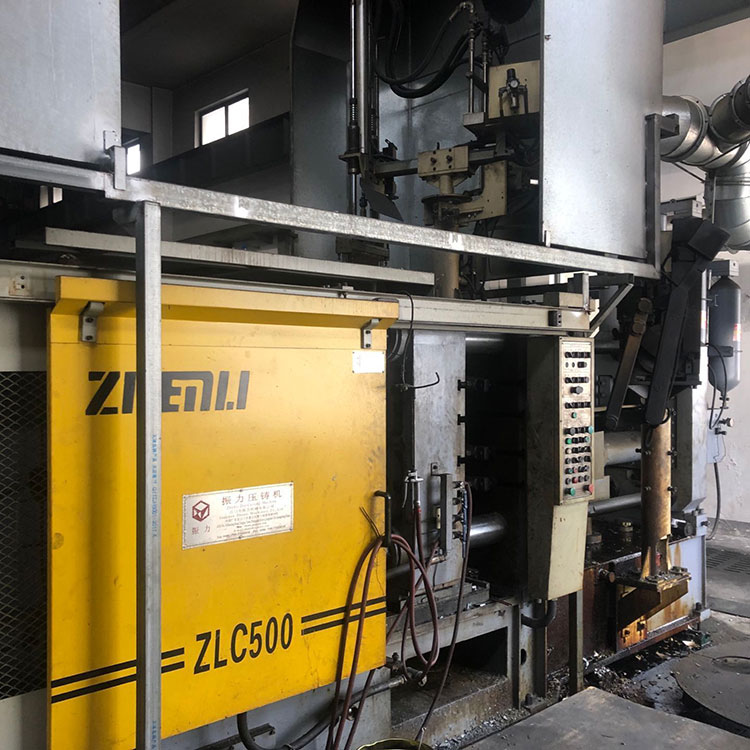
Table of Contents
- 1. Overview of Aluminum Casting
- 2. Aluminum Casting Process Explained
- 3. Common Aluminum Casting Methods
- 4. Key Advantages in Manufacturing
- 5. Industrial Applications
- 6. Quality Control and Common Defects
- 7. Comparison Table: Casting vs Other Methods
- 8. Frequently Asked Questions
- 9. Conclusion
1. Overview of Aluminum Casting
Aluminum casting is a metal forming process in which molten aluminum is poured into a mold cavity and allowed to solidify into a desired shape. This process enables manufacturers to produce complex geometries that would otherwise be difficult or expensive to achieve through machining or forging.
Industries rely on aluminum casting because it combines design flexibility with mechanical performance. Components can be engineered with thin walls, intricate internal channels, and precise tolerances while maintaining structural integrity.
2. Aluminum Casting Process Explained
The aluminum casting process generally follows a structured workflow that ensures consistency and material performance:
- Melting: Raw aluminum alloys are heated until they reach a molten state.
- Preparation: Molds are cleaned, coated, and preheated to ensure smooth filling.
- Pouring: Molten aluminum is carefully poured or injected into the mold cavity.
- Solidification: The material cools and solidifies into the mold shape.
- Finishing: Excess material is removed, and surfaces are treated or machined.
Each step must be tightly controlled to avoid defects such as porosity, shrinkage, or misruns.
3. Common Aluminum Casting Methods
Different casting techniques are used depending on product complexity, volume, and performance requirements.
| Method | Description | Best Use Case |
|---|---|---|
| Die Casting | High-pressure injection of molten aluminum into steel molds | Mass production of precise components |
| Sand Casting | Uses sand molds for large or complex parts | Low-volume, large-scale parts |
| Investment Casting | Wax patterns coated with ceramic for high precision molds | Complex and detailed components |
| Permanent Mold Casting | Reusable metal molds for repeated production | Medium to high volume production |
4. Key Advantages in Manufacturing
Aluminum casting offers several advantages that make it a preferred manufacturing method across industries such as automotive, aerospace, electronics, and construction.
- Lightweight structure: Reduces total product weight without sacrificing strength.
- Corrosion resistance: Naturally forms a protective oxide layer.
- Design flexibility: Enables complex geometries and integrated features.
- Cost efficiency: Reduces machining and assembly requirements.
- Scalability: Suitable for both prototyping and mass production.
These benefits directly address common industry pain points such as high production costs, long lead times, and excessive material waste.
5. Industrial Applications
Aluminum casting is widely used across multiple sectors due to its versatility and performance characteristics.
- Automotive industry: Engine blocks, transmission housings, wheels
- Aerospace: Structural components, brackets, and housings
- Electronics: Heat sinks, protective enclosures
- Industrial machinery: Pump housings, gearboxes
- Construction: Window frames, structural fittings
Manufacturers like Ningbo Yinzhou Xuxing Machinery Co.,Ltd. integrate aluminum casting solutions into precision-engineered components to meet demanding industrial standards and global customer requirements.
6. Quality Control and Common Defects
Ensuring consistent quality in aluminum casting requires strict process control and inspection systems. Even small deviations in temperature, pressure, or cooling rates can affect product integrity.
Common defects include:
- Porosity caused by trapped gases
- Shrinkage cavities due to uneven cooling
- Cold shuts from incomplete mold filling
- Surface cracks caused by thermal stress
Quality control measures:
- X-ray or ultrasonic inspection for internal defects
- Dimensional verification using precision instruments
- Material composition testing
- Process parameter monitoring (temperature, pressure, timing)
7. Comparison Table: Casting vs Other Methods
| Feature | Aluminum Casting | Forging | Machining |
|---|---|---|---|
| Material Waste | Low | Medium | High |
| Design Complexity | High | Low | Medium |
| Production Cost | Low to Medium | Medium | High |
| Production Speed | High (mass production) | Medium | Low |
8. Frequently Asked Questions
Q1: Why is aluminum preferred in casting?
Aluminum is lightweight, corrosion-resistant, and has excellent fluidity when molten, making it ideal for casting complex shapes.
Q2: Is aluminum casting suitable for high-strength applications?
Yes, with proper alloy selection and heat treatment, aluminum castings can achieve high mechanical strength suitable for automotive and aerospace use.
Q3: What is the most cost-effective casting method?
Die casting is generally the most cost-effective for high-volume production, while sand casting is better for low-volume or large components.
Q4: How can casting defects be minimized?
By controlling temperature, improving mold design, using high-quality alloys, and applying strict inspection procedures.
Q5: Can aluminum casting be customized?
Yes, aluminum casting is highly customizable in terms of shape, size, surface treatment, and mechanical properties.
9. Conclusion
Aluminum casting continues to play a critical role in modern manufacturing by offering a reliable, scalable, and cost-efficient solution for producing high-performance metal components. Its ability to support complex geometries while maintaining structural integrity makes it indispensable across multiple industries.
As global manufacturing demands continue to evolve, companies that adopt advanced casting technologies gain a competitive advantage in efficiency, quality, and innovation. With strong engineering capabilities and production expertise, Ningbo Yinzhou Xuxing Machinery Co.,Ltd. remains committed to delivering high-quality aluminum casting solutions tailored to diverse industrial needs.
For customized solutions, technical consultation, or product inquiries, contact us to explore how aluminum casting can enhance your manufacturing performance and product competitiveness.